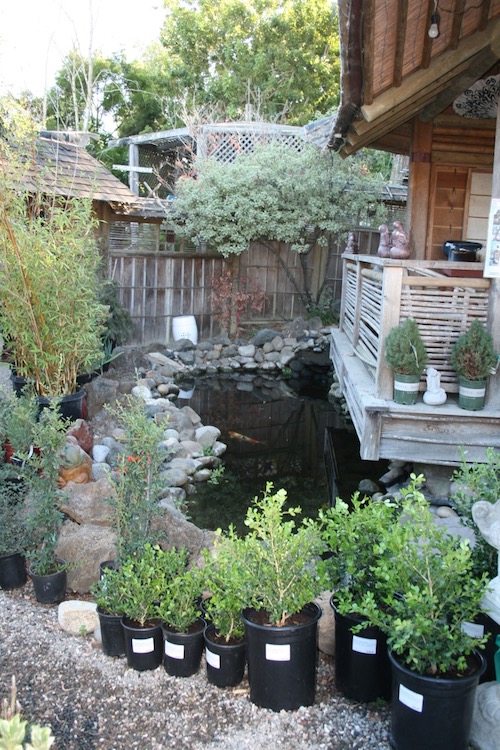
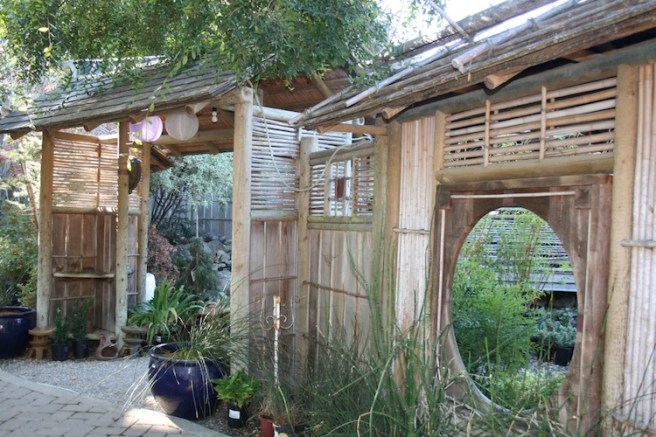
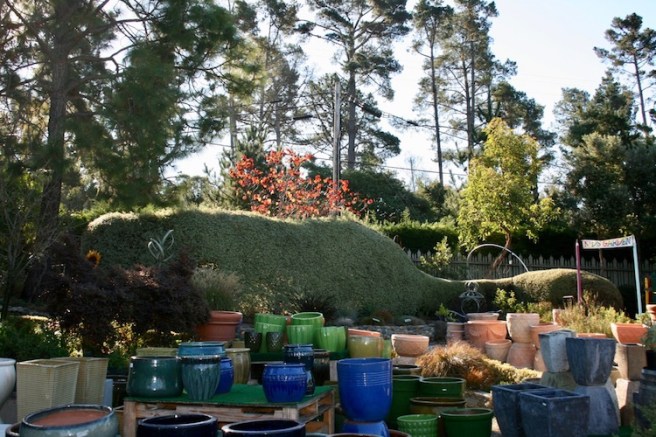
Howdy from Austin…

Howdy 1

Ninety two garden bloggers from 28 states plus Canada and the UK met up in Austin, Texas last week for the 10th anniversary of the Garden Bloggers Fling. The Fling started in Austin in 2008 as the brainchild of garden writer Pam Penick and so it was a fitting that it return to its roots. Host/Chairperson Diana Kirby and her committee arranged great accommodations, transportation and meals for us in addition to a stunning itinerary of private gardens, public gardens and the hottest in Austin’s retail garden center world.

As a second time Flinger I was not quite as shell shocked this time at the sheer amount of gardening knowledge and talent surrounding me as we toured and dined together for several days. This year Pam asked each of us to send a photo and short bio to be included on the Fling’s website to help us recognize and get to know each other–especially useful for first timers. In addition to hobby gardeners (i.e., ME) our numbers included professional landscape designers, freelance garden writers, garden authors with multiple books to their credit, horticulturalists who find and develop new plants and seeds, the publisher of a spectacular garden magazine and the editor of another, many current and former Master Gardeners, garden speakers, garden coaches and those whose passions are the pursuit of about any gardening niche you can name. If you are interested in Who’s Who at the 2018 Fling go to the Fling’s page at http://www.gardenbloggersfling.blogspot.com and click on the OWL in the right hand column for a look at the bios.

As a first timer last year, I conscientiously sat down every night, no matter how late or how tired, dumped my camera’s memory card onto my laptop and sorted through the day’s photos. Along with my notes on each garden I could at least develop a framework for each post I wanted to write based on my best photos. I think I posted 3 times while still at the Fling and then used the next two or three weeks to cover the rest of the gardens. This year, with my trusty Mac Book Pro at the St. Apple Hospital for the Near Fatally Wounded getting a $900 solid state transplant there was no place for my photos to go! I have been using that nightly shoot and dump regimen for years–in fact, the only memory card I owned for my Canon was the 1 GB one that came with it. My first Austin stop was Precision Camera–one of the Fling’s local sponsors–to purchase a handful of extra memory cards.

Arriving home a couple of days ago, life encroached on my blogging time immediately–the garden, left under my husband’s care in 90 degree weather for 8 days, had to be walked and any emergency care needed was dispensed. I will do a separate post on the deadheading chores awaiting me. Now with 1095 photos downloaded and ready to be reviewed, the fun starts. My fellow blogger Kris Peterson (her Late to the Garden Party blog is at http://www.krispgarden.blogspot.com) set a great example in her first post-Fling offering this morning by comparing her photos to old time postcards. You’re all ready at home and unpacked by the time your travel postcards reach your loved ones, giving them just a glimpse into what a good time you had. I am going to follow her lead by offering a single pic peek for each location now and follow up with more complete profiles as time permits.

ANTIQUE ROSE EMPORIUM
Howdy 2

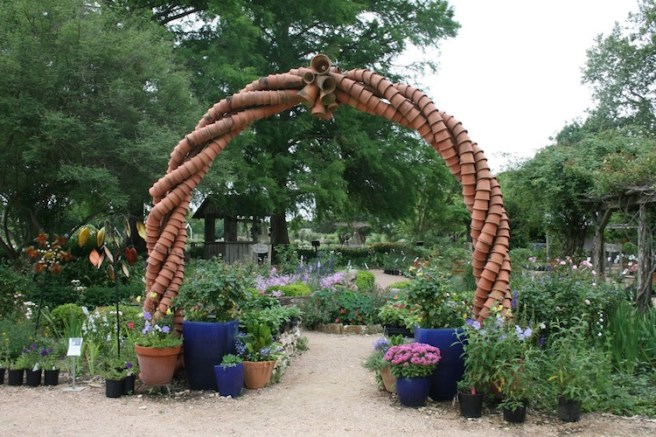
I had a couple of free days before the fling itinerary started so I took a road trip to Brenham, Texas to visit the Antique Rose Emporium. This iconic retail and mail-order rose source has been featured in many gardening magazines. The multi-acre location includes a number of demonstration gardens filled with roses and perennials and is a popular wedding venue.

NATURAL GARDENER

Howdy 3

Back in Austin, this destination nursery has a farmyard vibe with lots of display gardens featuring edibles, herbs, fruit trees and perennials. I loved this flowing stream highlighting riparian friendly Texas plants. The Natural Gardener was slated to be our luncheon location on the first full day of touring which I would miss so I was excited to fit it in on this day.

LADY BIRD JOHNSON WILDFLOWER CENTER

Howdy 4

The Wildflower Center is a groundbreaking botanical garden featuring only plants that are native to Texas. This gem was first up on the Fling’s itinerary, falling on the day I would not be able to travel with the group. Their late closing time on Tuesday allowed me to add it into the first day I toured on my own.

SOL’STICE
Howdy 5

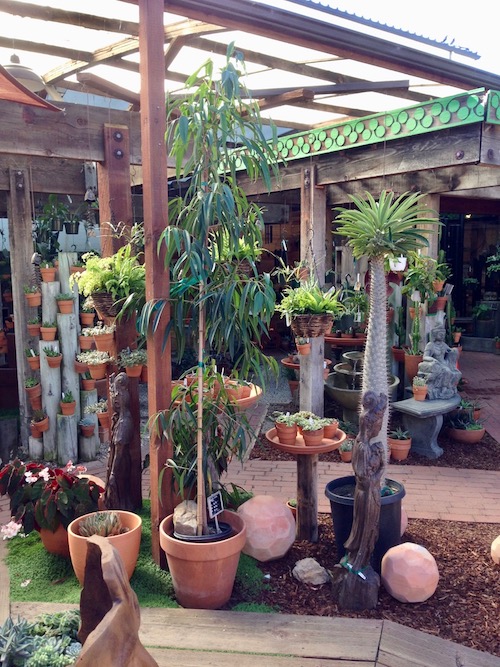
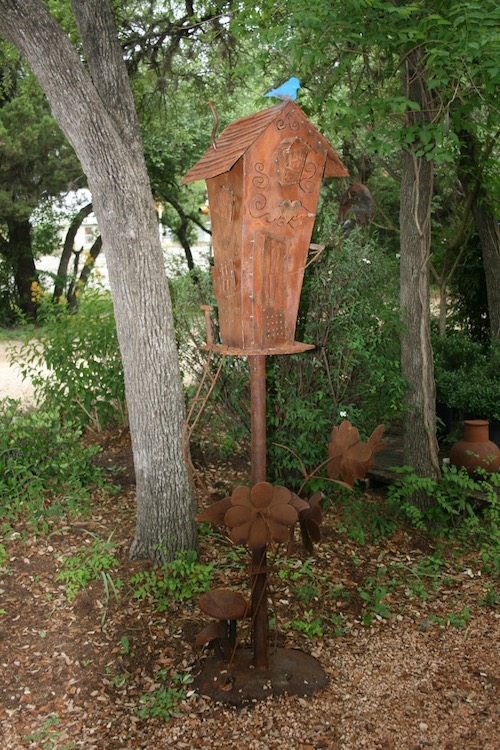
The following day, heading west to Fredericksburg, I ran across this funky local art/plant place and landscape design firm in Dripping Springs. I so wanted to take this rusted birdhouse (made by Steve Southerland) home!

FRIENDLY NATIVES NURSERY
Howdy 6

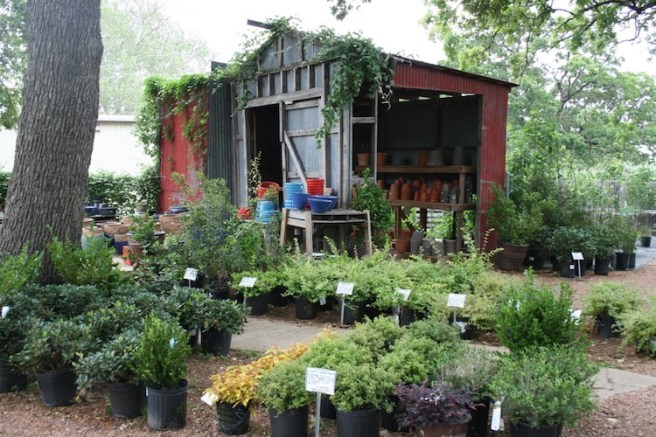
Matt Kolodzie and his nursery/landscape design business are all over Central Texas Gardener’s pages, both web and paper. Specializing in Texas climate and soil friendly plants, his Fredericksburg location was a delight. Matt is definitely a Friendly Native–he spent a lot of time talking plants with me and even offered to take me around to see Texas gardens done well!

PEACE GARDEN

Howdy 7

This serene scene was an unexpected addition to the second day on my own. The Peace Garden sits directly behind the Museum of the War of the Pacific in Fredericksburg’s historic downtown and was a gift from the people of Japan. I happened to pass by its open gate on my way to Main Street to have lunch and window shop a bit.

WILDSEED FARMS

Howdy 8

Wildseed Farms is a retail nursery business and event space on the highway between Fredericksburg and Austin. I made a quick stop on my way back to Austin to find a pretty ordinary garden center operation within some nice display garden areas and pleasing Hill Country architecture.

Fast forward…after a less than 24 hour trip from Austin to Atlanta/Athens, GA to see my future daughter-in-law receive her Masters Degree in Social Work I joined up with the Flingers to find out that torrential rains had kept most of them under cover at the Lady Bird Johnson Wildflower Center, Natural Gardener and the day before’s 3 private gardens. I had never glimpsed the sun and the the skies had threatened on the two days I was on my own but apparently Mother Nature was saving it all up for the other 91 bloggers. Whew!!

SATURDAY

GARDEN OF COLLEEN JAMISON

Howdy 9

Shady respite is the theme of this tree canopied garden which incorporates lots of casual seating amongst borders and beds filled with subtle color.

GARDEN OF PAM PENICK

Howdy 10

Texture and diversity rule in this sloping back garden. The space boasts several large shelves of rocks around which Pam has planted all manner of visually pleasing and wildlife friendly plant materials. This garden is full of interesting garden art and artifacts –watch for the full post with more photos soon.

GARDEN OF B JANE

Howdy 11

B Jane’s stated garden goal for her own garden was to “create a resort vibe” and if this gorgeous outdoor shower off the master bedroom doesn’t do that there is just no help for you. B Jane is a professional landscape designer and builder–see more of her work at http://www.bjanegardens.com.

GARDEN OF DONNA AND MIKE FOWLER
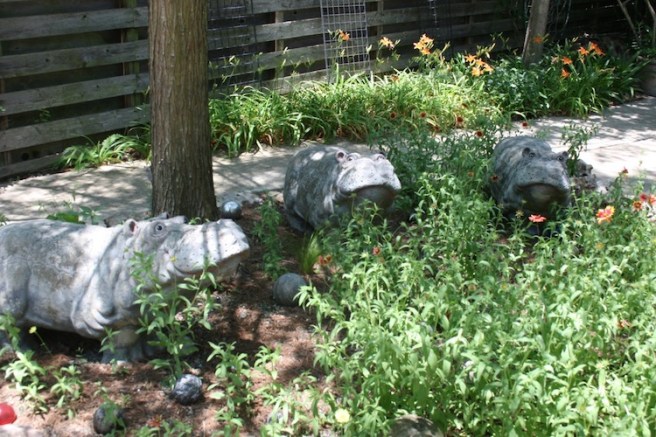
Howdy 12

A small town rural garden filled with Texas natives, reseeding wildflowers and whatever else strikes the owners fancy. Yes–there is a hippo story to tell…

TANGLEWOOD GARDENS

Howdy 13

Skottie O’Mahony and Jeff Breitenstein relocated from Seattle to Austin in 2013 with the dream of establishing a daylily hybridizing nursery. Their 1.7 acre garden overflows with tropicals and Moroccan influences.

SUNDAY

GARDEN OF LUCINDA HUTSON

Howdy 14

Cookbook author Lucinda Hutson’s La Casa Moradita (the little purple house) in historic downtown Austin cottage bursts with color at every turn and has been featured in magazines and PBS gardening shows. A devotee of all things Texican, this unique gardener greeted with open arms and wearing purple cowboy boots. This is one of the most personal garden I have ever visited–I am saving the best pics for the full post!

GARDEN OF RUTHIE BURRUS

Howdy 15

Ruthie’s Garden Haus was featured in Southern Living magazine in April 2017. Built from stone gathered on the property and salvaged tin roofing, windows and doors it is the backdrop for a climbing rose called Peggy Martin, sometimes referred to as the Katrina rose.

GARDEN OF MARGIE MCCLURG
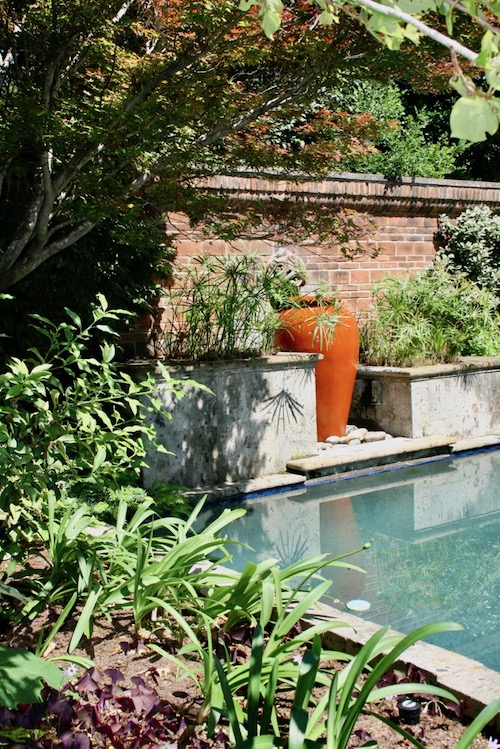
Howdy 20

A trip to Butchart Gardens on Canada’s Victoria Island inspired this homeowner to transform her courtyard back garden into a beautiful space to enjoy the sights and sounds of nature.

ZILKER BOTANICAL GARDEN

Howdy 16

The Isamu Taniguchi Japanese Garden, along with the Hartman Prehistoric Garden, are popular Sunday afternoon strolling spots.  We took time for lunch here before moving on to the final few gardens.

GARDEN OF TAIT MORING

Howdy 17

Local landscape architect Tait Moring has gardened this spot since 1997. His goal to celebrate the Texas Hill Country’s natural beauty is reflected in his use of native trees, shrubs, perennials and succulents. He characterizes his garden as a “test kitchen” for regional plants and is committed to the garden being a safe haven for local wildlife.

GARDEN OF KIRK WALDEN

Howdy 18

This relatively new home and garden (2013) replaced an abandoned house surrounded by invasive shrubs and weeds. Being in the front seat on the bus worked well for me at this garden–not everyone was able to photograph the terraced patio, spa and pool (and its phenomenal view) without anyone else in my shot. The home sits high on a bluff overlooking deep blue Lake Austin. Just bury me here.

ARTICULTURE
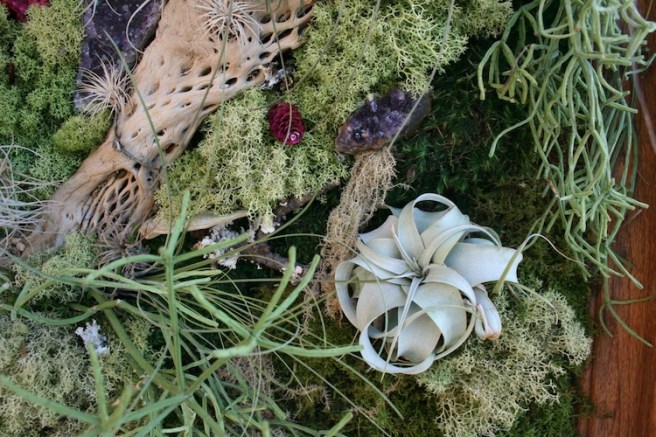
Howdy 19

We ended our day with a Texas barbecue dinner at Articulture, a creative indoor gardening boutique with a plant filled back yard event space. This happy hour with food and drinks inspired by Lucinda Hutson’s cocktail recipes was the perfect way to end our Austin Fling.

Every one of these gardens has so much more to see than the single photo I chose for this postcard peak. Hopefully I’ve lured you in and you keep an eye out for the longer, more complete posts as I publish them.

Plantspotting in Pasadena…

With barely a day home from AQS QuiltWeek (see We quilt this city…) I’ve changed out my suitcase to accommodate Southern California’s warm weather and am off for a few days in the LA area while my sweetie attends a conference. The garden gods have graciously arranged this international neurology meeting to coincide with the Garden Conservancy’s Open Days event in Pasadena.

Open Days is the Garden Conservancy’s education program which offers special invitations into private gardens all over the United States. The tours are self-guided and usually within reasonable driving distance of each other to allow you to see every one within the designated open hours. Visit http://www.opendaysprogram.org for information on gardens by location and date for the rest of 2018 and http://www.gardenconservancy.org for information about the Garden Conservancy and its mission to save and share outstanding American gardens for the education and inspiration of the public.

Pasadena is one of my favorite garden cities. It has it all–beautiful public spaces, tons of historic architecture, interesting neighborhoods with lots of diversity in home sizes and styles and residents who all seem to have a green thumb. I would venture a guess that it is something in the water but these days no California city seems to have plentiful water! Pasadena gardeners, along with those in several cities in the Bay Area, have risen to the occasion with some of the most well done waterwise and drought tolerant landscapes I have seen in my travels. A strong statement given their moniker ‘City of Roses’! You can see additional Pasadena gardens in my post The Ellen 5 get Rich in Pasadena….

Six private gardens plus La Casita Del Arroyo Garden (a City of Pasadena property maintained primarily by the Pasadena Garden Club) were included and I will post on four of the private gardens. As the day warmed up and my time grew short I left La Casita Del Arroyo for another visit. First up–the Penner Garden.

THE PENNER GARDEN

GC Pas Penner 1

In this era of every HGTV show touting the value of curb appeal it is immediately obvious that this home is more about privacy and family than making a splash in what is all ready a very WOW neighborhood. A 7 passenger golf cart ferried garden viewers up and down this very steep tree canopied driveway–a few of us made the climb on foot and regardless of how you got there the payoff was at the top.

GC Pas Penner 18

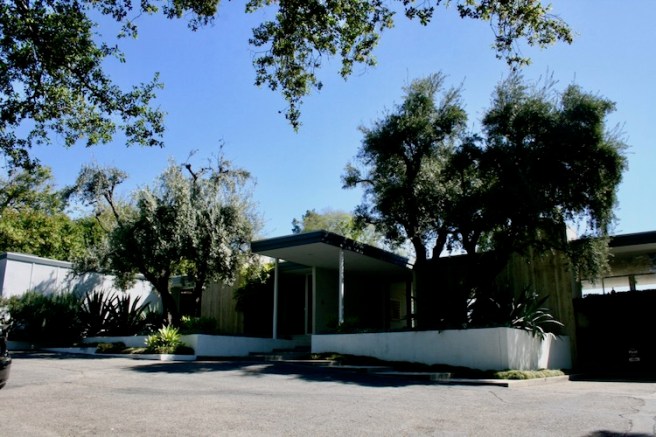
The mid-century single story home on the bluff overlooking the Arroyo River was designed by Smith & Williams in 1963. The post and beam residence is surrounded by mature oaks, olive trees and palm and the renovation of the outdoor spaces was designed to maximize their existing role in the landscape.

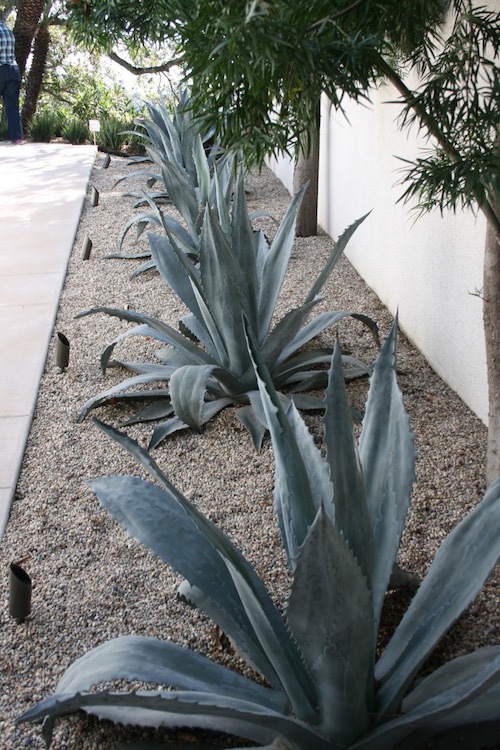
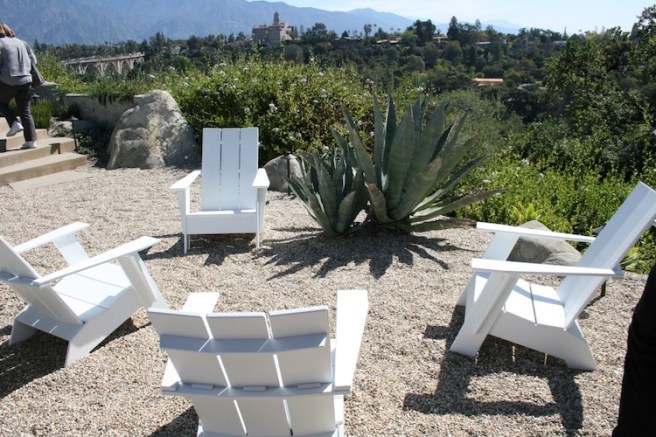
As we approach the wide entrance adjacent to the carport these agaves (terrible with succulents-let me know if I’m wrong) foreshadow the emphasis on groups of plants with strong structural qualities, an aesthetic which I think fits the home’s architecture well. Mature podacarpus of unknown variety have been limbed up to soften the stucco wall and provide some textural contrast.

GC Pas Penner 3
I imagine these are spectacular lit at night.

As the back garden vista opens up it is clear why this home is at the top of the hill rather than street side.

GC Pas Penner 14

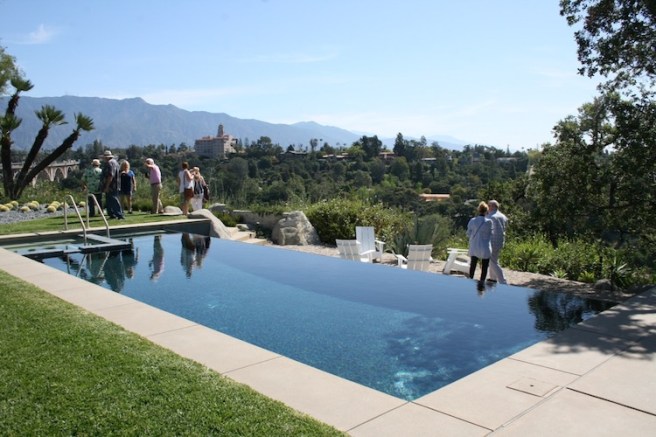
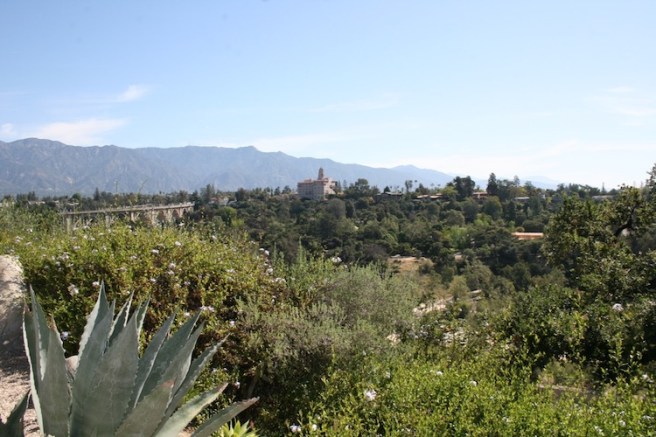
The view of the river bed and distant mountains is spectacular!

GC Pas Penner 10

From every vantage point you are held captive by the vista.

GC Pas Penner 7

Mid photo on the left is the historic Arroyo Bridge.

So now that you have recovered from the big picture–there’s a lot going on in this very family friendly garden which was renovated by landscape architect Nord Erickson to maximize outdoor entertaining space as well as create a more natural transition to the  hillside vegetation lying beyond.

GC Pas Penner 4

There are multiple seating and entertaining areas. Above you can see this great grouping of egg like woven chairs which surround a fire pit. What looks like a red sculpture tucked under the roofline’s overhang is actually a giant chair with multiple places to sit–the homeowner says his kids love to do their homework perched comfortably on this big red thing!

GC Pas Penner 15

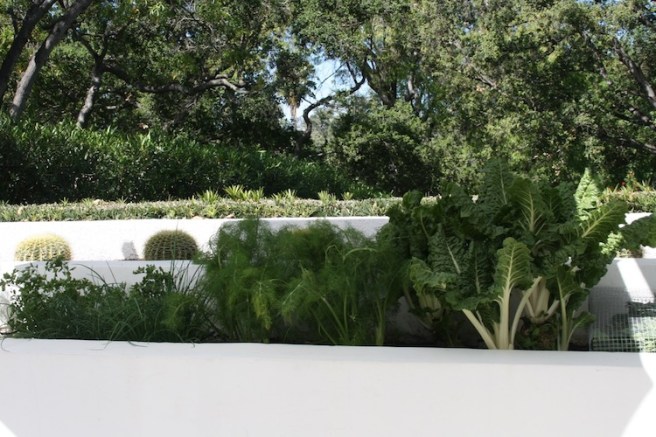
This fully outfitted outdoor kitchen, complete with a pizza oven, is tucked up next to the home and has raised beds to accommodate veggies and herbs.

GC Pas Penner 16

GC Pas Penner 13

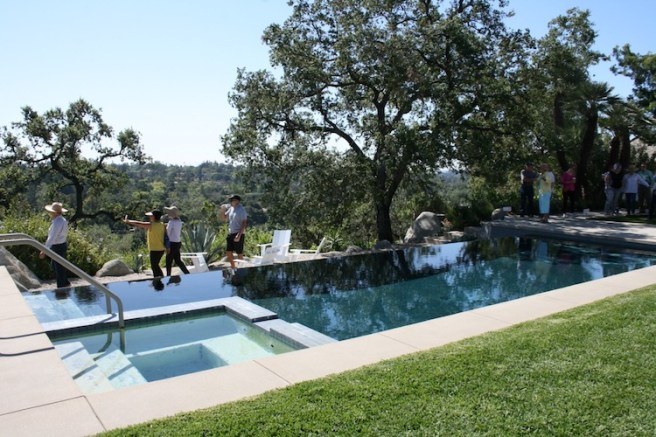
Stone steps tucked at the end of a small area between the infinity pool and the downslope of the bank of the riverbed give you access to another intimate seating area–this is definitely the after dinner wine sipping venue.

GC Pas Penner 6

GC Pas Penner 8

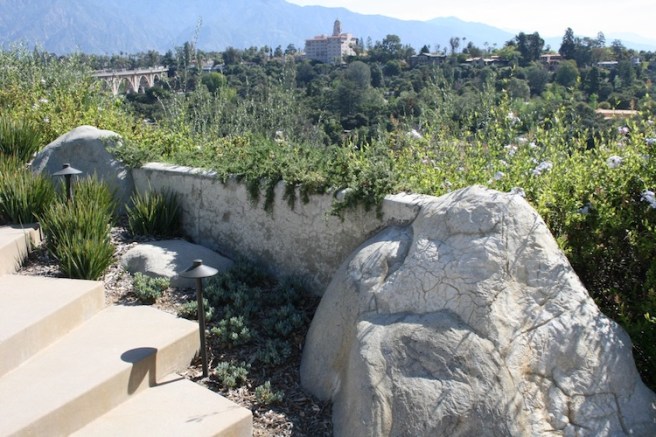
I loved the steps taking you up the other side which incorporate these large boulders and offer a planting pocket sporting a mass of succulents. The landscape architect’s plant palette is restrained in both color and number of plant choices. His selections are repeated throughout the garden and used in masses. Rosemary and cape plumbago peek over the short retaining wall.

GC Pas Penner 9

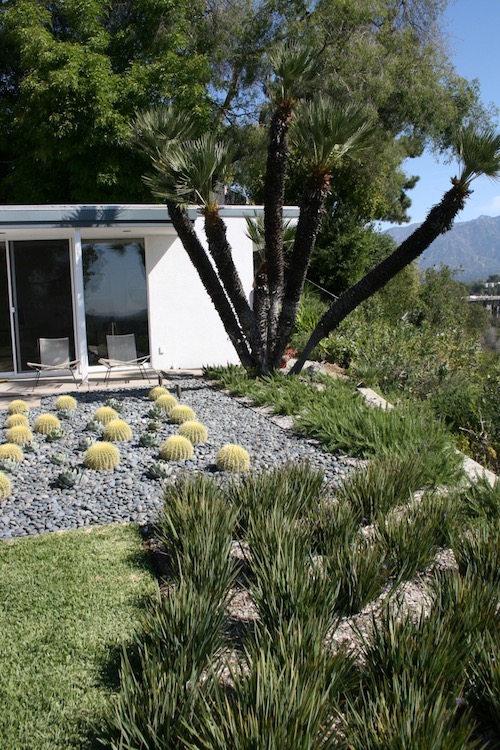
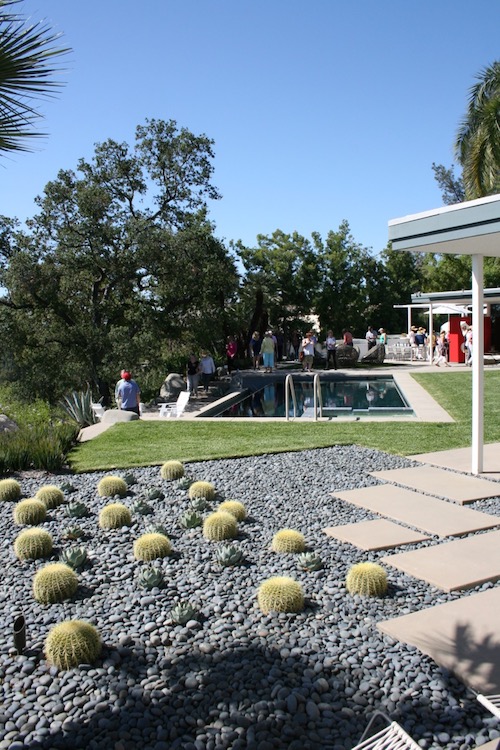
As you ascend those steps the emphasis on massed plants with architectural qualities is evident. In the foreground, the strap like narrow leaves of a mass of dianella (not sure which one but lower than most) are in start contrast to the geometric planting of a very spiny barrel cactus and its smaller blue gray succulent companion. Rosemary under the palm provides yet another leaf form and texture.

GC Pas Penner 12

Here is the view from that area back into the rest of the garden. The garden has a beautiful sense of enclosure given that the view from one side is just about forever– private, yet expansive!

GC Pas Penner 17

Three bushy olive trees planted in square metal forms sunk in the ground soften the stark white stucco wall of this wing of the home. Yet another table and chairs, this time funky red ones, offer a shaded place to dine or play games. You can be in the vicinity of whatever is going on in the pool without being right in the middle of it.

GC Pas Penner 5

Looking back at the home from the far side of the pool you can see that this home has the extensive walls of glass so evocative of the mid-century modern style and which provide a seamless transition to the outdoors and vistas beyond. A comfy sofa and chairs provide another shady spot for hanging out.

GC Pas Penner 11

Just one more look before we go! It seems as though lately we have been focused on  creating ‘garden rooms’ in our landscapes–looking to provide a little mystery as we move from one part of the garden to another. This garden could not be more different. From the vantage point of the last of those sculptural agaves in the first photo the entire space is in a single visual plane. This garden is beautifully designed to take best advantage of its location and is in total harmony with the home it enhances.

I often find ‘bonus’ homes and gardens as I move from one tour garden to the next and include them in my posts. Fun stuff along the way is always a great addition to any adventure.

gc-pas-penner-2.jpg

This peacock flew (?) up to this driveway gate only a few feet from where we were waiting for the Penner garden to open. Apparently in nearby Arcadia (which is relatively close to the Los Angeles Arboretum) there are literally bands of roving semi-wild peacocks inhabiting residential neighborhoods. Who knew? My guess is that they are cute just about as long as deer are cute in a residential neighborhood–just until they poop on your car or eat all your perennials to the ground.

Sierra Azul and Sculpture IS in the Garden…

Happy New Year to all my gardening friends! A very warm December and early January has lured me away from my computer and into my garden more than usual for what is supposed to be winter. Before I catch you up on what’s going on in the Queen’s little 1/2 acre I want to close the loop on the Watsonville trip I wrote a bit about in my December 6, 2017 post Gardening with Goat Hill Fair….

One of the facets of chronicling my garden travels for this blog that has proved an unexpected pleasure for me is learning a little about the history of the communities, events and gardens I visit. Even as a native Californian there are so many places in my own state that I have never visited!

Watsonville is the second largest community in Santa Cruz County. The city of  Santa Cruz has always been a popular beach destination for Central Valley residents and those of us who stayed in town for college thought that our friends who went of to UC Santa Cruz had died and gone to heaven…to party forever! I am pretty sure Watsonville–just a few miles away–was never on our radar. Watsonville was settled in 1852 and named after Judge John H. Watson who arrived in the Pajaro Valley and set up a claim on a portion of the Bolsa Del Pajaro, a land grant belonging to a prominent Mexican-American settler. Watsonville’s history is based in agriculture, growing products such as strawberries, apples (it is the home of Martinelli Cider), berries, lettuce, mushrooms and cut flowers. The rich, fertile land and favorable agricultural climate of the Pajaro Valley remains the basis of the area’s agricultural success today.

I have been buying plants grown by Sierra Azul Nursery from my local garden centers for many years and so I was excited at the prospect of visiting the nursery and meeting its owner, Jeff Rosendale. Jeff’s wholesale operation, retail nursery and demonstration garden are located on E. Lake Avenue, a stone’s throw from the Santa Cruz Fairgrounds and enjoy a spectacular view of the distant mountain peaks. The nursery’s name is taken from the mountain range of the same name. The southern half of the Santa Cruz Mountain Range is divided in two by California State Highway 17 into what the colonizing Spanish called the Sierra Moreno, “brown mountains”, to the north and Sierra Azul, “blue mountains”, to the south.

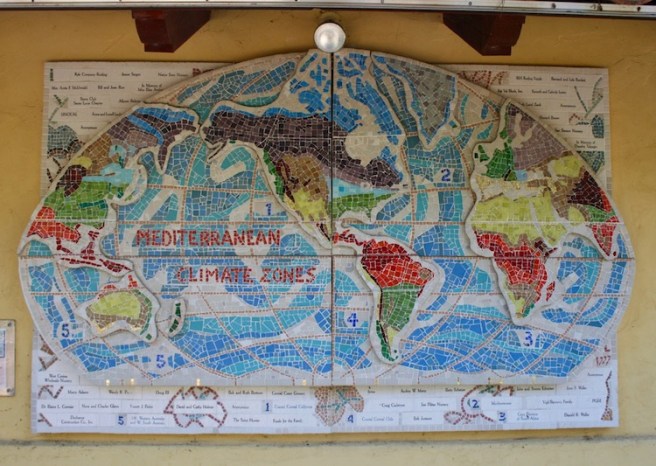
Sierra Azul Nursery & Gardens specializes in plants from the 5 Mediterranean climate zones–remember the great mosaic art piece at the San Luis Obispo Botanical Garden (see November 6, 2017 post SLO down for this Central Coast botanical garden) describing these 5 zones? Most of what the retail part sells is grown on the property.

SLOBG 12

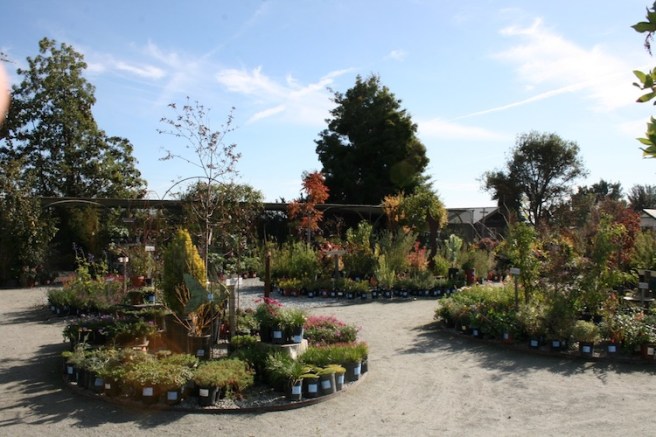
Owner Jeff Rosendale’s 2 acre demonstration garden adjacent to the retail nursery offers insight into what many of the plants he grows will look at mature size during various times of year. While it is not a manicured garden, it is a very realistic representation of how a wide variety of native and non-native trees and shrubs can work together in large scale borders.

Sierra Azul 4

The rocket ship like conifer in the background is Sequoia sempervirens ‘Mt. Loma Prieta Spike’, unfortunately no longer being grown for retail purchase. I loved it!!

In 2006, Sierra Azul’s demo garden became the backdrop for a project of the Pajaro Valley Arts Council dubbed Sculpture IS in the Garden, an extensive installation of art pieces from California artists. The open air exhibition now runs from June 1-October 31 yearly. Even though the event was technically over when I visited Sierra Azul many of the art pieces were still in the garden, along with pieces Jeff has acquired for his permanent garden collection. The 2017 event showcased over 90 pieces of original art. Included each year are works (many for sale) in a variety of styles and media, including steel, wood, ceramic, bronze, glass and concrete. Many are large scale. Some are static, some bend in the breeze. The winding open spaces of the garden drew me through the beds and borders, finding something new to admire at each turn. Over 1,000 pieces of sculpture have been featured in the garden in the past 11 years. Here’s a small sampling of what I saw.

Sierra Azul 1
This playful Pisces greets visitors just inside the property’s gate.
Sierra Azul 3
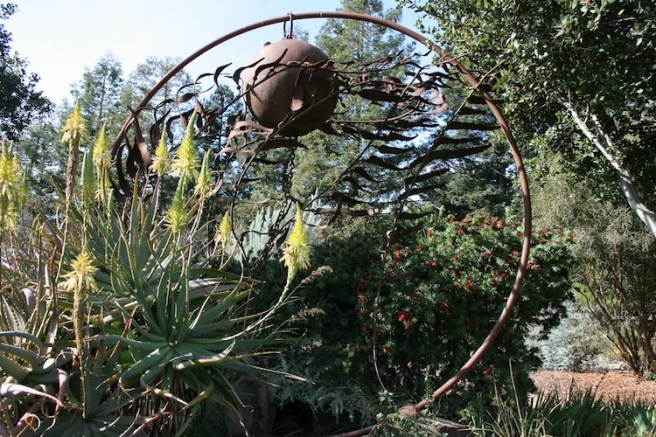
This organic representation of earth hangs high in the trees.
Sierra Azul 6
Bird and Gear by William Huffman was one of the pieces offered for sale.
Sierra Azul 2
Another large scale piece rising from the landscape–I loved the fanciful rusted iron face!
Sierra Azul 9
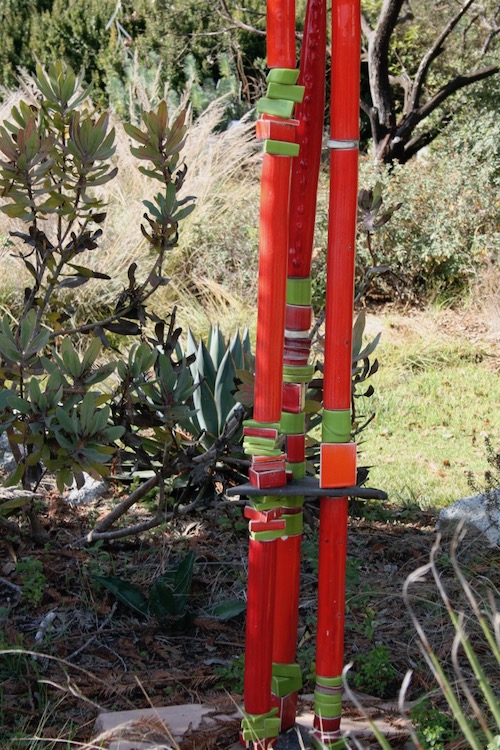
One of a series of colorful ceramic totems–I am obsessed with totems in the garden.

This huge bronze and steel sculpture entitled Woven Ring by Paul Cheney was my favorite piece–it can be yours for $7000.

Recognizing that I was lucky to even see a few of the pieces displayed this year I am putting a 2018 road trip to Sierra Azul on my calendar DURING the exhibit dates so I can get the full experience, including taking in the plantings during their best season.

I  spent a very enjoyable hour strolling the retail nursery and selecting a few interesting additions for my garden. The retail area is compact and gardener friendly. Like plant families are grouped together with lots of variety in each area. I am assuming that having your growing operation just steps away allows Jeff to keep just a few of each plant on display with the possibility of providing a larger quantity of a single species  upon demand.

Sierra Azul 17

Sierra Azul 11
Phormium and Cordyline varieties  with the demo garden in the background.
Sierra Azul 14
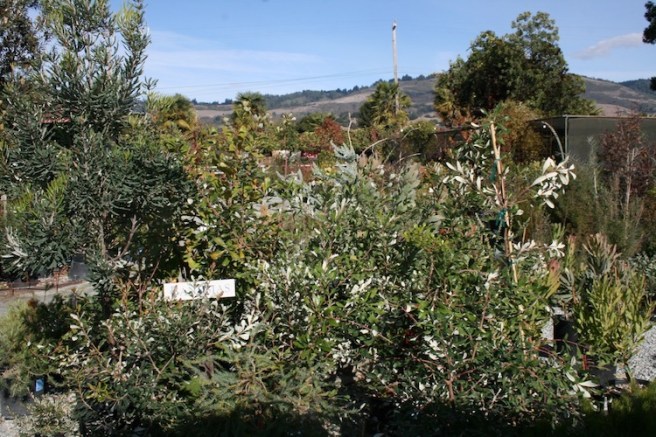
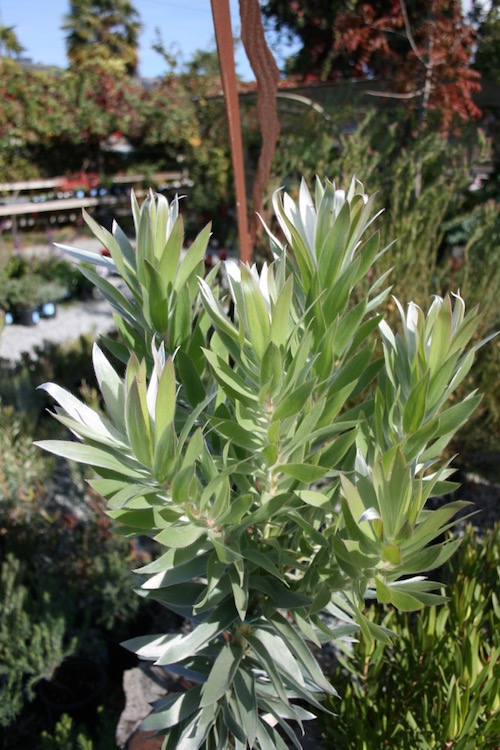
Lots of Pittosporum on the left and Leucadendron just past them

Garden centers in Southern California, the greater Bay Area and Central Coast are finding that plants of Australian and South African origin fit the bill for drought tolerant plantings in their warm winter climates. I see more and more varieties of Leucadendron and Banksia–genera with both interesting foliage and flowers. We see few of these in my somewhat colder winter valley. Sierra Azul has a nice selection in both these plant groups. They are fascinating to me but I am not sure about long term winter survival in my garden.

This huge Banksia integrifolia dwarfs the little redwood check out cottage!

Sierra Azul 12
Lots of Banksia, including integrifolia, await shoppers
Sierra Azul 21
Leucadendron argenteum or Silver Tree
Sierra Azul 22
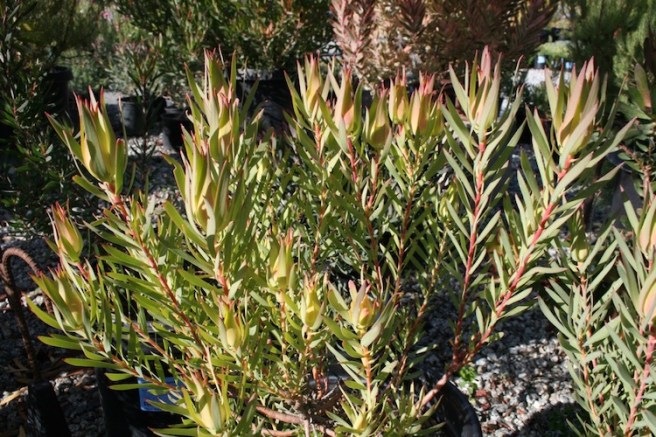
Leucadendron salignum ‘Golden Tulip’

Sierra Azul 24

I had to keep my hands in my pockets while passing this Correa ‘Wyn’s Wonder’. I love the dainty bell shaped flowers BUT the three Correa, although a different variety, I planted in the driveway circle last year were the only plants I lost–dead, dead, dead!

Sierra Azul 23
This was a new one to me–called Astelia nivicola ‘Red Gem’–and described as an evergreen perennial for shade.
Sierra Azul 19
There were many Grevillea to chose from–including this one Grevillea ‘Robyn Gordon’.
Sierra Azul 15
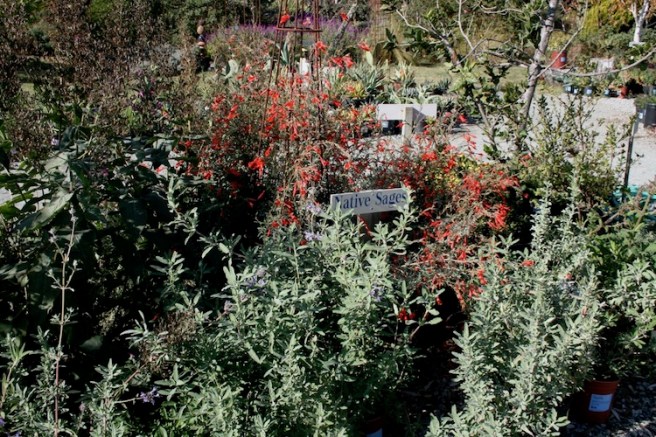
I never met a sage I didn’t like!
Sierra Azul 20
My booty accumulates!

Some of my purchases have all ready found places in my garden, others are resting in my holding area awaiting the right spot. Take a look!

Sierra Azul 27
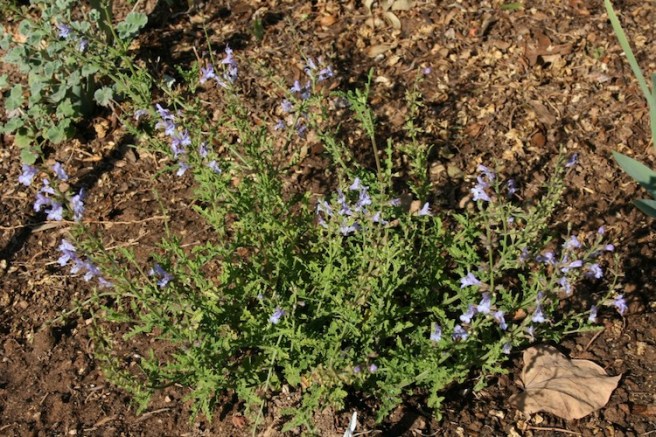
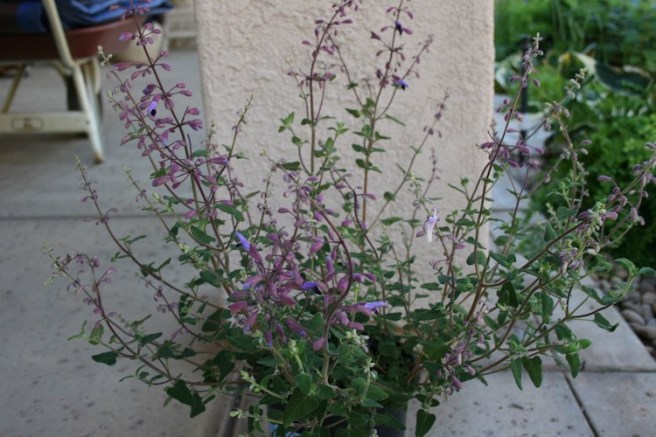
Salvia repens x namensis–a low selection with leaves similar to scented geraniums
Sierra Azul 26
Salvia repens x namensis–bloom closeup
Sierra Azul 28
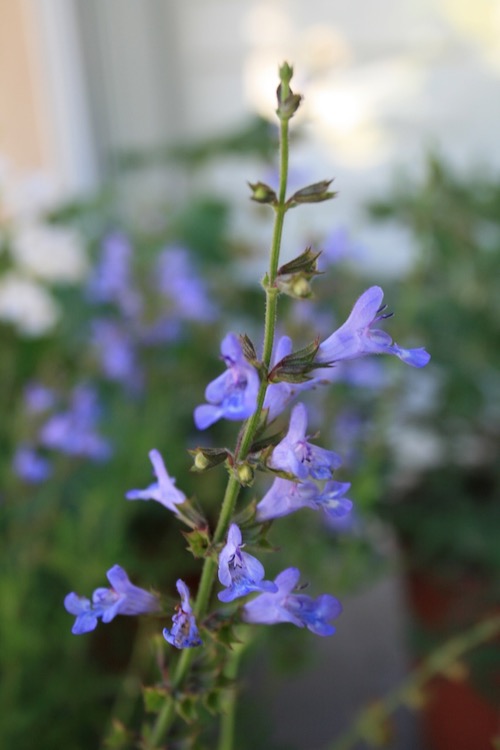
Salvia semiatrata–very delicate looking but purported to be 4 feet tall and wide
Sierra Azul 25
Salvia semiatrata–bicolor bloom closeup
Sierra Azul 32
Pelargonium quercifolium–common name oak leafed geranium
Sierra Azul 30
Salvia mellifera ‘Calamity Jane’
Sierra Azul 29
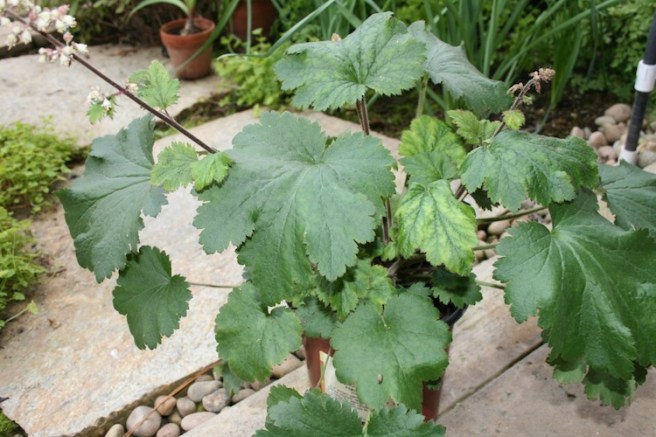
Heuchera maxima–a California native with huge leaves
Sierra Azul 31
Salvia somalensis–bright green velvety foliage

So many of the specimens I purchased are new to my gardening experience. It will be fun to see how they perform and share their success or failure with you. Sierra Azul Nursery & Gardens has a permanent place on my ‘make time to stop’ list if I am anywhere at all close. Check out their website at www.sierraazul.com for more information and contact information–also a series of pictures of lawn free landscapes Jeff has designed. A++ for a great selection of plant material, helpful gardening advice and a welcoming garden for a picnic lunch when I have done my shopping!


Gardening with Goat Hill Fair…

Twice a year Goat Hill Fair comes to the Santa Cruz Fairgrounds in Watsonville, CA. I had read several articles about this self described vintage marketplace over the last few years and so I headed north to Watsonville to see it for myself. I have a few garden art projects ideas for which I have been accumulating vintage garden tools, flower frogs and hose ends–Goat Hill sounded like a fun day with promise for a few new acquisitions. As I do with any first road trip to a city I scoured the internet for other good garden destinations I could fold into my trip. As if by fate, I found that Watsonville is home to literally dozens of wholesale growers and a sprinkling of retail specialty growers, some only open by appointment.  Unfortunately my time frame and that of a couple of the specialty plants people just did not mesh for this trip and I had to be content with a visit to Sierra Azul, Jeff Rosendale’s nursery and 2 acre demonstration garden east of Watsonville and only two giant steps away from the Fairgrounds. Sierra Azul did not disappoint and is worthy of its own post.

The Fairgrounds were my first stop. Let me say that the ladies (and I think one gentleman) who produce and curate this vintage marketplace have got it all together. Parking is well organized and painless and the venue has a turn of the century feel to its buildings which works in concert with Goat Hill’s farmhouse chic ambiance.

Goat Hill 1
Goat shaped chalkboards point the way
Goat Hill 2
One of several pieces of beautifully restored vintage farm equipment on display
Goat Hill 3
Goats are everywhere
Goat Hill 4
These gals were playing bluegrass as I approached the fair’s three buildings
Goat Hill 5
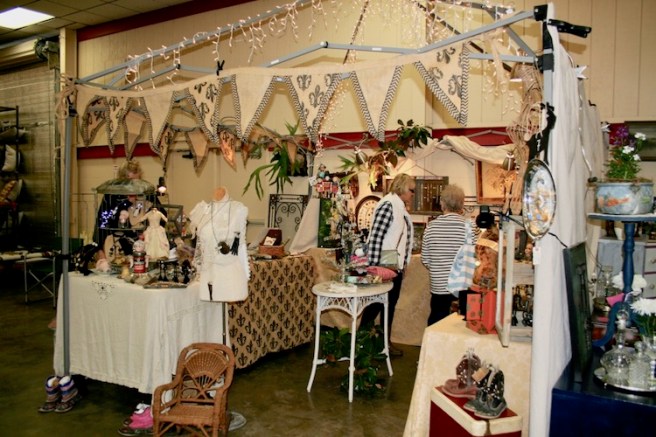
Every booth was beautifully presented
Goat Hill 6
Wide aisles and open booths made it really easy to shop
Goat Hill 7
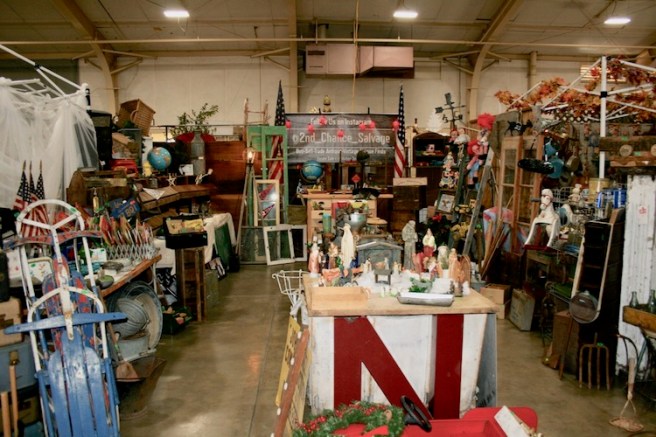
I regret talking myself out of the blue wooden sled
Goat Hill 8
Airstream chic
Goat Hill 9
Great vintage felt banner flags
Goat Hill 10
Every vendor was unique and the merchandise very appealing
Goat Hill 11
Run TOWARD this food truck if you ever have the chance

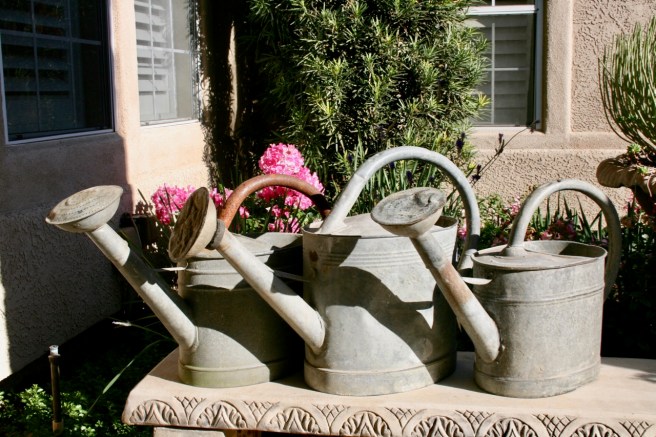
Although I did not find as many vintage garden goodies as I had hoped for I did purchase these three old watering cans. Old galvanized watering cans have become increasing hard to find on sites like eBay and Etsy–these three are well used but heavy and solid and were pretty good bargains.

Goat Hill 12

Goat Hill Fair will return to the Santa Cruz Fairgrounds in May 2018. Unless you are a hardcore shopper it is easily done in a half of a day. They have a hold area to which each vendor can have a runner deliver your purchases for you to gather up at day’s end and a car pick up hold area for oversized or heavy purchases, complete with enthusiastic young people to load it all up for you. Check out their site at http://www.goathillfair.com or follow them on Instagram and Pinterest.

NEXT UP: Sierra Azul Nursery and Sculpture IS in the Garden


Greystone Mansion and Gardens…

My quick overnight jaunt to Los Angeles allowed me time to visit one more venue on my list of lesser known garden sites: Greystone Mansion and Gardens, also called the Doheny Estate, in Beverly Hills. A heads up if this post inspires you to spend an afternoon at this lovely historic home and gardens which are now a city park, complete wth its own on site ranger: when your GPS tells you to turn off Sunset Blvd. onto Doheny Road–make sure you turn on Doheny ROAD not on Doheny DRIVE. I saw many other beautiful estates and gardens during the 30 minutes I spent going in circles on Doheny Drive but not one homeowner invited me in to take photos. Apparently this is common enough that a very explicit caution about just that is printed on the brochure–which of course you do not have until you get there!

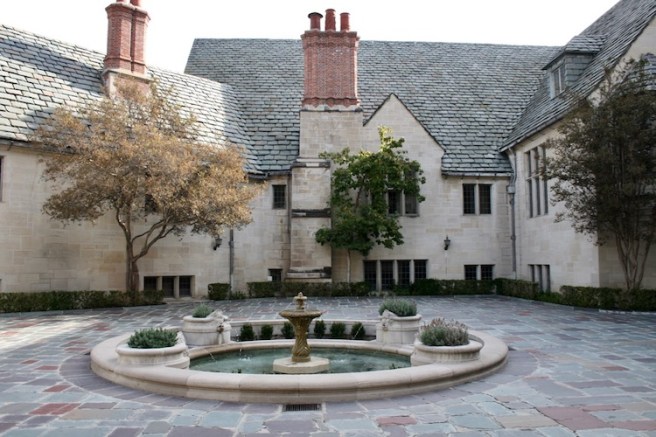
Greystone 24

View of the Inner Courtyard

The gardens’ brochure offers a brief Doheny Family history to help you put Greystone in its proper context. In 1892, Edward Doheny Sr. and his business partner discovered the first productive oil well in Los Angeles. With the opening of additional deposits in California and Mexico they became one of the largest producers of oil in the world. In the 1910s Mr. Doheny Sr. purchased a number of land parcels in what is now Beverly Hills, creating the 429 acre Doheny Ranch. The 12 and a half acre parcel which became the site of Greystone was on the western edge of the ranch. In 1926 the senior Mr. Doheny gave the land to his son, Edward “Ned” Doheny Jr. and his wife Lucy.

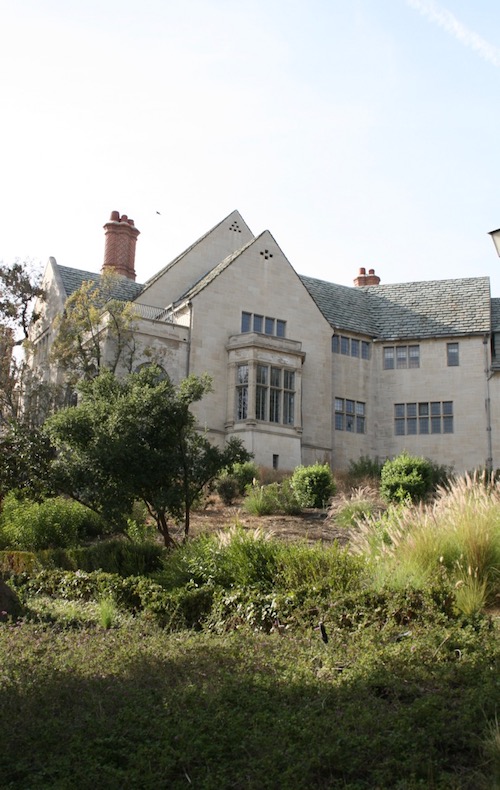
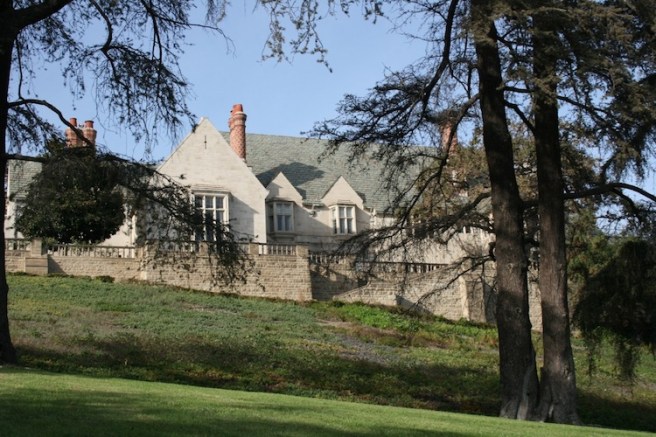
Southern California architect Gordon B. Kaufmann designed the 46,054 square foot 55 room home in the English Tudor style. It took 18 months to build the mansion, outbuildings and install the landscape at a completion cost in 1928 of $3,166,578. The house is built of steel reinforced concrete faced with Indiana limestone and has a Welsh slate roof. The grounds included a tennis court, kennels, garages and stables, a fire station, swimming pool and greenhouse.

Ned Doheny was tragically shot and killed within a year of the family moving into their new home. Lucy Doheny, her five children, and eventually her second husband remained at Greystone until 1955 when she sold the mansion and 18 acres of land to Chicago industrialist Henry Crown. Mr. Crown never occupied the home instead starting a long tradition of using the property as a movie location–over 69 films have been made there to date. The City of Beverly Hills purchased the property in 1965 and the grounds were dedicated as a city park in 1971. The American Film Institute was based at Greystone from 1969-1972. Greystone was listed on the National Register of Historic Places in 1976.

The grounds of Greystone are open daily with plentiful free parking (I am pretty sure this is the only place in metro LA that has plentiful free parking) and the mansion is the site of many cultural events and activities.

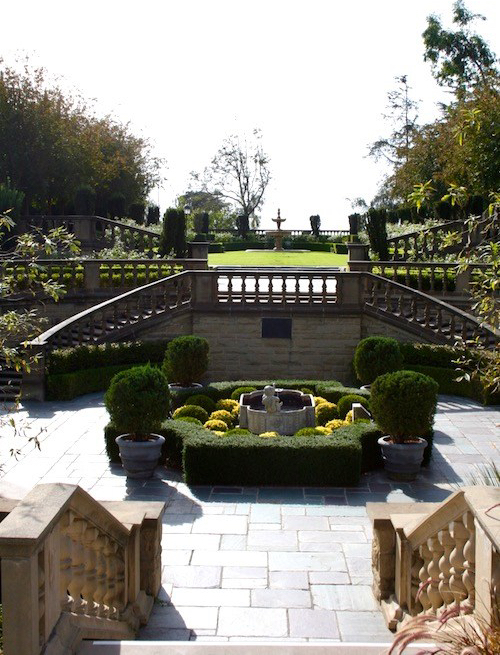
Greystone 1

Looking down into the Forecourt of the Formal Garden.

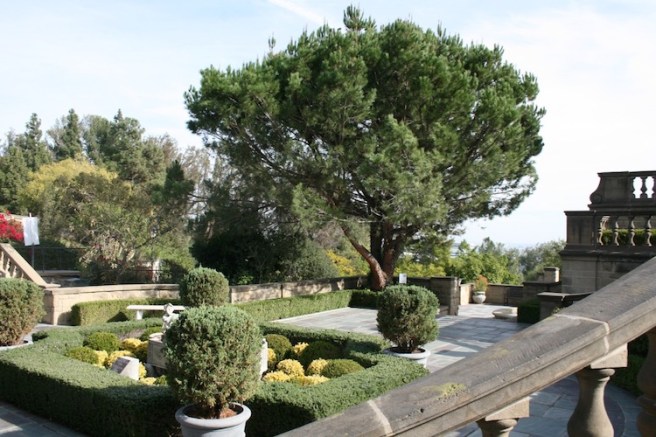
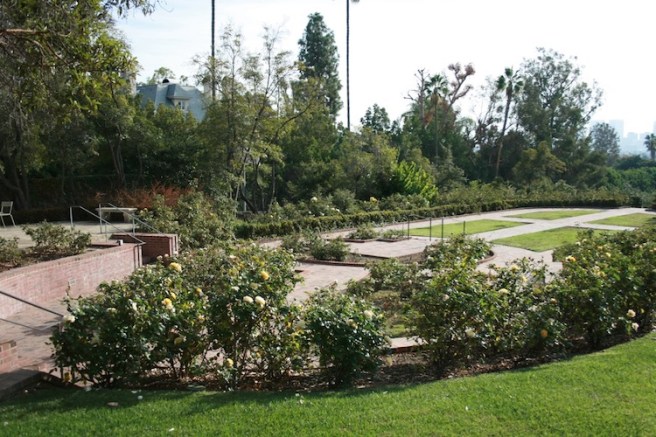
Landscape architect Paul Thiene and lead designer Emile Kuehl created a series of terraced gardens and lawns that reflected a mixture of styles, most notable are the Italian Renaissance inspired gardens above the house. Parking is at the highest point on the hill and so you wind downhill through these gardens to approach the mansion.

Greystone 2

You go down stone stairs into the Forecourt and then back up another set to the Formal Garden.

Greystone 3

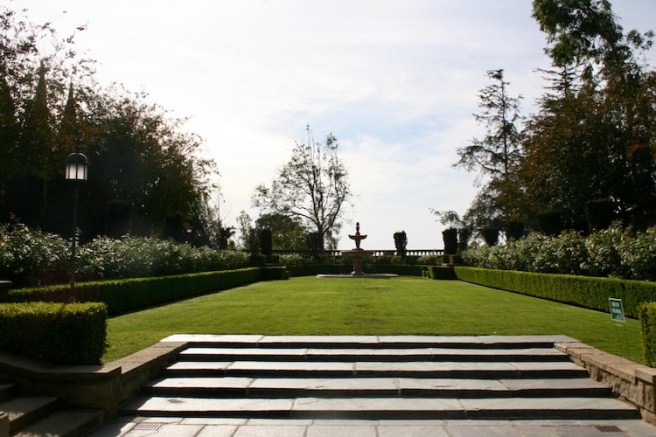
On a clear day you can probably see the ocean from this classic garden. The plant materials are as you would suppose them to be in a garden of this style: clipped boxwood, ‘Iceberg’ roses, columnar yews and mature single trunked crape myrtles.

Greystone 4

Greystone 5

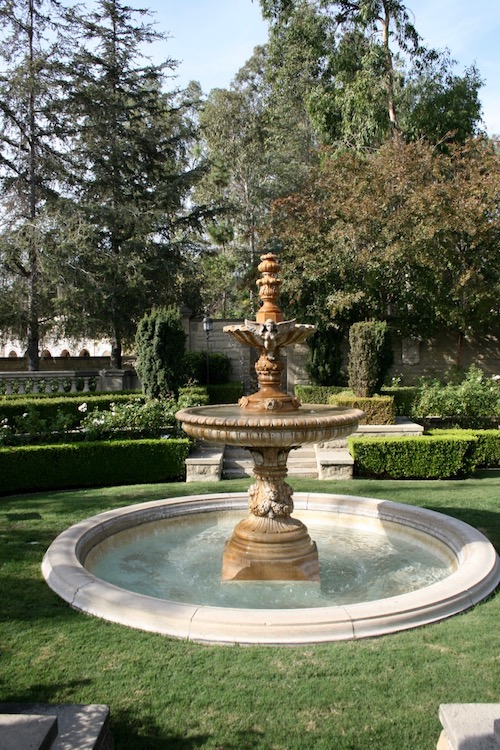
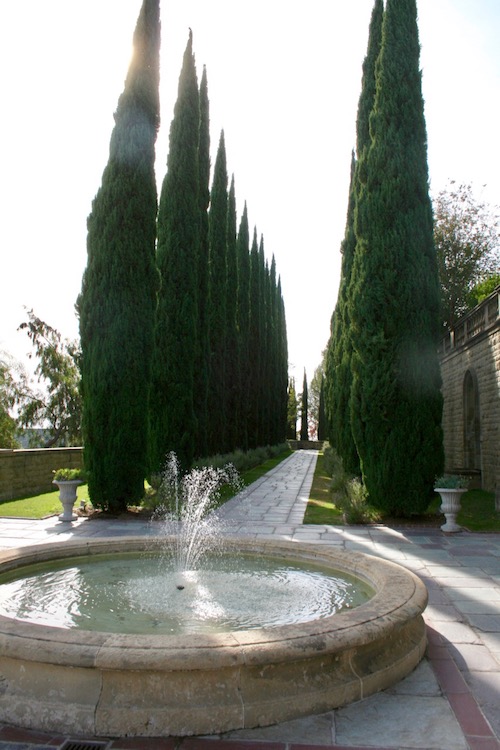
Classic fountain at the furthest sight line

Greystone 6

From the Forecourt another stairway leads me to another sparkling fountain and the Cypress Walk.

Greystone 7

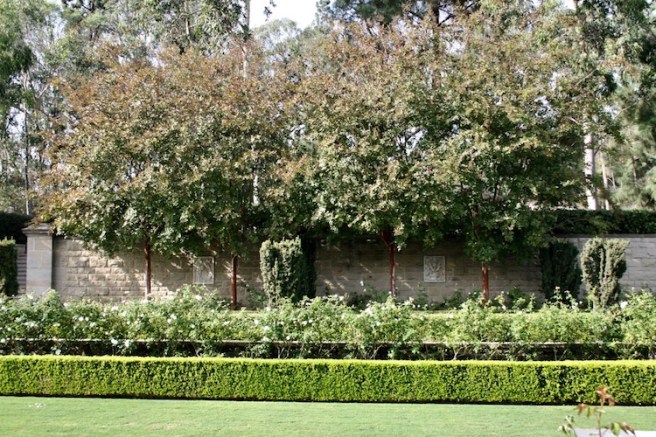
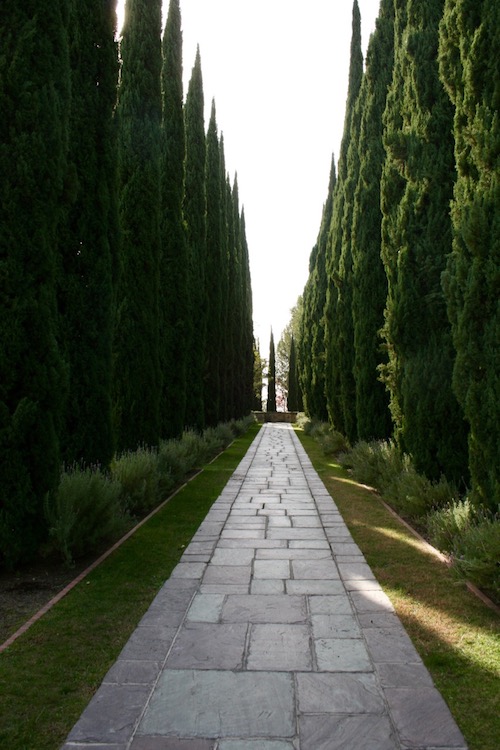
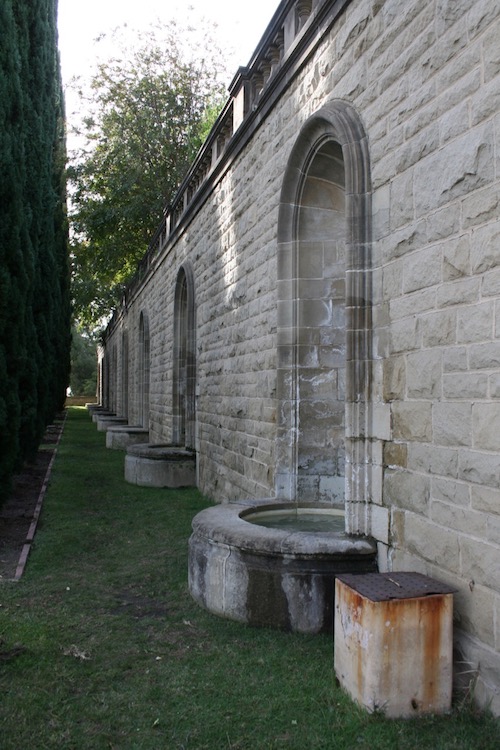
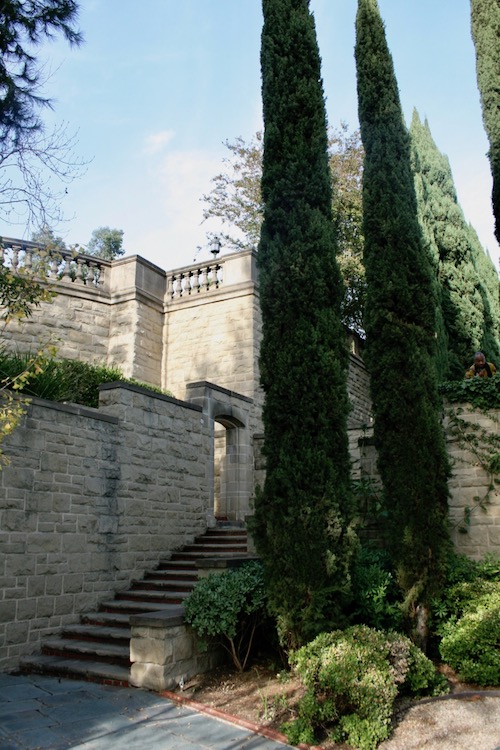
I love the simplicity of the soaring cypress allee complimented only by the stone walk, lawn and French lavender snuggled in their bases. The massive retaining wall which supports the Formal Garden above is not left without ornamentation–each of these framed alcoves houses a small bubbling pool.

Greystone 10

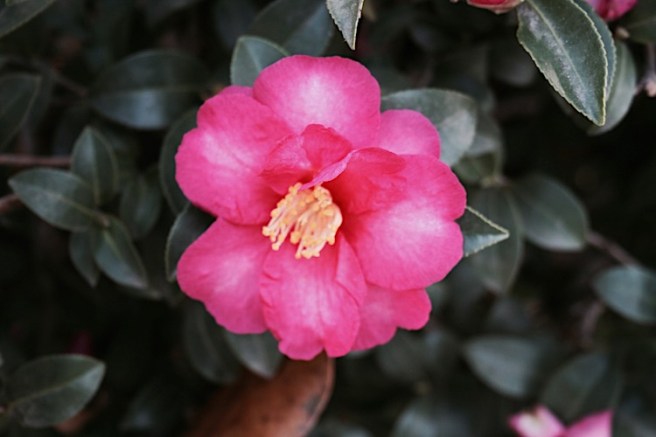
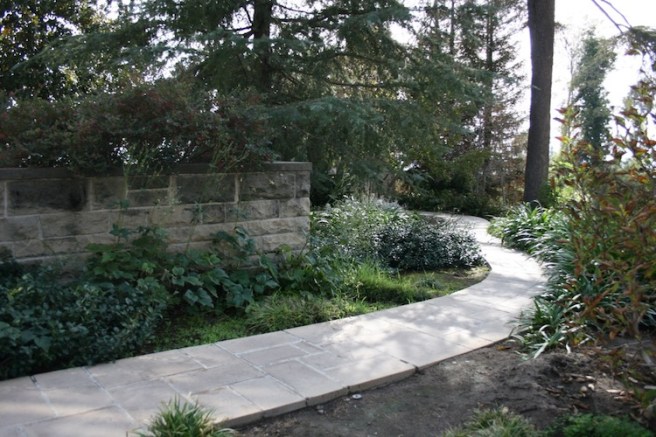
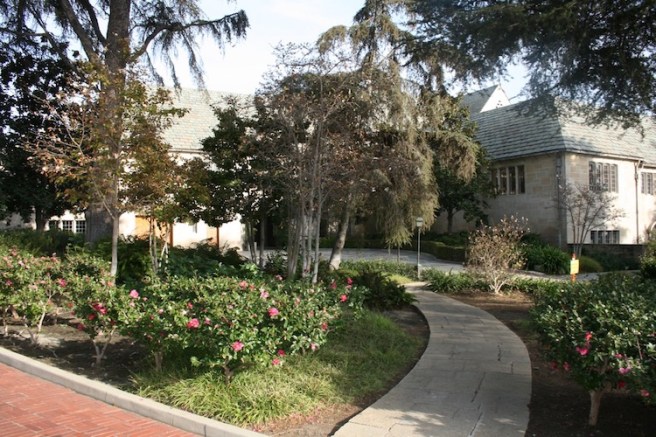
Two more sets of stone steps down and walk along the back of the Inner Courtyard Wall brings me to the West Courtyard . This curved swathe of Camillia sasanqua is at least 100 feet long and reinforces the philosophy of using great quantities of a restrained variety of plants so that the mass has reasonable proportion to the adjacent structure. These blooms are shaded by mature Southern magnolias.

Greystone 11

Greystone 12

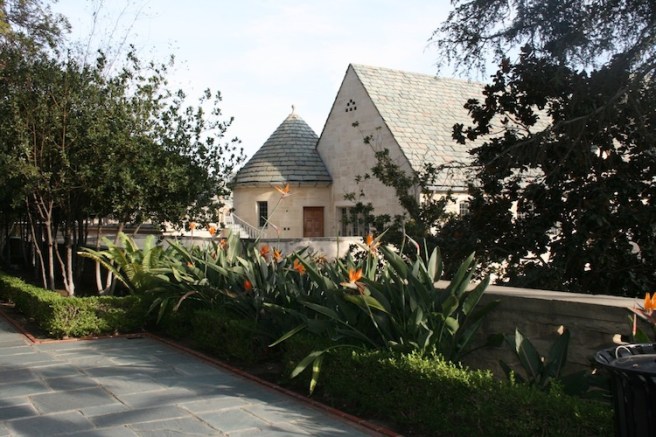
This stone area would have served as the car park for the mansion. Guests could be dropped off right at the archway which shelters the home’s main entry. It was not atypical for home built in this era to have the ‘front door’ in the back–thus preserving the views from the front of the home. The Inner Courtyard (first photo) lies on the other side of the entrance archway.

Greystone 14

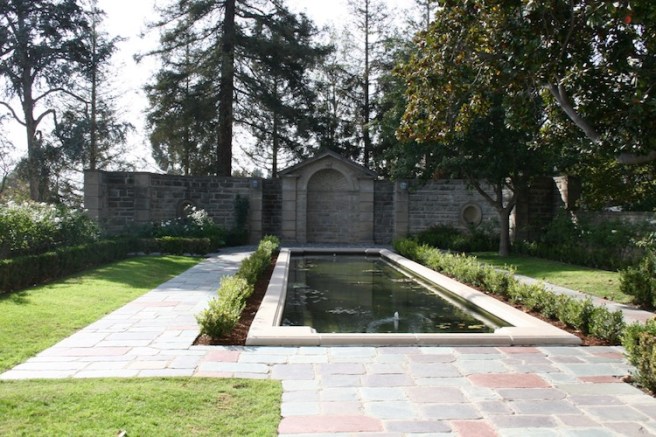
This stone path leads me from the West Courtyard entrance to the Reflection Pond. More clipped boxwood and white roses in formally geometric beds.

Greystone 18

Greystone 19

This koi filled pond is visible from Greystone’s Mansion Terrace which spans the entire width of the back of the home.

Greystone 20

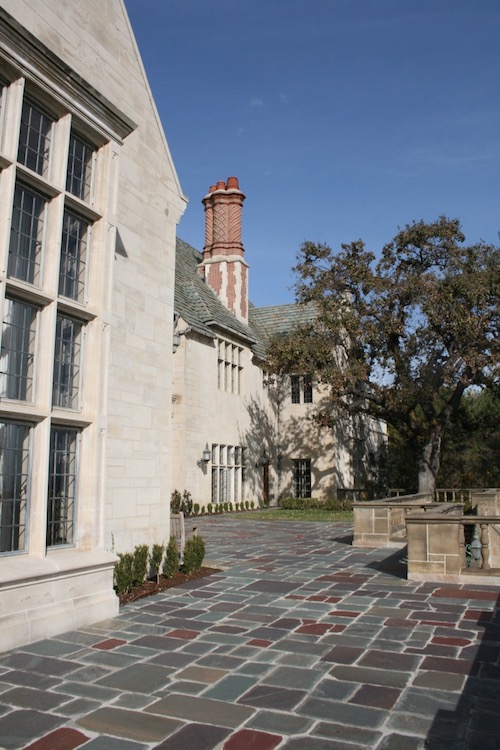
The walkways and this terrace are paved with colorful stone (slate?) which is complimentary to the home’s facade and the slate roof.

Greystone 21

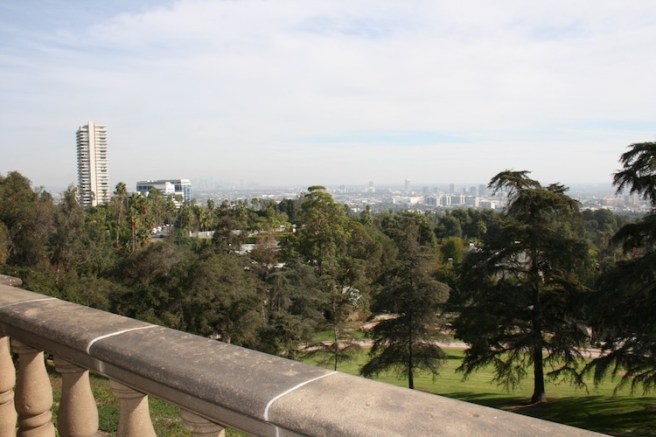
It is hard to believe that this property is actually in the city until you catch the stunning view from the balustrade of the Mansion Terrace.

Greystone 22

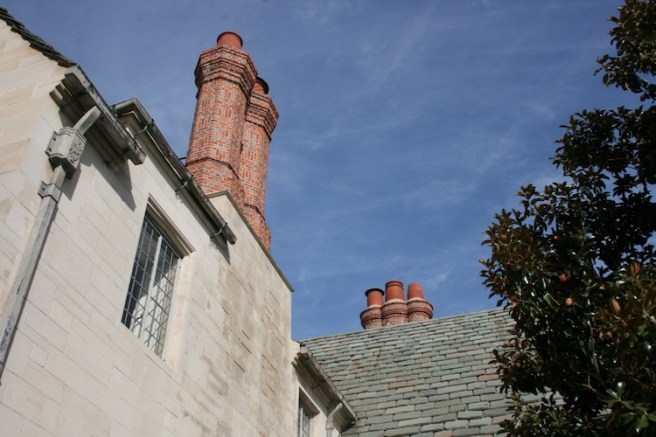
Copper gutters, brick chimney pots, leaded glass windows and, of course, that great Welsh slate roof.

Greystone 27

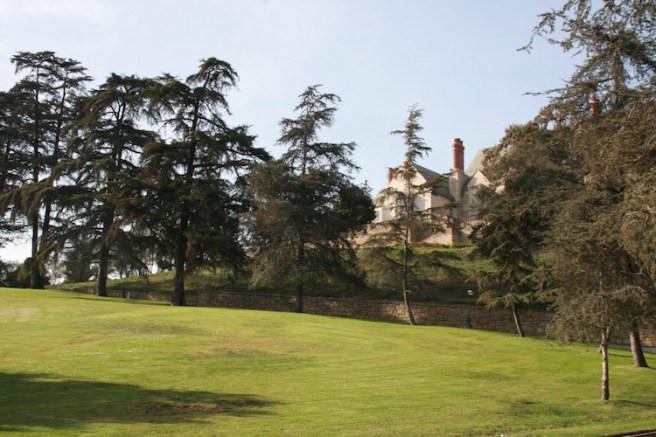
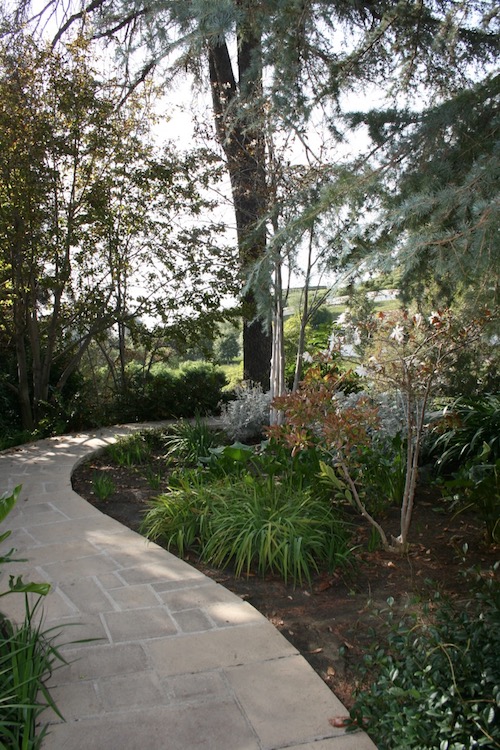
A long curving path with multiple sets of steps on the east side of Greystone leads me downhill in front of the mansion in an effort to get the ‘curb appeal’ photo. This planted slope appears to have been updated with broad groups of grasses, shrubs and ground covers which have more drought tolerance than the uphill formal areas.

There are some small areas of succulents–this is one of very few plants I saw that probably would not have been part of the original plans–I am sure that just like everywhere else in water starved California attempts at xeric modifications are being made in areas that will not take away from the overall garden atmosphere.

Greystone 28

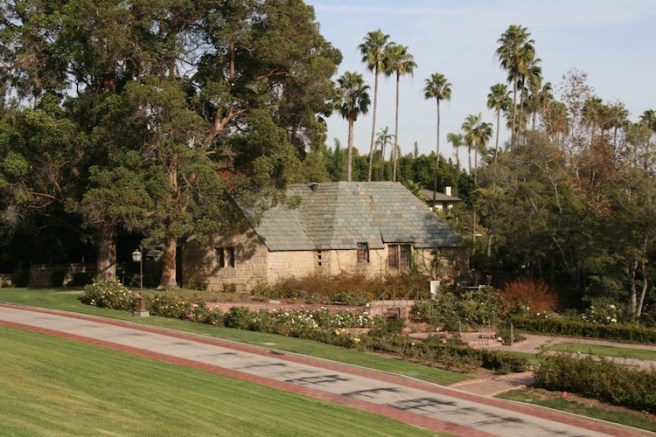
At the bottom of the hillside property the original Gatehouse now serves as Greystone’s main office.

Greystone 29

Tucked up against the Gatehouse is the small but formal Rose Garden.

Greystone 31

I am not sure what the cultivar name for this rose is but it is powerfully fragrant even late in the season.

Greystone 32

This modern day brick lined roadway leads to the original Stables, Garages and Greenhouse.

Greystone 30

To give you a sense of the scale I am standing on that paved road looking across the lawns and planted slope uphill to the imposing home.

Greystone 33

A number of paths through the broad lawn allow you to descend the hillside toward the west side of the house. This would be similar to the view seen by guests as the approach Greystone on the driveway that will take them to the West Courtyard. Can you imagine?

Greystone 13


Greystone 16

More modern day pathways lead visitors back to the home’s elevation. This pretty little Magnolia stellata was unexpectedly in bloom!

Greystone 17

Greystone 35

Sort of like the back stairs in a home, several sets of stone stairs on the west end will lead me back up to the far end of the Formal Garden. Interestingly, I saw none of these openings when I was IN the Formal Garden.

Greystone 36

View from the first landing looking back at the West Courtyard

Greystone 38

Gorgeous hardscape

Greystone 37

Uphill one more terrace level–there is a bridge at this level connecting the garden to the home via a second story walled courtyard.

Greystone 39

Back stairway landing hidden at the west end of the Cypress Walk

Greystone 40

Arriving the back way to the elevation of the Formal Garden I find the site of the original Pool House and Pool. The bricked over pool is popular for wedding receptions and community events. Without my Greystone brochure map I would have missed this entirely. It is directly adjacent to the fountain end of the Formal Garden but totally obscured from view by the trees and high courtyard wall.

I have come full circle–from top to bottom to top again–and I am sure I have missed lots of landscape detail along the way. Greystone is a fairytale mansion surrounded by formal and informal gardens styled perfectly to complement its era and architecture–a fun afternoon for gardeners and historic home buffs alike.

Greystone 41

Yes–there really is a Beverly Hills Park Ranger–a polite young man with a spiffy uniform and a very nice ride!


Blue Ribbon Garden…

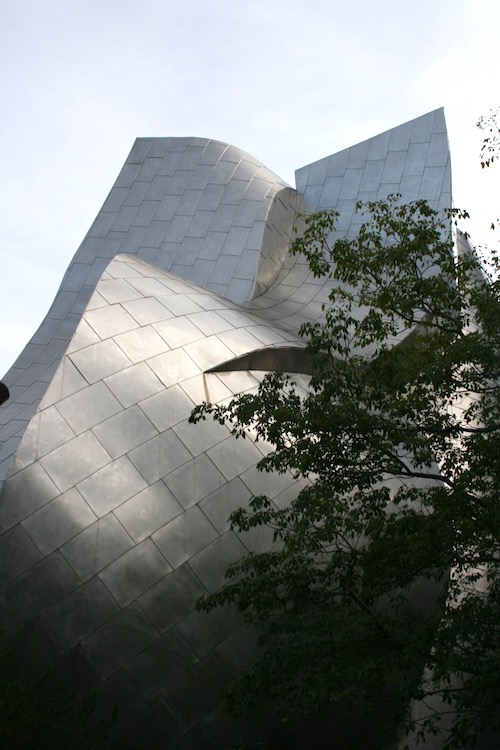
The Walt Disney Concert Hall in Los Angeles is a gleaming silver space age structure which opened in October 2003. Designed by celebrated architect Frank Gehry, it is home to the Los Angeles Philharmonic and the Los Angeles Master Chorale. The photo below is the facade as viewed from Grand Ave and 2nd Street. The building occupies the entire block and each side features a variety of flat and undulating metal panels. At $4.50 per 15 minutes of parking in the structure across the street you are just not getting views of all sides of the building!

Blue Ribbon 18

A short walk up a wide staircase easily visible from the corner of Grand and 2nd will take you to one of downtown Los Angeles’s secret garden gems–The Blue Ribbon Garden. This rooftop garden wraps the modern architecture of the Hall on three sides. In spite of its almost 1 acre size the garden is intimate in nature, an amazing design feat given that at the core of the garden the building’s facade rises several more stories and that there are also many opportunities from garden’s perimeter for expansive views of the surrounding city.

The Blue Ribbon Garden is a gift from individual members of The Blue Ribbon, an organization of women devoted to the support of the music center and its resident companies. The garden provides a gracious outdoor venue for receptions and other events; I imagine it would be beautiful at night when lit for a gathering of music lovers.

Blue Ribbon 2

This sculptural Erythrina coralloides, native to Mexico and commonly called naked coral tree, is one of several in the garden and greets you at the top of the stairs. This species is the first of many tropical trees and shrubs in the landscape. The naked coral bears showy red flowers in the spring and is deciduous, as you can see by its just turning leaves. This species is said to be the most cold hardy of the coral trees. Just beyond, a labyrinth awaits a busy Angeleno in need of a calm respite from the hustle and bustle of downtown. I fully intended to get a closer look at this but when I circled back at the end of my wanderings an actual line had formed with soon-to-be-newlyweds and their engagement photographers waiting for their turn in the labyrinth’s center!

Blue Ribbon 3

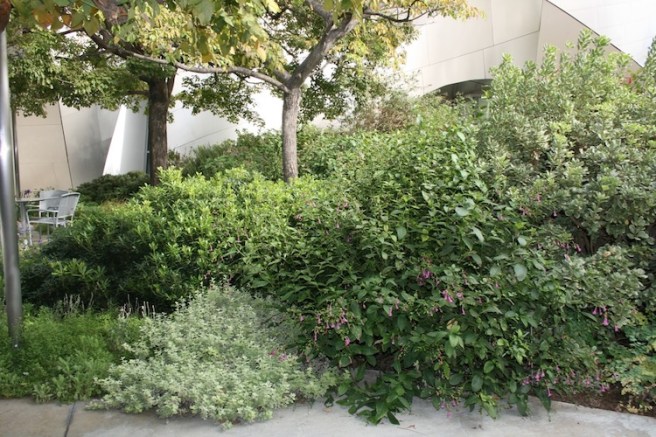
This garden’s plant palette is well-defined and restrained; the selected elements are repeated throughout. No willy-nilly plant collectors at work here. That restraint has produced a very calm but not at all boring viewing experience. As with many open urban gardens, this one seems to be a magnet for readers and lunchers in ones and twos–nothing rambunctious going on here.

Blue Ribbon 6

Also repeated throughout the landscape is the Bauhinia x blakeana, or Hong Kong orchid tree. I had to stand on my tip toes to catch a good look at its blooms.

Blue Ribbon 7

Another tropical, the Hong Kong orchid tree grows to about 20 feet tall and broad and is semi-deciduous and frost tender.

Blue Ribbon 1

The juxtaposition of the leafy green trees, even those just starting to don their fall colors, with the sleek metallic building facade somehow seems to be both startling and expected and the same time.

Blue Ribbon 10

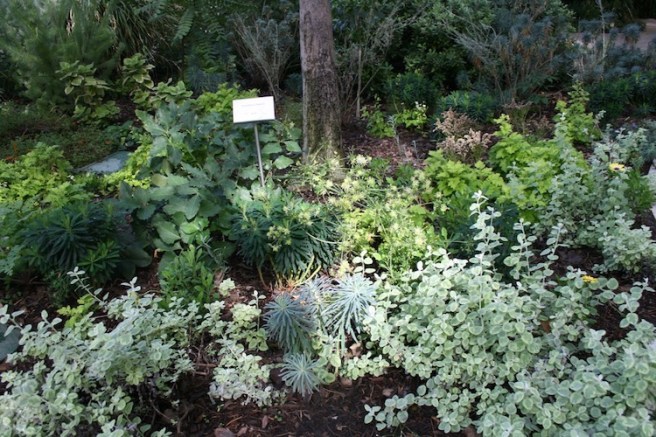
Lovely foliage color combination

Blue Ribbon 9

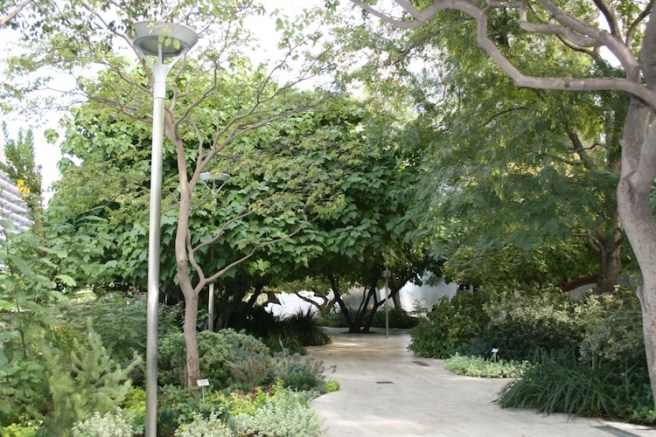
The bed plantings soften the winding edges of the wide paths. Pavers set into the paths pay tribute to those donors whose gifts built this city garden.

Blue Ribbon 4

Large mounds of Strobilanthus cusia, Chinese rain ball, offer late fall blooms. Also called Assam indigo, this herbaceous perennial is native to tropical climes and not frost hardy. There are over 350 species in this genus and one of the most commonly known to American gardeners is Strobilanthus dyeranus, Persian shield, grown for its green, silver and purple variegated foliage with pale violet flowers. The Chinese rain ball and all its cousins are surely hummingbird havens!

Blue Ribbon 14

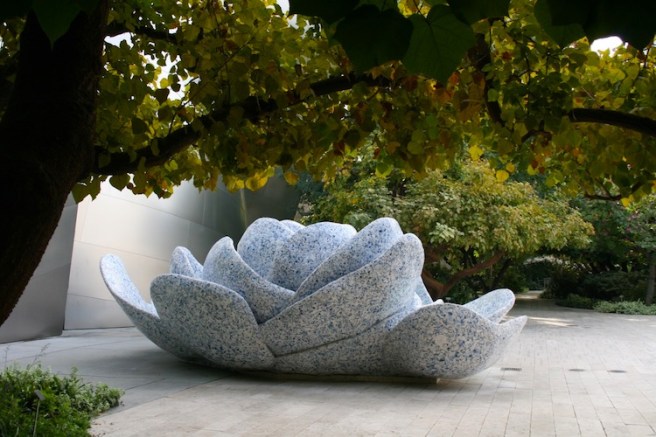
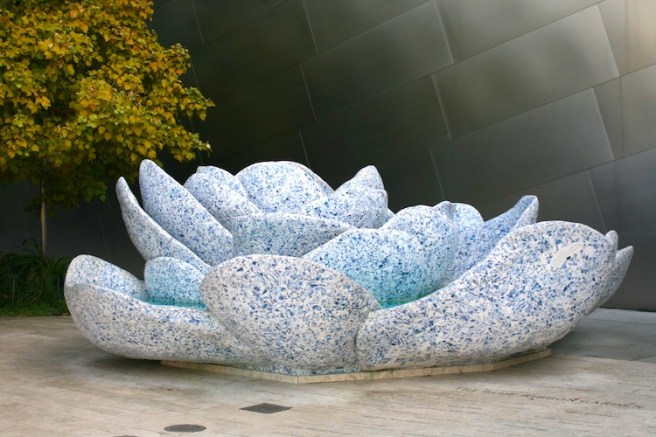
Definitely a focal point in the garden, the architect designed this fountain to pay tribute to the late Lillian Disney and her love of roses and Royal Delft porcelain vases.

Blue Ribbon 12

The large rose is covered in a mosaic of thousands of pieces of broken Delft porcelain and tiles.

Blue Ribbon 11

You can just make out some of the donor tribute pavers surrounding the rose. More silvery wall panels rising to the sky provide a backdrop for the fountain. I am not sure if the water action on this fountain is intentionally subtle or if it was just not working today.

Blue Ribbon 15

Wow–from total shade to total sun in just a few feet!

Blue Ribbon 16

Another interesting pair of semi-tropical trees–these are Dombeya wallichii, the pink ball tree from Madagascar. The velvety heart shaped leaves are dinner plate sized as seen below. In autumn and winter this smallish tree will be adorned with large clusters of fragrant pink flowers. The clusters will fade to pale pink, then brownish, and then dry on the tree. So sorry that these were not in bloom yet.

Blue Ribbon 17

Although much of the plant material grown here is not conducive to my garden’s slightly colder winters, the obvious takeaway for me is how effective using limited but bold and repeated plant selections throughout a space can be. The Blue Ribbon Garden earns a place on my list of off the beaten path small gardens to revisit at a different time of year, even if I have only an hour to spare. I would love to see the pink ball tree in bloom!


Garden goodie gazing in Cambria…

THE GARDEN SHED

On every road trip to the Central Coast I visit this Cambria East Village gem without fail. The Shops at the Garden Shed offer a whimsical small boutique shopping experience which includes several small shops clustered around the back courtyard of the aforementioned Garden Shed which itself has a lovely selection of garden art, home accessories, pots and plants. Even though I have never really been a rusty metal, upcycled, vintage kind of girl this place just makes me smile. It is perfectly in step with the woodsy, redwood and glass meets Victorian cottage vibe of this seaside village.

G Shed 1

G Shed 2

When you walk through the inside retail space of The Garden Shed you emerge into this courtyard, a riot of colorful plants and pots, displayed in creative and unusual vintage vignettes.

G Shed 3

This charming rusted gate on the shady side of the courtyard is the shipping and delivery entrance–what a loss for gardeners that it remains propped open all day, literally disappearing into the fencing.

G Shed 4

G Shed 7

G Shed 5

There are lots of succulents and some seasonal color to be found. Many plants are sourced locally from wholesale growers.

The Junk Girls make all kinds of interesting and unique items from recycled materials and parts. This vintage truck/planter leaves no doubt as to their skill set and the rusty bicycles pedal across their roof, watched by another Scarecrow Festival entry. I am SO without  succulent knowledge and can’t identify this monster for you but it looked truly alive.

G Shed 11

g-shed-9.jpg

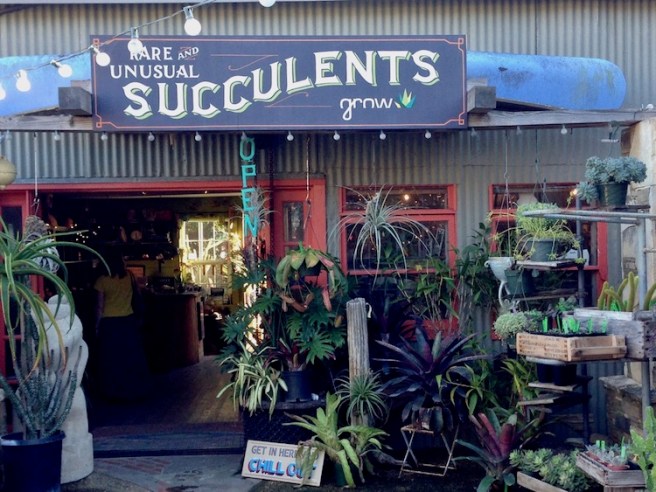
The back of the courtyard is occupied by Grow, a specialty nursery focusing on rare succulents. They also have an inside area with pots and lots of garden themed treasures.

G Shed 8

G Shed 6

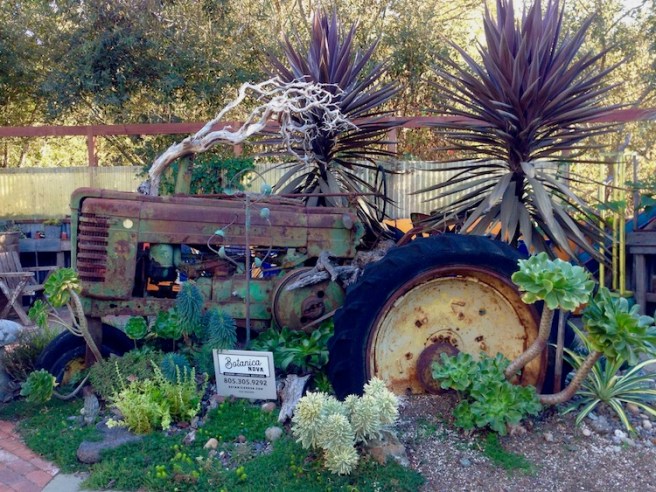
This old tractor, acting as both art and landscape,  is at the very back of the courtyard behind Grow.

G Shed 10

G shed 12

This architectural specimen may be run of the mill amongst gardeners who are knowledgeable about the wide variety of succulents but it was pretty spectacular to me!

CAMBRIA NURSERY & FLORIST

This was my first opportunity to check out this full service nursery and florist perched  high on a hill above the village. Although their emphasis is on coast friendly, drought tolerant plants with proven track records in local climate conditions there is a little bit of everything to be found on the 4 acres nursery grounds–vegetables, perennials, succulents, shrubs and trees. A number of quaint outbuildings feature seasonal home decor. Cambria Nursery also does an extensive Christmas light festival which was in the preliminary set up stages on my visit.

Cambria Nursery 1

Who wouldn’t be charmed by entering through this classic red barn?

Cambria Nursery 2

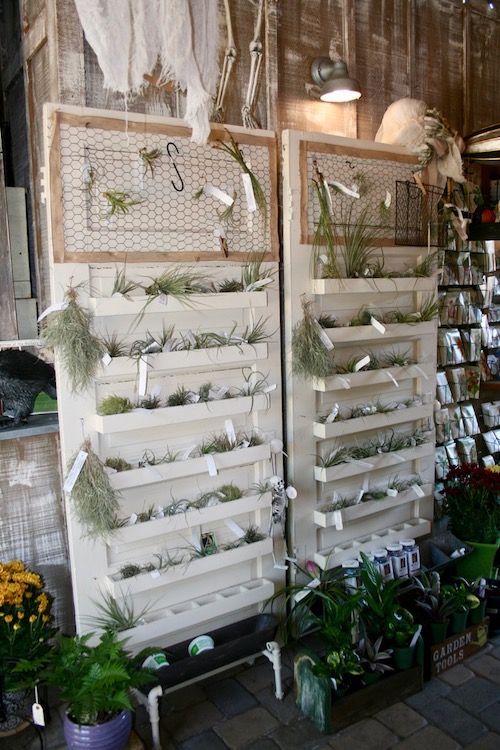
This fun display rack houses a bevy of Tillandsia, the so-called airplants. Most species in this genus are either epiphytes (growing without soil while attached to other plants) or aerophytes (having no roots and typically native to areas with shifting desert soil).

Cambria Nursery 3

Decorated for fall, the grounds are easily wandered on paver patios and decomposed granite paths–the latter being a little challenging on which to maneuver your wagon loaded with garden additions.

Cambria Nursery 9Great succulent displays are ubiquitous in the mild winter parts of California but few are as well organized and labeled as this one.

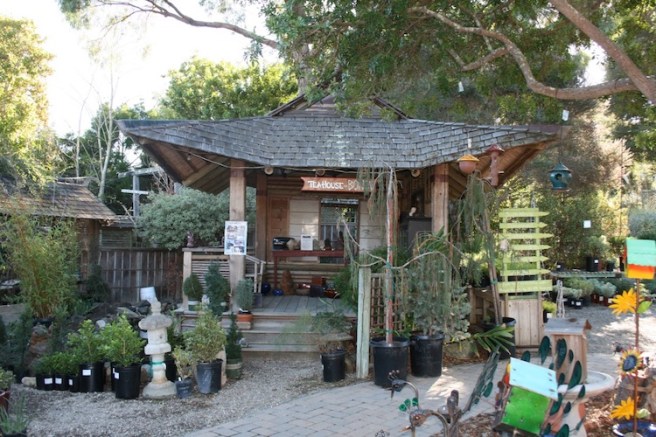
I especially liked the Japanese Tea House and its small koi pond. The Tea House provides a focal point around which are grouped all those plants we typically think of as having an Asian garden aesthetic.

Cambria Nursery 4

Cambria Nursery 5

Cambria Nursery 8

Colorful signage helps shoppers negotiate the meandering paths to the many demonstration beds and the nursery stock represented in them.
Cambria Nursery 7

A wonderful and seemingly life-sized whale topiary is settled into the hillside next to the Kids Garden. The topiary material is Pittosporum tenuifolium ‘Marjorie Channon’.

Cambria Nursery 6

The condition of the plants available varied widely. The six paks and 4″ pots were fresh as was some of the wide selection of woody shrubs. Many of the woodies looked a little long in their cans but frankly did not look much different than drought tolerants and natives in late fall even if they are in the ground. The staff was very attentive and knowledgeable. I did snap up a great looking Sollya heterophylla (Australian bluebell creeper) that is bound for my in progress side yard renovation. I am putting this nursery destination back on my list to visit in early spring–I’ll do some research on selections whose names I jotted down and be ready to fill up my wagon.


The Garden Gallery in Morro Bay…

California’s Central Coast towns are home to a nice mix of kitchy tourist shops and upscale local art and craft galleries. Mixed in you will find a wonderful variety of dining experiences along with all the charm of any town from whose streets water is visible. Morro Bay is no exception–and it is home to a lovely garden shop that has as much appeal for those who do not dig in the dirt as those of us who do.

The Garden Gallery is located on the Embarcadero just across the street from the water in Morro Bay. Even though the wood and glass indoor/outdoor shopping experience is by no means a full service garden center it is a must see destination for me every time I am anywhere close to this stretch of Highway 1. The highly creative staff combines plant materials in interesting ways and containers and I admire the care that is put into the ever changing displays.

Gallery 1

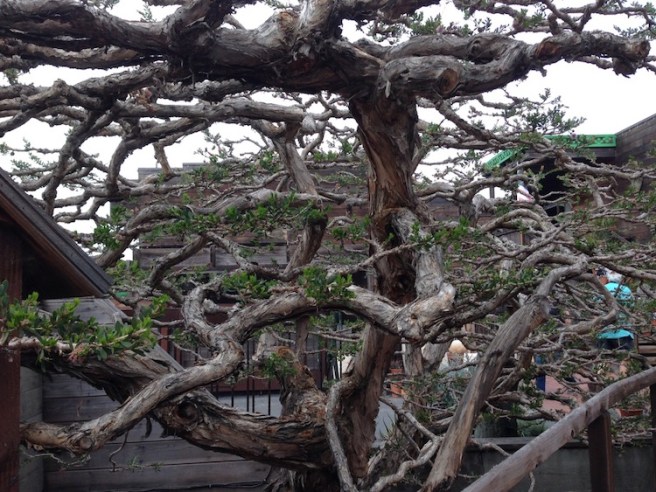
The magic starts immediately at the unique front gate. This stunning living screen is a 44 year old Melaleuca nesophila, commonly called pink melaleuca. This coast friendly tree or large shrub is impervious to beach winds and salt spray and is drought tolerant to boot.  This one is an ongoing bonsai project and, having just been clipped in the last few days, has very little visible green–making the gnarled trunk structure even more prominent.

Gallery 20

It is a very overcast morning and the grays of the buildings’ wood cladding, the sky and the tree all seem to meld together.

Gallery 18

Take a closer look at the patinated detail on the gate…I want this gate hanging man so badly!

Gallery 19

The shop is compact but spread over several buildings and several levels around an open courtyard–lots of steps to take care with–and has a bench or two on the wooden landings for shoppers to take a breather or just plop down and take it all in. More than once I have found the bench next to the sculpture below occupied by someone reading the daily paper or a book. The fog has burned off enough to catch a peek of blue sky!

Gallery 15

This piece of art is called Leap Frog and can be yours for $8,500. I’ll take two.

The majority of plants are succulents and bromeliads. At every turn another vignette offers ideas for potting and displaying these very coast friendly specimens. The tree like green shrubs are mature Hollywood junipers.

Gallery 7

Gallery 3

Gallery 6

The Gallery offers many ideas making use of wall space to move the green up from the ground with wall mounted pots, boxes and metal baskets.

Gallery 4

Gallery 2

Check out these great hanging metal fish–available in several sizes and finishes.

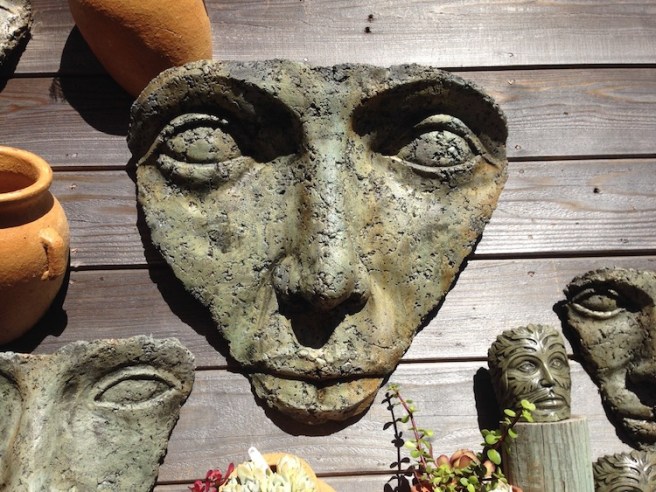
These great Mother Nature faces also caught my eye.

Gallery 8

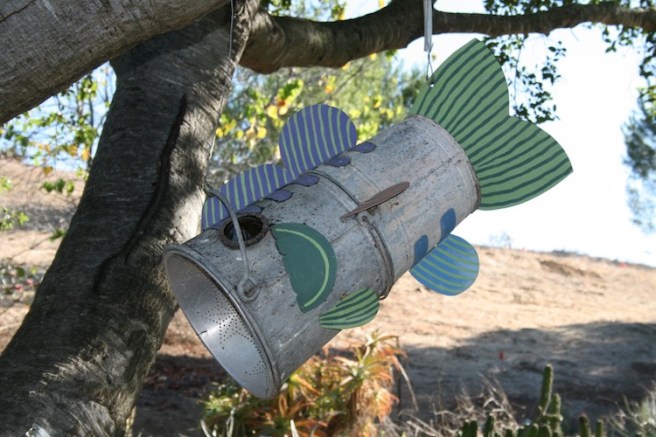
It was all I could do not to come home with this spectacular birdhouse!

Gallery 25

The weather protected surrounding small sales areas have a eclectic mix of high quality decorative home items. The overall vibe of the goods the Garden Gallery features is that of elevated natural materials–definitely a Sunset magazine aesthetic. The seasonal tablescapes and displays are always beautifully done.

Gallery 16

One of several shapes of turned wooden vases and lamp bases

Gallery 17

Shallow woven baskets as wall art

gallery-13.jpg

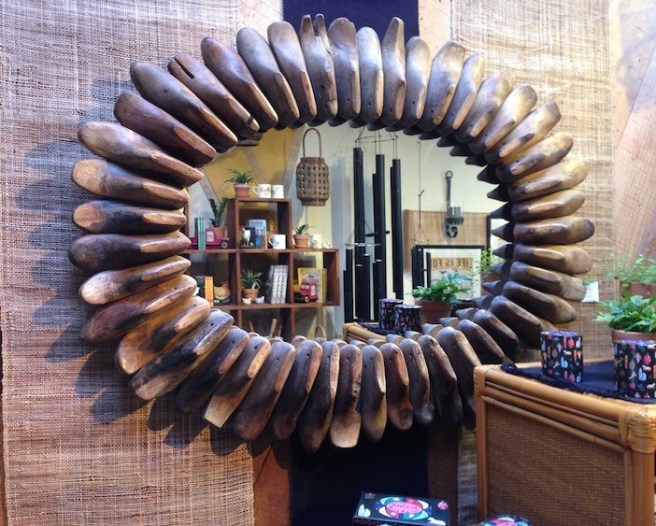
Great large mirror framed with wooden shoe molds

Gallery 26

Fall and Thanksgiving accents

Gallery 27

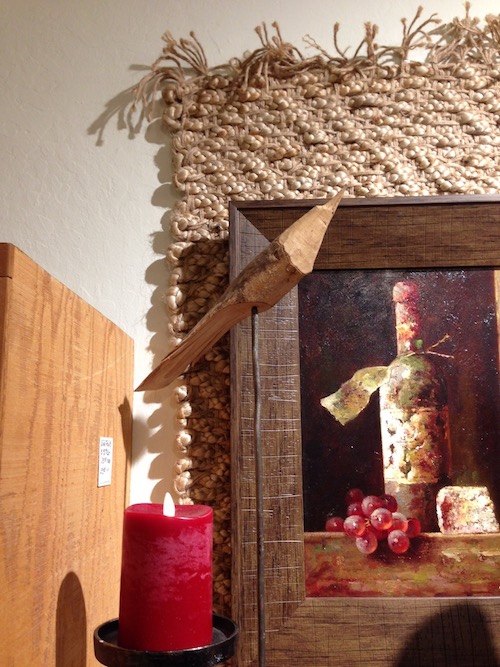
My quilting friendship group has decided we are good enough with our hands to carve these primitive birds. We are going home to find our husbands’ old boy scout knives and you may see us in your yards picking up nice fat sticks!

The Garden Gallery is an inspirational place to browse whether you are looking for a special plant, a unique display idea or nature inspired art. Don’t miss it! Still to come–The Garden Shed and Cambria Nursery & Florist in Cambria.


SLO down for this Central Coast botanical garden…

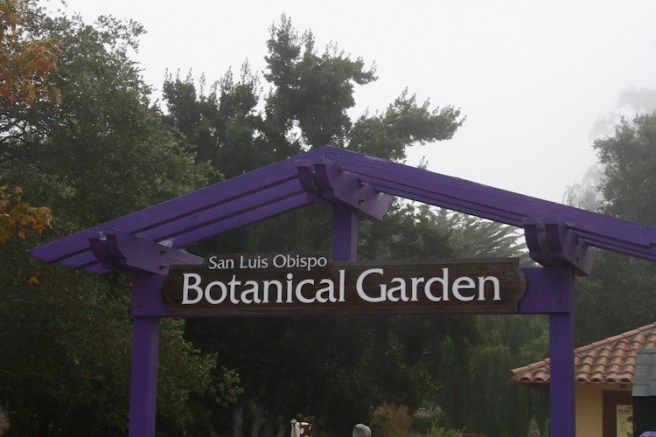
The coastal morning fog (which followed those several screaming hot days) had not yet lifted when I arrived at the San Luis Obispo Botanical Garden just as it opened. San Luis Obispo, lovingly nicknamed SLO, is home to Cal Poly. Although now consolidated with other disciplines of study, the former horticulture department has been responsible for many professionals in the ornamental horticulture and plant science world. Although it makes perfect sense that SLO would have a botanical garden I had heard nary a mention of it from any of my plant road tripping, nursery shopping, garden touring compatriots.

SLOBG 1

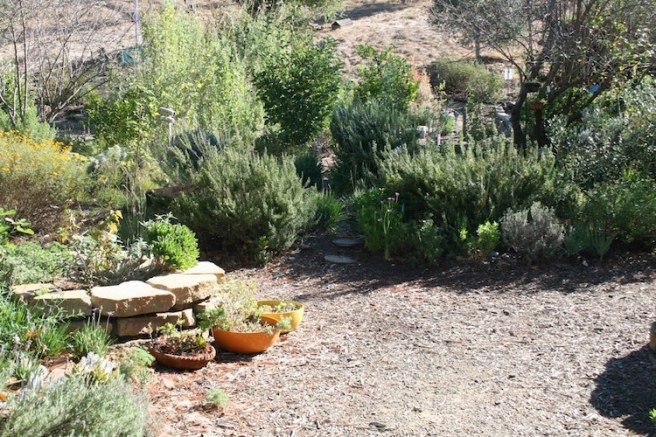
San Luis Obispo Botanical Garden is located on Highway 1 tucked into El Chorro Regional Park. It was established in 1989 and focuses on plants adapted to the dry summers of California and the world’s other four Mediterranean climate regions.

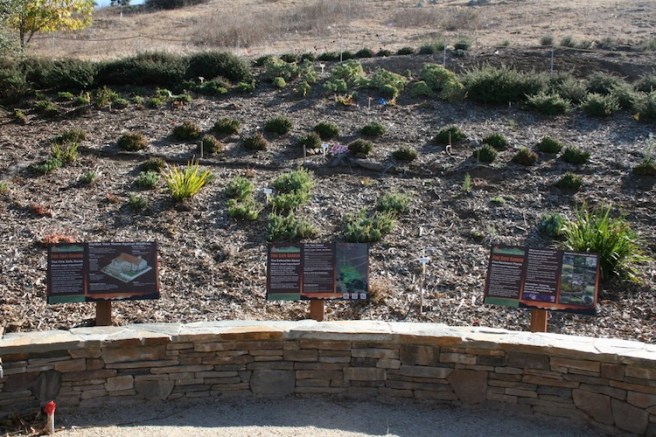
SLOBG 12

Gold tiles on this beautiful mosaic map near the entrance show the Mediterranean climates which were first studied scientifically around the Mediterranean Sea. These climate regions feature hot summers with no rain which stresses plants. Winters are mild with rain which supports growth and blooming. Adapted plants are able to minimize water loss and store water to survive through the summer. This type of plant material does not make a classically beautiful garden filled year round with showy color but does provide a great resource for gardeners faced with long dry summers and mild wet winters as a place to see successful plants in situ and at mature size. Sort of a bloom where you are planted philosophy–we all can’t have English cottage gardens or Pacific Northwest woodlands.

SLOBG 2

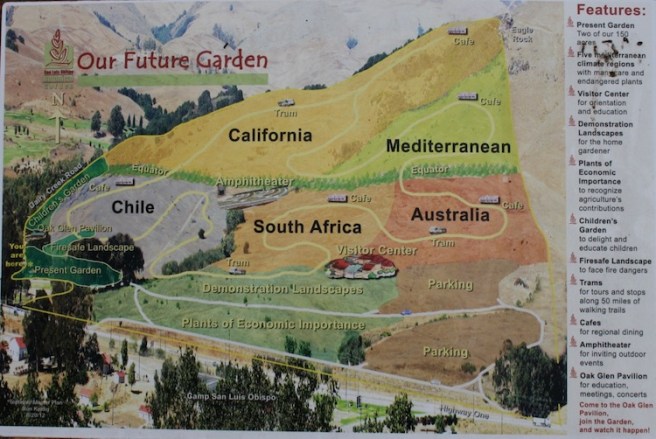
The present garden (far left middle in green) represents only 2 of the 150 acres laid out in the garden’s 1998 master plan. Development of these remaining acres awaits further funding. Check out http://www.slobg.org  for ways you can donate to help this ambitious project!

SLOBG 3

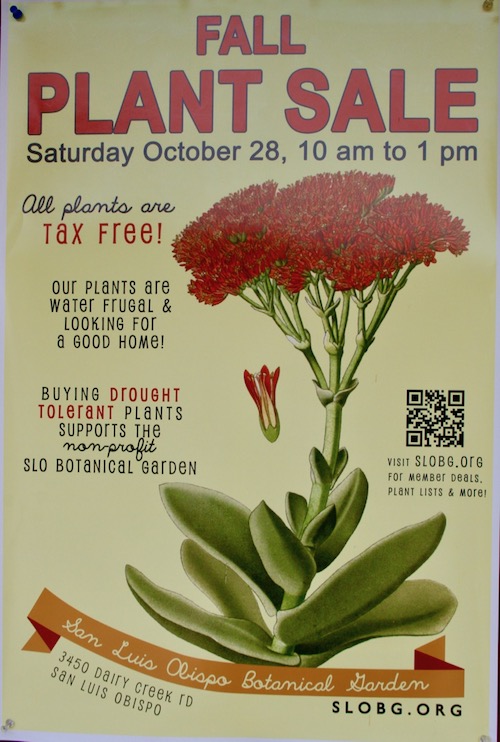
Lucky for me, my visit coincides with the annual Fall Plant Sale. Knowing that the early shopper gets the best selection I am headed there first, hoping to find a few new-to-me goodies to incorporate in my long side yard renovation. As it is a pretty much stand alone area with little view of the front yard proper I think it can take a few ‘one ofs’ without distracting from the visual rhythm of the existing landscape. Up the hill I go!

SLOBG 4

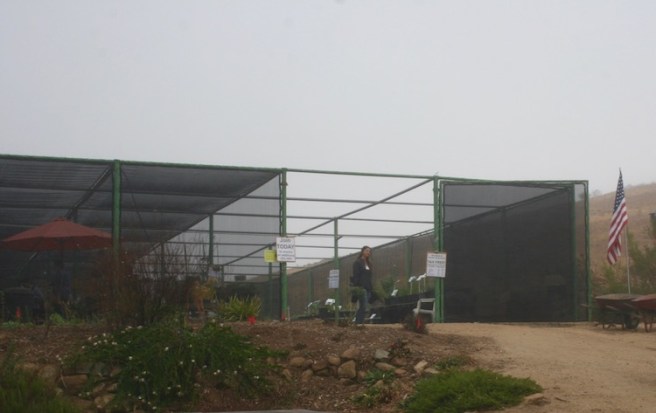
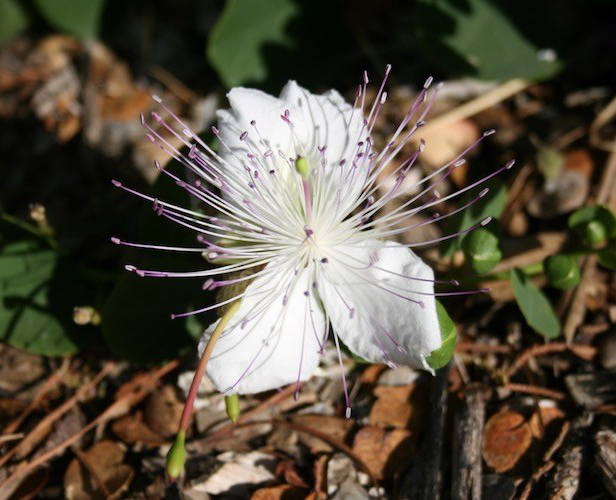
The screened houses are almost ethereal in the low hanging fog. Note the  barely visible shrub with the white blooms cascading down the slope–this is Capparis spinosa, the evergreen shrub whose flower buds are pickled and bottled as capers. I encountered the plant elsewhere in the garden and decided it was a little large and rangy for my needs but I did snap a photo of its gorgeous flower.

SLOBG 6

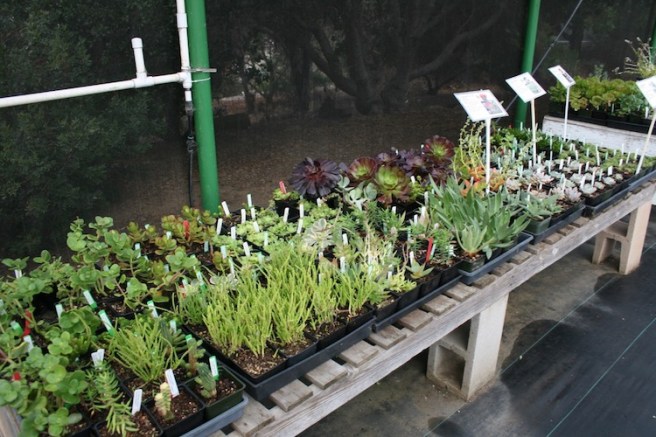
Unlike my valley, the Central Coast is able to many plant succulents directly into the ground without fear of frost–there were many varieties and container sizes available.

SLOBG 7

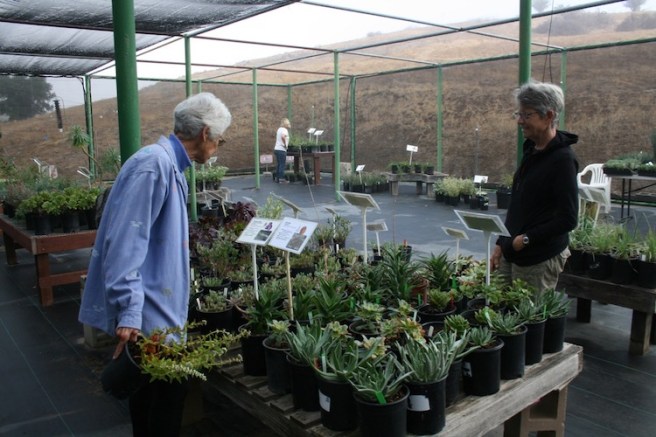
Happy shoppers!

SLOBG 5

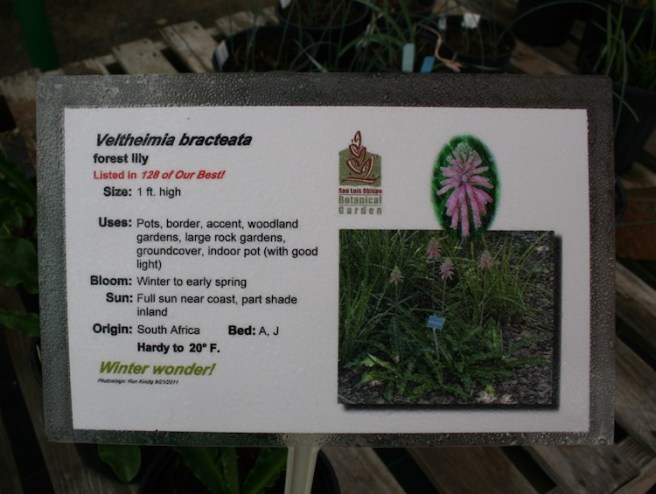
I was really impressed with the sale’s organization and excellent labels. The forest lily was one of my purchases and I doubt I would have looked twice (only foliage, no flower) had the photo of the plant in bloom not caught my eye. I am going to put this one in a pot for its first year and give it some winter protection while I settle on a spot in the ground with enough summer shade.

SLOBG 13

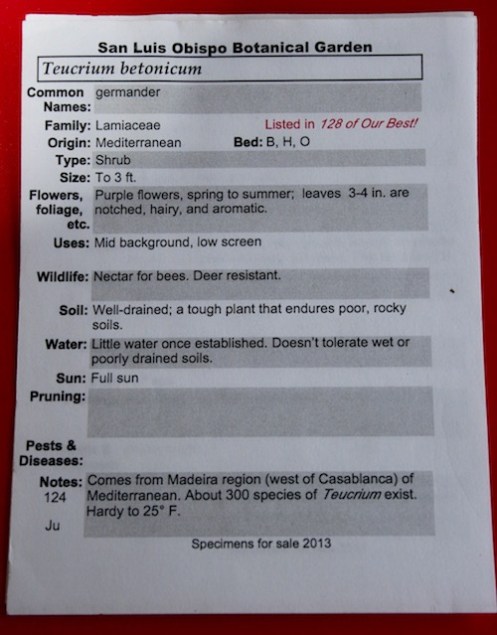
Knowledgeable volunteers to assist shoppers were abundant and I was given an information sheet like this one for each of my selections. For those with garden questions the SLO County Master Gardeners (not affiliated with the botanical garden) were on hand with lots of reference material to tease out the answers. Although this was a modest sale in terms of the number of plants, the individual plants were in excellent condition, the variety of plants was great and I even got a ride back to my car with the garden’s Education Director, Lindsey Morgan, plant booty tucked safely in the back of her golf cart!

With the precious cargo stowed away in my car I spent some time wandering the meandering hilly paths of the garden. The Self Guided Tour leaflet listed the not-to-miss specimens in each of the site’s numbered climate zones. Most zones had several beds and each bore a reference letter. Note that the above info sheet told me to look in the Mediterranean region (#4) at beds B, H, or O to see Teucrium betonicum–easy to find.

SLOBG 8

Many of the plant labels have attached QR (Quick Response) codes–the little jigsaw looking square scanner codes you see on everything these days–which allow you to access additional information about the plant using your smartphone camera. The red ones like above link you to the garden’s publication, 128 of Our Best!

SLOBG 9

SLOBG 11

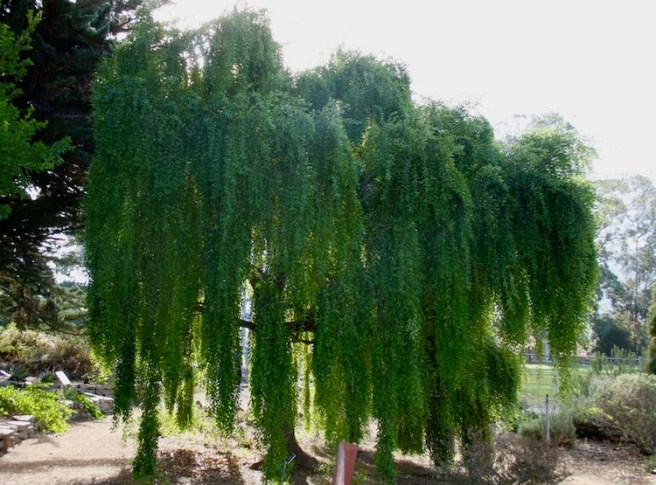
This bright green, weeping mayten tree (Maytenus boaria) is the star of the Chilean Region. Its lush and graceful branches make it hard to believe that is a drought tolerant evergreen from canyons in central Chile’s coastal ranges. If this one is at its mature size it would make a lovely addition to a midsize residential garden.

SLOBG 14

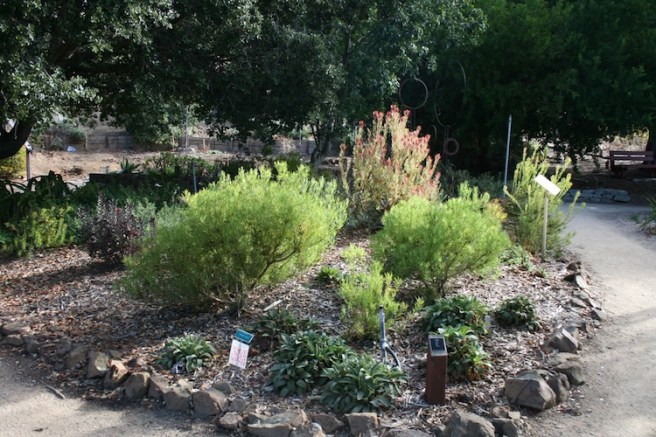
Many of the plants in the California Region have small or needle-like leaves with hard coatings to minimize water loss. Manzanitas (Arctostaphylus spp.) and California lilacs (Ceanothus spp.) are good examples of this water saving foliage strategy. In several of my April 2017 posts about the Theodore Payne Native Plant Tour there are photos of many different cultivars of both of these species. Both species are spring/summer bloomers and as such don’t look like much more than green shrubs here!

SLOBG 15

SLOBG 16

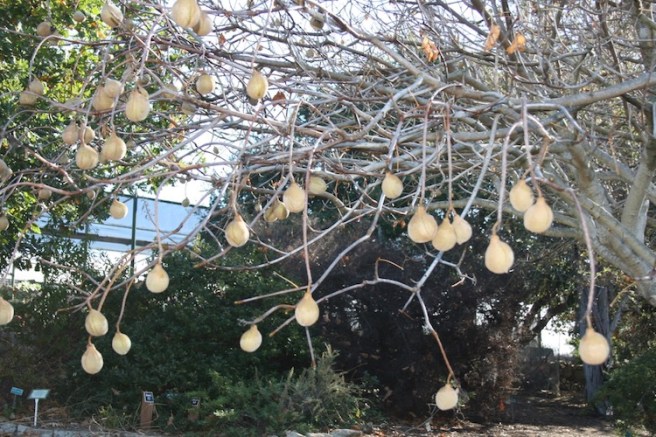
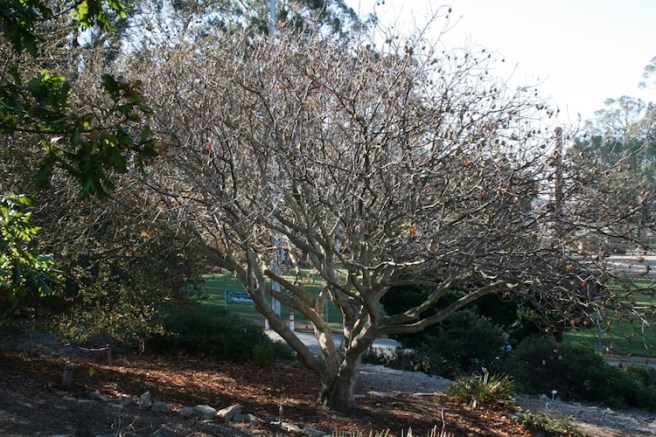
The California buckeye (Aesculus californica) is a summer deciduous tree which blooms in the spring and then drops its large leaves to reduce water loss. It is easily identified from a distance by its large, hard, fig shaped fruits. My tour leaflet taught me that the Chumash and Salinan peoples crushed and tossed these toxic fruits into ponds and streams to temporarily stun fish for easy harvest.

SLOBG 17

Can’t resist a great piece of garden art made from recycled/upcycled materials.

SLOBG 22

The Firesafe Demonstration Landscape includes plants with fire resistive properties and good educational materials about maintaining a fire defensible space around homes built near natural spaces. Dry summers = fire danger–we have all seen the recent examples of loss of life and property to wild fires.

SLOBG 20

SLOBG 21

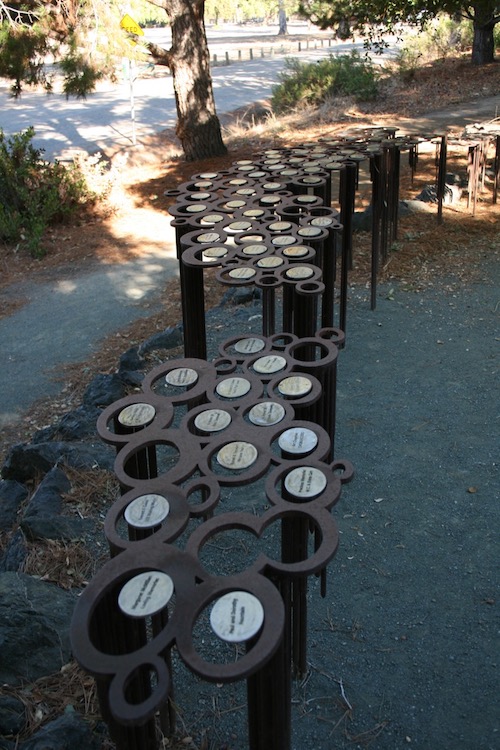
The Life Celebration Garden is a quiet, contemplative space furnished with benches in the shade of oaks. The Allen Root art piece entitled Celebration invites you to imagine as you view it a flowing stream with circles of ripples from pebbles tossed into it.

SLOBG 24

The Children’s Garden features drought tolerant plants, edibles, insect and bird houses and is the site for a variety of family friendly educational activities designed to spark interest in and appreciation of our natural world.

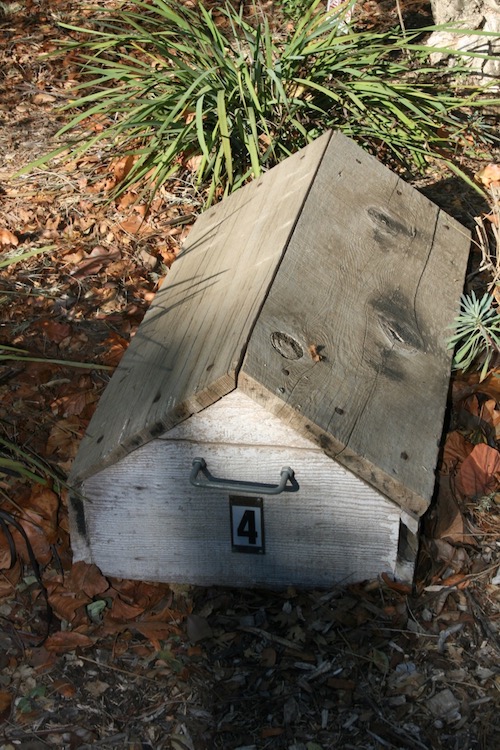
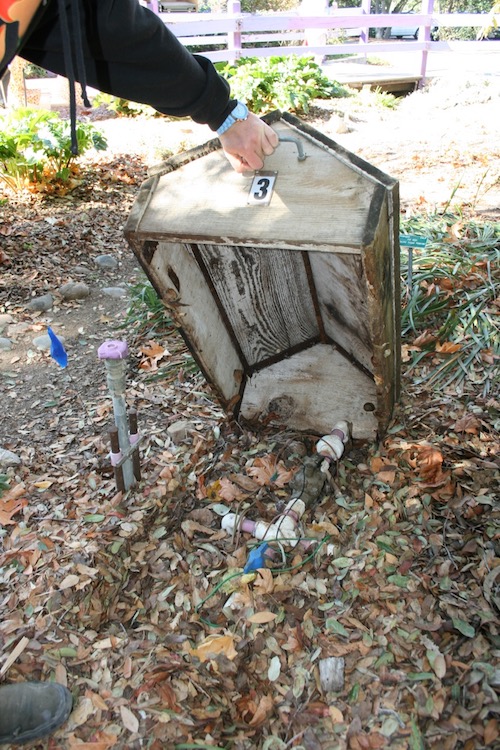
As I wandered the casual garden spaces I observed many of these little house and conjured up a scenario in which the SLO Botanical Garden was providing shelter for some quasi-endangered little creature. Meeting up with garden staffer Lindsey Morgan near the end of my tour I question her about the wildlife the houses were sheltering–turned out to be the native Sprinkerlus manifoldii–proving that I can be be sucked into believing just about anything.

SLOBG 25

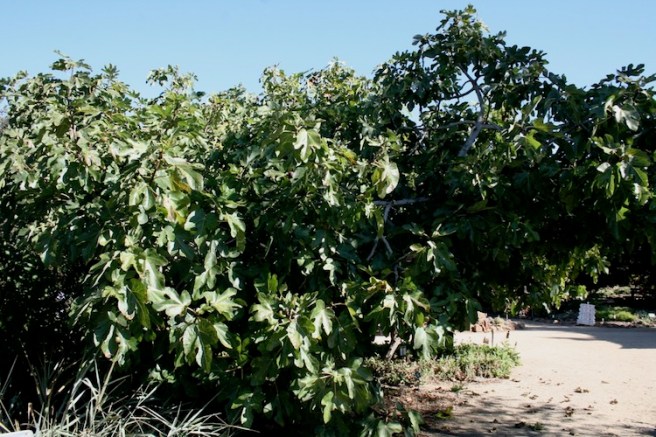
OK, so this Historic Fig Tree doesn’t really look different from any other fig tree but here is its story: A cutting of the ‘Mother Fig’ at the San Gabriel Mission was given to Father Jose Cavalier of the San Luis Obispo Mission in the late 1780s. It grew to be a large tree in the Mission’s orchard until its removal in 1974 during construction work. Many cuttings were made at that time and this one was given to the SLO Botanical Garden in 1997. It is Ficus carica (edible fig) and bears fruit annually.

SLOBG 26

So ends today’s brief tour of this nascent botanical garden. I love the fact that it is part of the larger regional park. There are people playing baseball in the field to one side of it and I can see tent campers on a not too distant rise. I expect that locals use the park for many family friendly activities and events and that makes the garden another place you can spend part of a larger day in the park–learning about plants and wildlife under the open skies rather than a classroom. I plan to return in the spring to see many of the garden’s shrubs in the full flush of a coastal spring. I hope you will come too!
SLOBG 28

This caper bud escaped harvest and the pickling brine to offer this gorgeous bloom!


As the crow flies…

My quilting group is fortunate to be able to cut and stitch for a week twice a year at an oceanfront beach cottage in Cayucos, CA. It is a time to sew, relax, eat out and revisit a number of must drop into Central Coast sites and shops. We are equal opportunity road trippers and include quilt stores, the apple farm, garden centers, the farmer’s market and anything that looks like fun. Late October coastal weather is generally cool and moist with foggy mornings and pleasant afternoons. Wonderful weather to open the windows for a cool breeze and walk leisurely on the sand from the cottage to downtown Cayucos. This year we enjoyed (??) record high temperatures for three days with highs hovering at 100 degrees–even more incentive to wander up and down the coast in search of businesses with air conditioning!

The next village up the coast is Cambria–renown as the site of one of only 3 native Monterey pine forests on the US mainland.  A special pottery store, a wonderful needlepoint/yarn store and a very fun store called Home Arts are always on the go to list. The Garden Shed is also worthy of a visit and I will dedicate another post to introducing you to this cluster of quirky garden and gift storefronts.

This year we found ourselves right in the middle of the Cambria Scarecrow Festival. Here are a few of the MANY scarecrows sponsored and constructed by both business and organizations.

Scarecrows 1

Scarecrows 4

This bevy of stick beauties clothed in knitted and crocheted outfits reminiscent of the 1960s were fabulous!

Scarecrows 5

A painterly offering in front of one of many art galleries

Scarecrows 6

The Queen of Hearts

Scarecrows 7

Guardian of the Garden

Scarecrows 8

Popeye, Olive Oil and Sweet Pea

Old Happy Herb at Ephraim Pottery

Scarecrows 11

The Love Courier

Scarecrows 19

Groot from the movie Guardians of the Galaxy–this one won a ribbon for innovative use of materials. It is made of cardboard and the split foam tube you use to cover pipes in cold areas.

Scarecrows 12

Scarecrows 13

Scarecrows 14

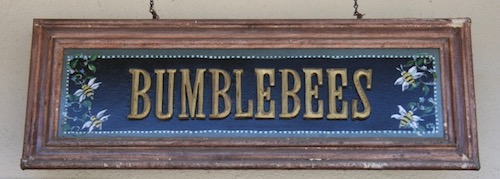
In front of a gift shop called Bumblebees

Scarecrows 15

The Photo Crow-Today Everything Exists to End in a Photograph

Scarecrows 16

Scarecrows 17

How could you not love this fishing frog and his skeletal mermaid lady friend?

Scarecrows 32

Linn’s Restaurant and Pie Shop has their delivery girl working overtime.
Scarecrows 20

A little more traditional

Scarecrows 21

Scarecrows 22

The Cambria New Wave Riders-the bicycle wheels were motorized and they looked as though they were really riding!

Scarecrows 31

Knit 1, Purl 2

Scarecrows 23

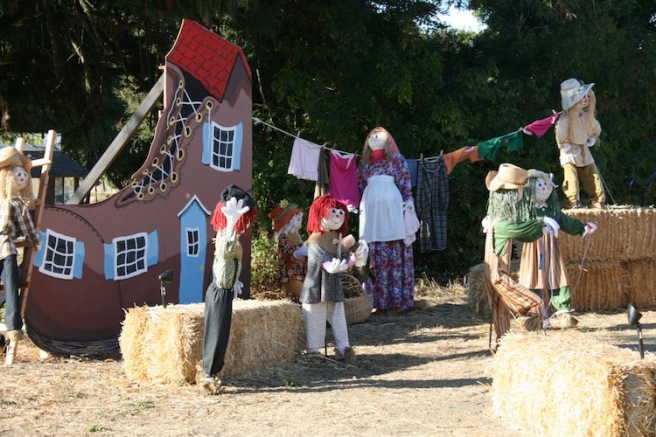
The Old Woman Who lived in a Shoe and some of her many children

Scarecrows 24

Dakota the dog

Scarecrows 26

Scarecrows 25

Tree Bob-the Ent of the East Village handles all the needed tools of the realtor trade on his multiple arms and no, I don’t have a clue what ‘Ent’ means. Any help out there?
Scarecrows 28

Doing Our Part to Conserve Water

Scarecrows 27

Ichabod Crane and the Headless Horseman

Scarecrows 33

This one says it all!

More posts from the Central Coast in the next week.