Howdy from Austin…Lady Bird Johnson Wildflower Center

LBJ 1

The Lady Bird Johnson Wildflower Center at The University of Texas at Austin is the state botanical garden and arboretum of Texas. The internationally recognized botanic garden is dedicated to inspiring the conservation of native plants in natural and designed landscapes. The Center’s website at http://www.wildflower.org has a great overview of its history, mission and programs and states that it “promotes its mission through sustainable public gardens and natural areas, education and outreach programs, research projects, and consulting work throughout Texas and the surrounding region.”

LBJ 2

Founded by Lady Bird Johnson and Helen Hayes as the National Wildflower Research Center in 1982 and renamed the Lady Bird Johnson Wildflower Center in 1997, the Center originally occupied land in East Austin and moved to its current site in 1995. A signature piece of Mrs. Johnson’s environmental legacy, it is a must see for any nature lover visiting the Austin area.

The Wildflower Center was to be first up on the Garden Bloggers Fling opening full day schedule–the day I would miss because of my 24 hour trip to Atlanta–and I was determined I would find an open spot for me to see it on my own. At a roadside stop to eat on the way back to Austin after visiting the Antique Rose Emporium I realized it was Twilight Tuesday and the Center would be open until 8 pm. I quickly finished my late lunch, reprogrammed my GPS was off! Later I would discover that my group had been overwhelmed by torrential rain the entire day of their visit and had not been able to see much of the grounds at all. When I visited two days earlier, the skies were periodically dark and threatening (as you will see in some of the photos) but I escaped without a drop.

A FEW QUICK FACTS about the Lady bird Johnson Wildflower Center as taken from http://www.wildflower.org

  • 284 acres total
  • 16 acre arboretum
  • 9 acres of gardens
  • 800 species of Texas natives plants
  • 5 major spaces: Central Complex, Central Gardens, Texas Arboretum, Family Garden, Natural Areas

The buildings and hardscape are constructed with locally harvested stones and designed to reflect regional architectural styles. All of the structures built harvest rainwater into a 68,500 gallon capacity storage system. The Center’s landscapes are managed to support a vast web of life, and have recorded more than 143 species of birds, 15 species of mammals, and 1800 species of insects.

I spent most of my time in the Central Complex and Gardens area, choosing not to stray too far from shelter should a storm catch me by chance. There is easily a full day’s worth of wandering around should you have that much time. The very nature of wildflower gardens is that they are ever-changing and would be equally beautiful, although different, at various times of the year. Membership would be a must for me if I were an Austin resident!

LBJ 3

My first glimpse of what would be lots of beautiful Texas stone put to use creating structures reminiscent of a historic almost ruin-like hacienda and grounds. This water storage tank is part of the rain catchment system–notice the metal water raceway feeding in at the top.
LBJ 5

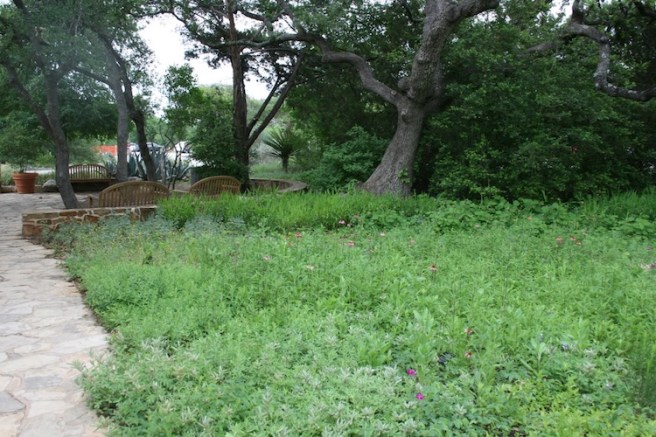
As you enter the grounds this restful seating area adjoins a shaded wildflower meadow. Not much was in bloom this day but I could see the seed head remain of huge swathes of Texas bluebonnets which would have been a sea of blue only a couple of weeks ago.

LBJ 4

The distant stone arch literally draws you down the long walkway leading to the Central Complex.  This series of vine draped stone columns lends an air of walking back in time into Texas history. The rainwater raceway rests atop the columns.

LBJ 7

LBJ 9

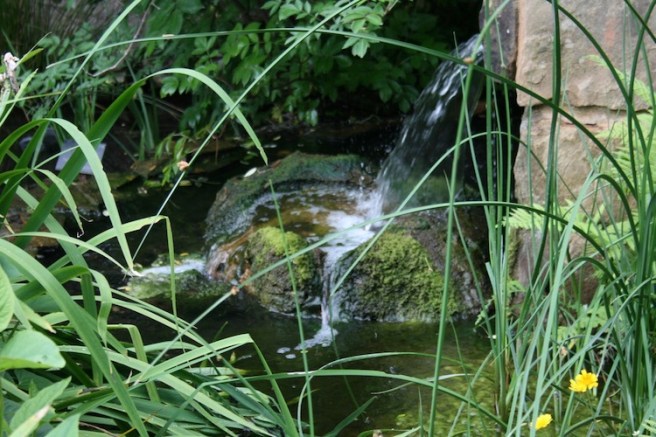
The Wetland Pond showcases plants naturally found along streams and ponds in Texas including Justicia americana, commonly called water willow, seen in the foreground with tiny white flowers.
LBJ 11

The water cascades down the rustic stone wall to hit this well worn, mossy rock its base.
LBJ 10

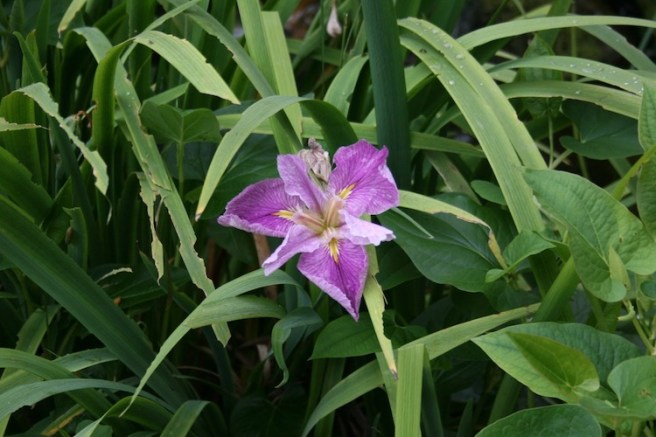
This lone bloom stood amidst a sea of cooling green–I believe this area would make you feel cooler in the blazing heat of summer, even if you really weren’t. This looks to me like  one of the Louisiana irises, often planted in water. The Wildflower Center has a superb plant database on its website and lists 4 native to Texas but this one didn’t look like any of the four.

LBJ 12

I love that the designer/stonemason incorporated planting spots in the inside corners of the archway–a great place to showcase this blue green spiky thing–unless I could see a plant marker that is about as close as I will get on MANY spiky things I encountered on this adventure. Even at some distance my eye was drawn up to this detail.

LBJ 8

Opposite the Wetland Pond, the arched stonework creates a sort of vestibule which almost obscures the modern door into the Auditorium.

LBJ 13

If you read my blog regularly you will have learn that my husband has an almost phobia like reaction to plants trained up any permanent hard surfaces so everywhere I go I take pictures of just that to show him that so far this stone wall has not fallen down yet from the imagined ill effects of green stuff touching it! This scrambler is Clematis texensis, commonly called scarlet leather flower or scarlet clematis. The red balls will open to petite, scarlet, downward-nodding, urn shaped blooms.

Passing under the last massive stone arch reveals the Courtyard anchored by the understated Courtyard Spring.

LBJ 14

Standing in this large area surround by buildings but with a wide open sky, I can imagine an age old Texan hacienda where the work happens during the day in the various parts of the home and then everyone spills out in the cool of the evening to eat, drink and relax.

LBJ 15

Shaded areas create a green buffer between the central open space and the structures, offering some visual softening of the stone and other hard surfaces. The Courtyard offers entry to the Great Hall and Classrooms, the Gift Shop and the Little House. The Little House is a single room structure on the southwest corner designed as a special place for children and includes a kid sized door.
LBJ 16

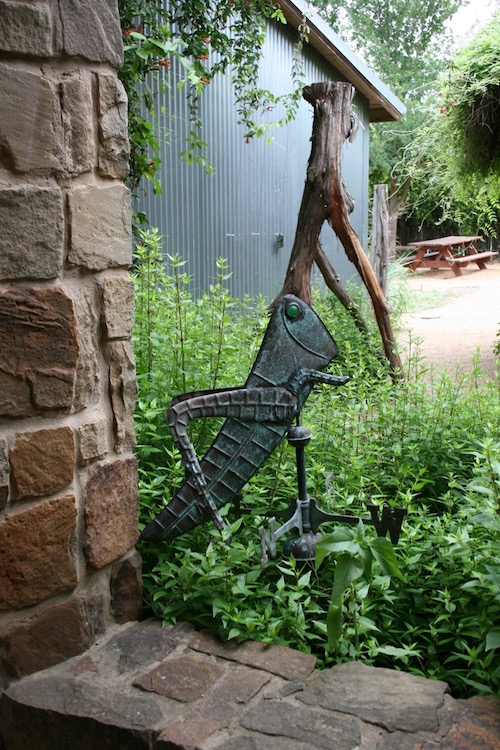
The Little House has its own back courtyard where many children’s programs are held. This whimsical critter keeps watch on the goings on through a stone opening just at kid level. The Little House also has its own garden filled with native columbine and Salvia greggii ‘Teresa’ as seen below. I love the pale pink tint of the ‘Teresa’ blooms.


LBJ 17

This vine draped pergola in front of the Little House marks the transition between the Courtyard and a variety of paths and small garden spaces. You can see a little peak at the Observation Tower just the top of the photo. I am headed that way!

LBJ 21

I wandered past the Color Garden, the Volunteers Garden and the Dry Creek Garden which is nestled at the base of a wall near the Observation Tower. Several mounds of Phlox pilosa, prairie phlox, were growing along the creek bed. I think the surrounding leaves are of Pavonia lasiopetala, a widely used Texas native commonly called pink rock rose.

LBJ 51

The Observation Tower stands tall over the other structures, appearing to be hundreds of years old and should you be able to get to the top, offering a 360 degree view of the surrounding country. The golden ball leadtree, Leucaena retusa, was totally unknown to me but one I would see many times more in both commercial and residential landscapes.

LBJ 50

Look how the weather changed just as I backed up to get a wider image of the Observation Tower. No amount of editing could lighten this up any more. It looked as though the rain was ready to pour down.
LBJ 23

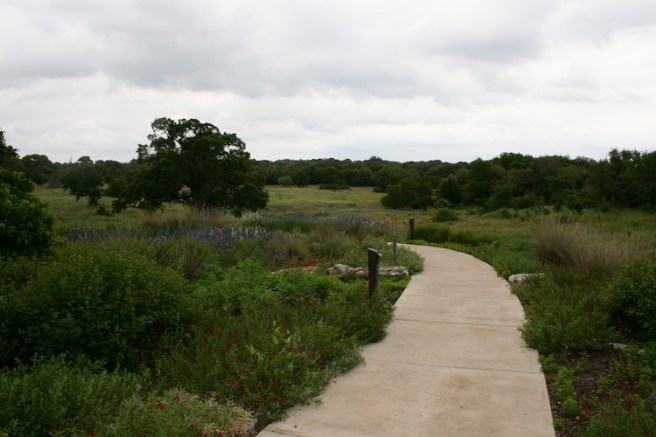
It brightened up a little bit as I approached the meadow flanked pathway to the Luci and Ian Family Garden. There were still a few flashes of wildflower color to be found but given the state of the weather I decided to leave this fairly long ramble for another visit.
LBJ 22


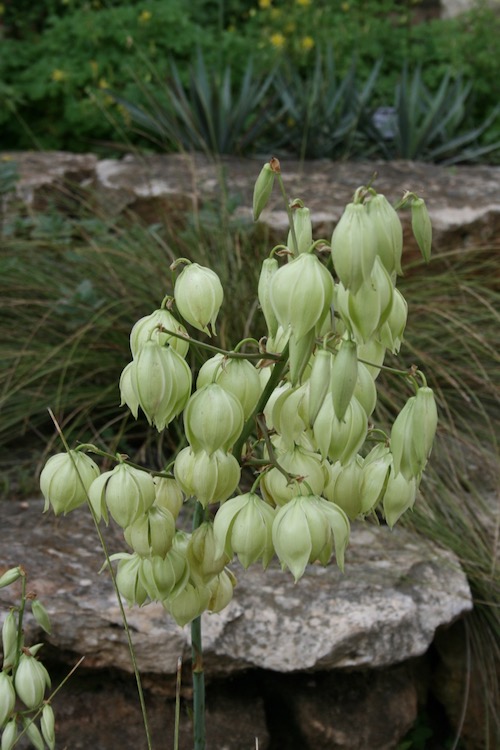
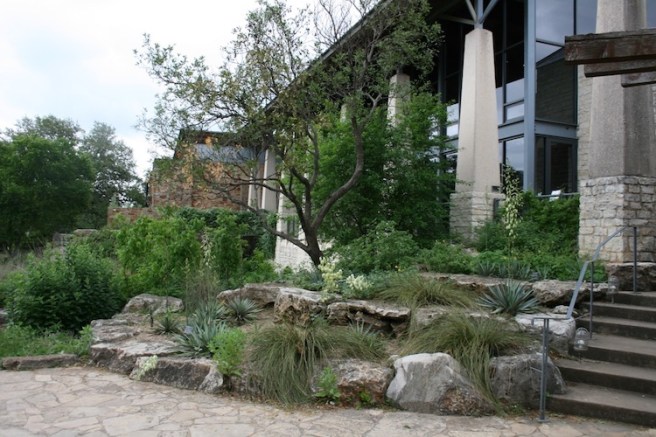
The back side of the Great Hall and Classrooms building has walls of windows with a sweeping vista of the meadow. This small stone terraced bed represents plants found in the rockier mountain areas of Texas including the Yucca pallida, pale leafed yucca, which was coming into bloom. Even though falling in that ‘spiky thing’ category of plants which I have not favored I came to appreciate the structural beauty and wide variety of yucca by the time I left Austin.

LBJ 29

LBJ 30

Passing through the Woodland Garden I entered the walled Central Gardens area which houses the Theme Gardens. Each small garden here is indicative of a specific habitat or region and showcases Texas appropriate native plant material. Here is just a sampling:
LBJ Wildflower South Texas Sampler
South Texas Sampler-highlighting plant material from the southernmost areas of Texas
LBJ Wildflower Hummingbird Garden
Hummingbird Garden-big red sage, flame acanthus and hesperaloe all offer blooms loved by hummers
LBJ 33
Wandering Walkers Garden-honors those botanists whose collection and propagation of native plants made them available for use in home gardens

LBJ 32

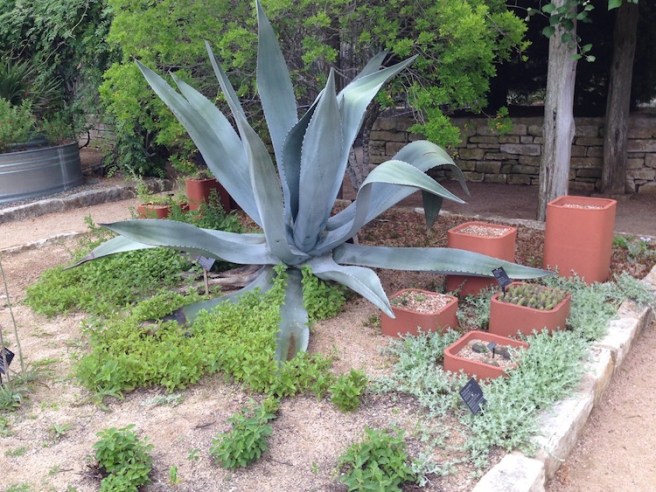
These were the first of many stock tanks I would see used in Austin as water gardens and raised planters. Note how the back sides of the smaller ones have been altered to allow them to snug up tight to the larger center one.

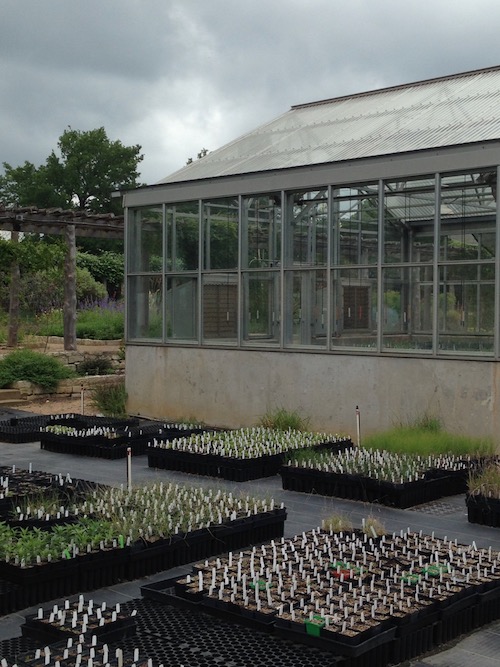
The Greenhouses and outdoor propagation areas span one entire side of the Central Gardens.

LBJ 41

LBJ 44

The Wildflower Center’s large greenhouse operation propagates plants for the gardens and is the site of research projects.  The annual native plant events offer educational outreach into the local gardening community and a chance for gardeners to try plants they have admired at the Center in their own gardens.

LBJ 37

LBJ 38

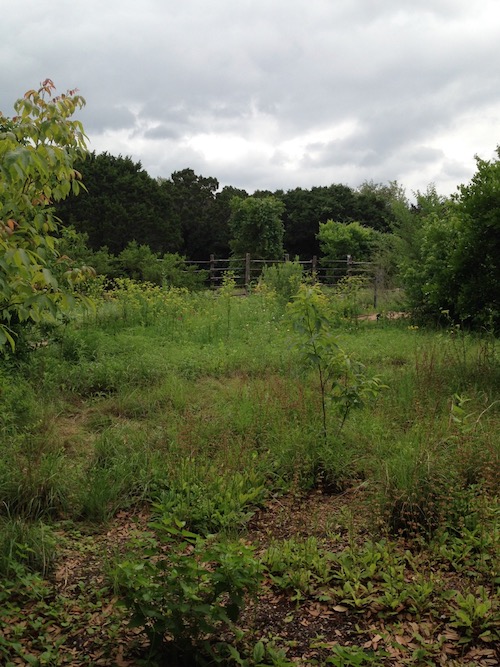
The Pollinator Habitat Garden contains 350 different plant species, arranged in 10 plant communities designed to support butterflies and other invertebrates throughout their life cycles by offering water, food, protection and appropriate breeding conditions. The garden is an open air pollinator habitat, demonstrating the co-dependant relationship of plants and insects and the critical role of pollinators in biodiversity.

LBJ 27

The far side of the Central Gardens offers another pathway to the Family Garden. Given more time and better weather I think I would make the loop through that garden back to the first path but not today!
LBJ 53

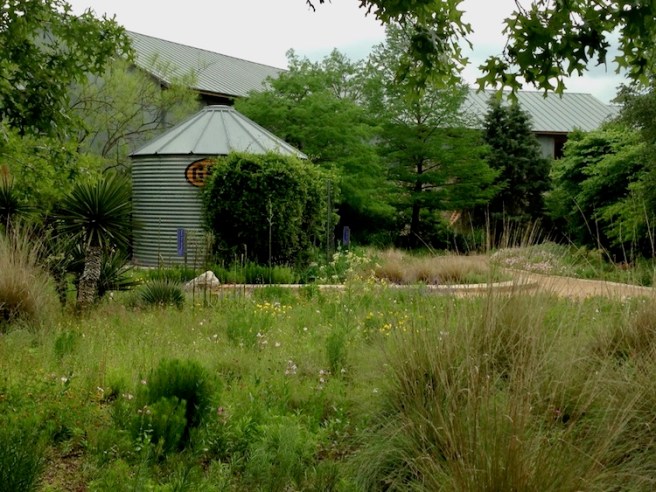
I strolled back to the parking area on what must have been a service road behind the Silo Garden–I could have been 20 miles out in the country if I hadn’t known better–and found these blooms among the meadow grasses.


Now…if I only had a good Texas wildflower book!
Austin pre-Fling road trips… Antique Rose Emporium

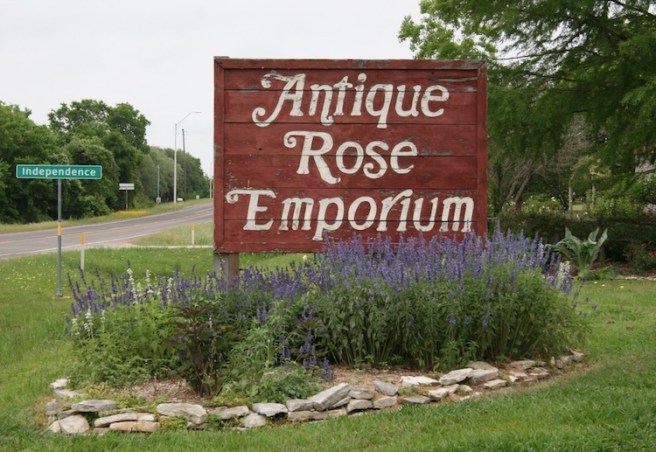
Knowing I would miss the actual first day of the group itinerary, I front loaded a couple of extra Austin days leading up to the 2018 Garden Bloggers Fling. There would be no way to see that day’s private gardens but I wanted to at least see the public things the group would cover on that first day and a few side trip suggestions in our pre-Fling materials had captured my attention–high on the extras list was a road trip to the Antique Rose Emporium about 2 hours east of Austin in the small town of Independence, Texas.

Ant Rose Emp 37

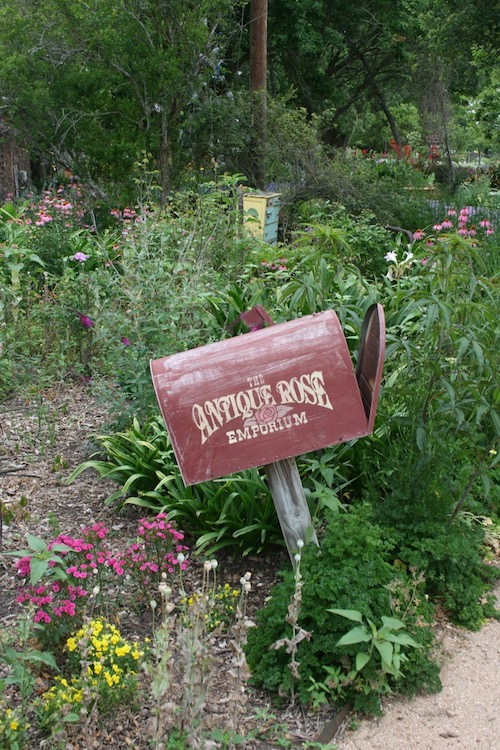
This 8 acre display garden, event venue and retail nursery was established in 1984 by Mike and Jean Shoup. Holding a Masters Degree in Horticulture and growing woody perennials for the landscape industry and retail centers since 1976, Mike grew weary of the green shrub grind and turned his attention to finding plants native to Texas which could fill the same purpose as those ubiquitous go-to foundation plants currently in favor. It was on one of those plant finding forays that Mike first encountered everblooming roses growing happily in desolate and uncared for country areas. His fascination with and acquisition of what he calls “pioneer roses” or “survivor roses” became the foundation of the Antique Rose Emporium. In addition to the roses available in the retail garden center they have a huge mail order inventory and ship all over the continental United States. Mr. Shoup is also the author of Empress of the Garden, a gorgeous coffee table book laden with photos and growing tips.

Upon pulling into the gravel parking lot I have to say it looked exactly as I thought it would–like the garden of a family well settled into their land for generations. The retail part of the business is tucked beautifully and naturally into an area overflowing with shaded beds, borders, vintage buildings and whimsical garden art.

Ant Rose Emp 6
Come on in! Who could resist?

Ant Rose Emp 8

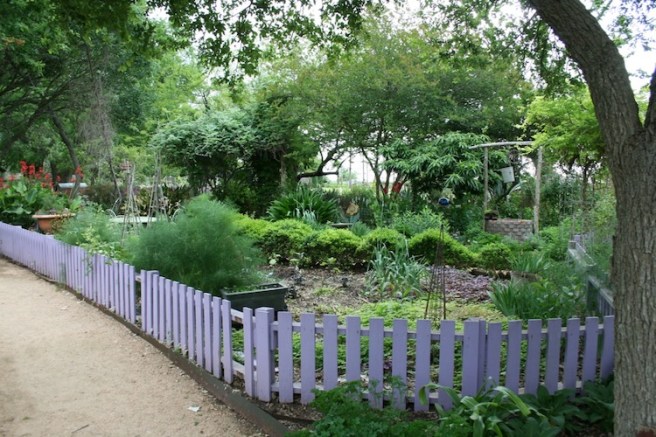
The Beatrix Potter themed Children’s Garden overflows with all things Peter Rabbit! Friendly squirrels top the fenceposts on the purple picket fence.

Ant Rose Emp 9
One of several bottle trees 

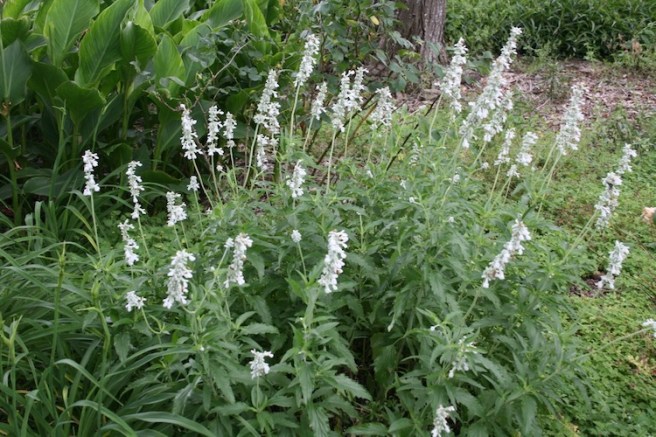
In the foreground you can see a great stand of blue Salvia farinacea ‘Henry Duelberg’, a Texas native mealycup sage. It is growing in many large perennial colonies all over the display gardens and at about 30″ high is much taller than the mealycup sages I see in California garden centers. I learned that it was found at the Central Texas gravesite of Henry Duelberg by Texas horticulturalist Greg Grant who introduced it along with a white mealycup sage found at the grave of Henry’s better half–appropriately called Salvia farinacea ‘Augusta Duelberg’.

Ant Rose Emp 3
Salvia farinacea ‘Augusta Duelberg’

Ant Rose Emp 13

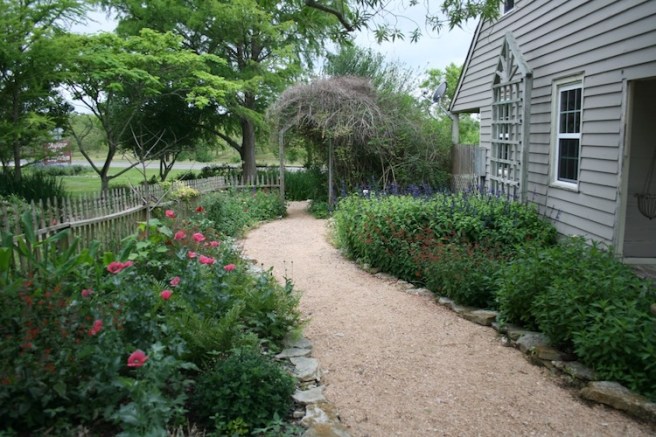
A variety of pathways, brick and gravel, offer approaches to the display gardens and historic buildings on the site. This one, smothered in a green canopy just begs you to walk through with the promise of wonderful things on the other side.

Ant Rose Emp 14

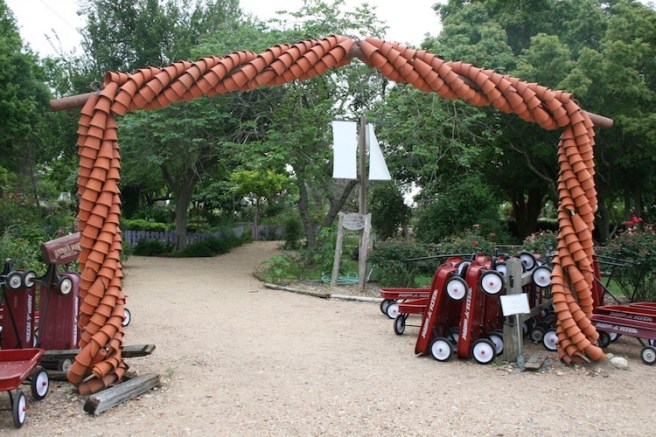
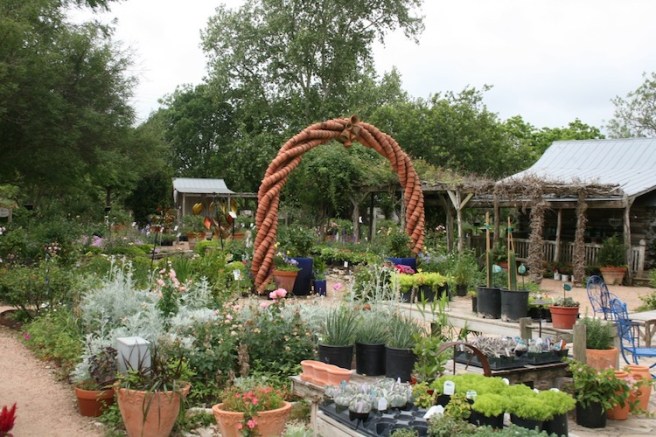
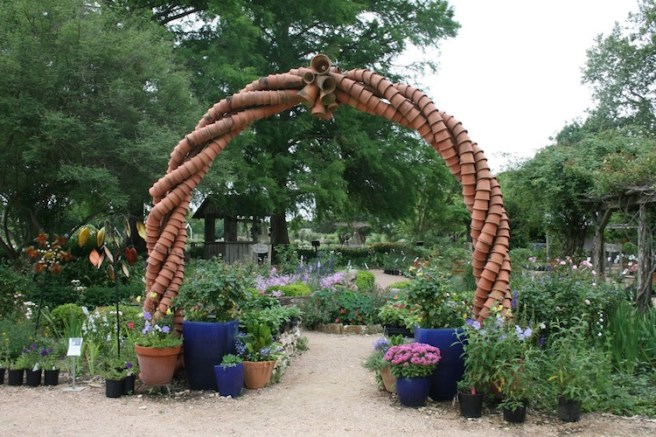
A second homage to the humble terra cotta pot marks the entry to retail plant area. I had seen this wonderful sculpture in an article in Southern Living Magazine years ago and have never stopped talking about how to add a similar feature to my garden.

Ant Rose Emp 21
Looking back from the retail area
Ant Rose Emp 32
Huge surface roots from a very old crape myrtle–natural garden art!
Ant Rose Emp 33
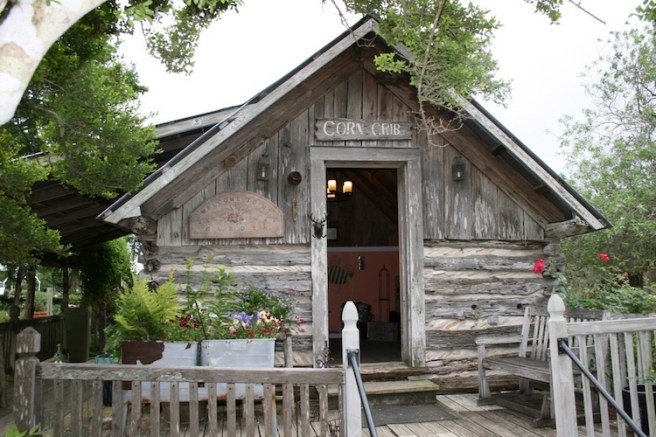
The corn crib (which you see the side of in the distance in the previous photo) was moved to its current home from about 300 yards away.
Ant Rose Emp 16
A closer side view
Ant Rose Emp 15
Manager Gayle Wehring confirmed this was a ‘found’ Phlox-variety unknown but clearly very happy! 
Ant Rose Emp 17
Looking back over the shade bed into the retail area
Ant Rose Emp 22
Meandering tiny stream

Ant Rose Emp 35

Ant Rose Emp 34
Treasures and Trellis, a c. 1850 classical cottage moved from nearby town Cat Springs, sits surrounded by cottage gardens and a path inviting you to stroll

Ant Rose Emp 20

The 2 story McKnight-Hairston stone home originally sat on this acreage. The homestead included a detached kitchen, smokehouse, milk house, corncrib and barn. Only ruins of the detached kitchen remained when the Shoups purchased the land. The stone kitchen has been restored and is surrounded by a period cottage garden and a perennial border.

Ant Rose Emp 19
Stone kitchen perennial border
Ant Rose Emp 30
Looking across the circular center garden toward the stone kitchen
Ant Rose Emp 29
This unknown small flowered pale pink rose all but obscures a low stone border wall
Ant Rose Emp 23
Well maintained, wide walkways carry you from the more densely planted areas out into open areas with expansive views

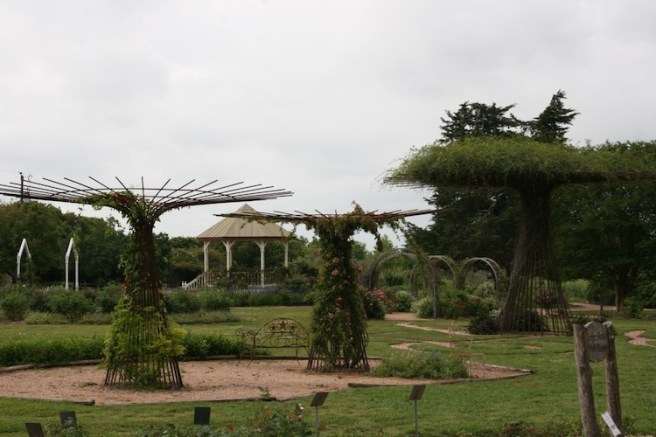
There are a number of locations in the display gardens which are very popular for weddings and community events. Above you look past these HUGE rebar tuteurs covered with roses and other vines to a picturesque white gazebo. It was very cloudy throughout my visit but at this point it looked as though the skies would open up at any minute.

Ant Rose Emp 27
I can easily imagine a bride walking on her father’s arm through these crisp white wooden arches to met her groom in the gazebo
Ant Rose Emp 26
This chapel was built a few years ago as a meeting house
Ant Rose Emp 28
A wide open meadow filled with roses, perennials and grasses on the side of the chapel

One of the most appealing things to me about these display gardens and the variety of spots to hold formal and informal gatherings was that they look exactly like what they are–country gardens. They are not manicured and clearly face all the challenges a home gardener with a large property would face–too many plants and not enough hands. They looked as though nature was really at work here: annuals reseeding, bees and butterflies pollinating, roses resting to bloom once again, real life, real gardening!

The drive from Austin was wide open and easy. The gardens were inviting and inspiring and I know would be different upon every visit. Thank you to the Antique Rose Emporium for being one of the Garden Bloggers Fling Austin 2018 sponsors. You can read more of their story and check out their online mail-order rose catalog at http://www.antiqueroseemporium.com

Ant Rose Emp 7


Deadheading daze…

The months of April and May are peak times in my garden–rapid growth and lots of perennials and roses in bloom. This year travel took me out of my garden from mid-April until 10 days or so ago when I returned from the Austin Garden Bloggers Fling. A few days home here and there did not afford me many opportunities to keep up with the daily maintenance my spring flowering plant heavy garden demands to looks its best. Adding to that was our very mild winter which brought many things into bloom earlier and thus looking a little longer in the tooth by mid-May than I prefer.

So even with my 1000+ Fling photos still needing attention and at least a dozen posts to write covering all the glorious garden I saw in Austin, I knew time must be devoted to deadheading at least the roses. This routine task becomes much more taxing as the heat of summer comes and I like to have them all cut back by late May so I can look forward to a nice repeat flush of bloom mid-summer.

In direct opposition to my sort of blowsy, frowsy, scrambling, climbing plant aesthetic my husband feels more comfortable when the garden is under a little more, even if still tenuous, control. He is sure that the minute he gives it an inch, the garden will take a mile and rampaging plants will have damaged stucco walls, weakened wood fences or tumbled out of beds and borders and onto sidewalks and patios. He is not much for that garden principle of blurring the lines or softening the edges by letting plants wander as they choose. To that end, the purple Lantana montevidensis planted on either side of the rock waterfall behind the pool is always on his radar and I swear he adjusts his travel schedule so that he will be home while I am gone for several days so that he can have his way with the purple interloper.

Daze 1

In this older photo taken from just off the patio you can see the lantana has scrambled over the boulders–just the way I like it!

Daze 3

Several weeks ago when this photo was taken the lantana was just coming back into bloom after a brief late winter rest. Neither the climbing roses ‘Raspberry Cream Twirl’ on the fence behind the waterfall nor the cascading tree roses ‘Renae’ planted on either side had really come well into bloom yet.

Daze 2

Here’s what I returned home to–both climbing and tree roses had bloomed steadily during my absence and my purple trailing lantana had gotten a haircut worthy of a pair of army boot camp recruits! The twiggy little mounds remaining can barely be seen at the bases of the ‘Renae’ roses. OK–I really wasn’t surprised and am practicing being grateful because it is one less cutting back task for me in an all ready busy spring. To his credit I do tend to let them go too long between trimmings. This particular plant responds well to his unmerciful cutting style and will reward me with lots of new growth and flowers in a couple of weeks. Speaking of drastic pruning, you may notice we now have a view of our over the back fence neighbors. Until last fall their very overgrown plantings of Xylosmacongestum and Nerium oleander towered over our garden, allowing only a peek at their roof. We lost 100% of our privacy when all those trees were topped with their stumps right below the top of the fence. You can see that they are making a small comeback with some new growth above the fence edge but it will be forever, or possibly never, until the full view of their second story is obscured. See below what we lost!

Daze 11

I got busy today and deadheaded the ‘Raspberry Cream Twirl’ climbing roses (just barely planted in the above photo which is about 3 years old) on the fence. This dark pink striped climber has very long canes and it a great repeat bloomer.

Lavender Twirl

Daze 5The west side is done…now on to the east.

Daze 15

With both climbers and the ‘Renae’ tree roses on either side cleaned up I gave the waterfall rocks a scrub down and let it run for awhile.

Daze 16

‘Renae’ is pretty much a self cleaner and this is the first time I’ve have made an effort to deadhead midseason. I have 2 in the front garden and these two in the back which were planted a year later. Neither of the two has ever been as vigorous as the two in the front. I think it will be interesting to see if this deadheading will encourage renewed growth on the two that lag behind. The rose on the east side (right) has struggled since planting and only this year seems to be gaining some speed.

The front garden did not even seem to notice my absence. In our lawn removal/bed renovation projects the last couple of years I have eliminated almost all of the older roses, leaving only the modern carpet/ground cover types which require very little deadheading. I have put the last plants for this season in the newest of the formerly lawn areas and soon I’ll give you a tour. I used many 4″ containers and recent photographs reveal mostly the humus top dressing with a little blob of green here and there–let’s give these little guys some time to get going. Every year I look forward to the luminous white blooms displayed on this colony of trumpet lilies which rise behind a ‘Pink Supreme’ ground cover rose and a couple of salvias–Salvia fruticosa and Salvia chamaedryoides ‘Marine Blue’–not yet flowering. Soon these venerable three will be duking it out for dominance of the space and, if I am very lucky, spill right out onto the front sidewalk in search of the upper hand. Just the way I like it!

Howdy from Austin…

Howdy 1

Ninety two garden bloggers from 28 states plus Canada and the UK met up in Austin, Texas last week for the 10th anniversary of the Garden Bloggers Fling. The Fling started in Austin in 2008 as the brainchild of garden writer Pam Penick and so it was a fitting that it return to its roots. Host/Chairperson Diana Kirby and her committee arranged great accommodations, transportation and meals for us in addition to a stunning itinerary of private gardens, public gardens and the hottest in Austin’s retail garden center world.

As a second time Flinger I was not quite as shell shocked this time at the sheer amount of gardening knowledge and talent surrounding me as we toured and dined together for several days. This year Pam asked each of us to send a photo and short bio to be included on the Fling’s website to help us recognize and get to know each other–especially useful for first timers. In addition to hobby gardeners (i.e., ME) our numbers included professional landscape designers, freelance garden writers, garden authors with multiple books to their credit, horticulturalists who find and develop new plants and seeds, the publisher of a spectacular garden magazine and the editor of another, many current and former Master Gardeners, garden speakers, garden coaches and those whose passions are the pursuit of about any gardening niche you can name. If you are interested in Who’s Who at the 2018 Fling go to the Fling’s page at http://www.gardenbloggersfling.blogspot.com and click on the OWL in the right hand column for a look at the bios.

As a first timer last year, I conscientiously sat down every night, no matter how late or how tired, dumped my camera’s memory card onto my laptop and sorted through the day’s photos. Along with my notes on each garden I could at least develop a framework for each post I wanted to write based on my best photos. I think I posted 3 times while still at the Fling and then used the next two or three weeks to cover the rest of the gardens. This year, with my trusty Mac Book Pro at the St. Apple Hospital for the Near Fatally Wounded getting a $900 solid state transplant there was no place for my photos to go! I have been using that nightly shoot and dump regimen for years–in fact, the only memory card I owned for my Canon was the 1 GB one that came with it. My first Austin stop was Precision Camera–one of the Fling’s local sponsors–to purchase a handful of extra memory cards.

Arriving home a couple of days ago, life encroached on my blogging time immediately–the garden, left under my husband’s care in 90 degree weather for 8 days, had to be walked and any emergency care needed was dispensed. I will do a separate post on the deadheading chores awaiting me. Now with 1095 photos downloaded and ready to be reviewed, the fun starts. My fellow blogger Kris Peterson (her Late to the Garden Party blog is at http://www.krispgarden.blogspot.com) set a great example in her first post-Fling offering this morning by comparing her photos to old time postcards. You’re all ready at home and unpacked by the time your travel postcards reach your loved ones, giving them just a glimpse into what a good time you had. I am going to follow her lead by offering a single pic peek for each location now and follow up with more complete profiles as time permits.

ANTIQUE ROSE EMPORIUM

Howdy 2

I had a couple of free days before the fling itinerary started so I took a road trip to Brenham, Texas to visit the Antique Rose Emporium. This iconic retail and mail-order rose source has been featured in many gardening magazines. The multi-acre location includes a number of demonstration gardens filled with roses and perennials and is a popular wedding venue.

NATURAL GARDENER

Howdy 3

Back in Austin, this destination nursery has a farmyard vibe with lots of display gardens featuring edibles, herbs, fruit trees and perennials. I loved this flowing stream highlighting riparian friendly Texas plants. The Natural Gardener was slated to be our luncheon location on the first full day of touring which I would miss so I was excited to fit it in on this day.

LADY BIRD JOHNSON WILDFLOWER CENTER

Howdy 4

The Wildflower Center is a groundbreaking botanical garden featuring only plants that are native to Texas. This gem was first up on the Fling’s itinerary, falling on the day I would not be able to travel with the group. Their late closing time on Tuesday allowed me to add it into the first day I toured on my own.

SOL’STICE

Howdy 5

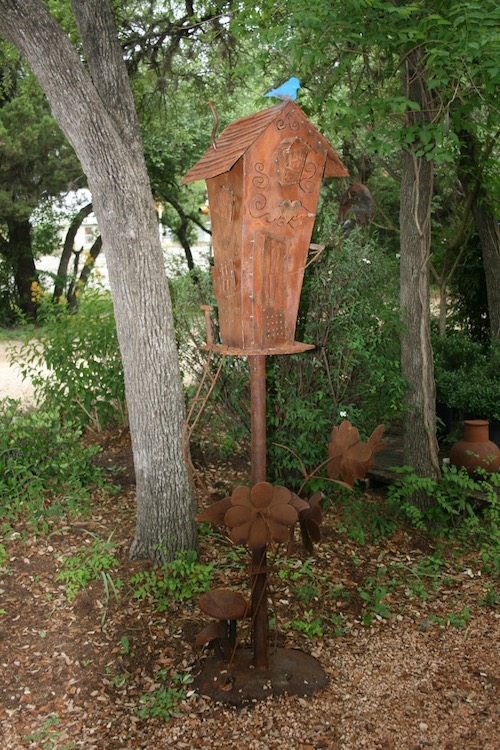
The following day, heading west to Fredericksburg, I ran across this funky local art/plant place and landscape design firm in Dripping Springs. I so wanted to take this rusted birdhouse (made by Steve Southerland) home!

FRIENDLY NATIVES NURSERY

Howdy 6

Matt Kolodzie and his nursery/landscape design business are all over Central Texas Gardener’s pages, both web and paper. Specializing in Texas climate and soil friendly plants, his Fredericksburg location was a delight. Matt is definitely a Friendly Native–he spent a lot of time talking plants with me and even offered to take me around to see Texas gardens done well!

PEACE GARDEN

Howdy 7

This serene scene was an unexpected addition to the second day on my own. The Peace Garden sits directly behind the Museum of the War of the Pacific in Fredericksburg’s historic downtown and was a gift from the people of Japan. I happened to pass by its open gate on my way to Main Street to have lunch and window shop a bit.

WILDSEED FARMS

Howdy 8

Wildseed Farms is a retail nursery business and event space on the highway between Fredericksburg and Austin. I made a quick stop on my way back to Austin to find a pretty ordinary garden center operation within some nice display garden areas and pleasing Hill Country architecture.

Fast forward…after a less than 24 hour trip from Austin to Atlanta/Athens, GA to see my future daughter-in-law receive her Masters Degree in Social Work I joined up with the Flingers to find out that torrential rains had kept most of them under cover at the Lady Bird Johnson Wildflower Center, Natural Gardener and the day before’s 3 private gardens. I had never glimpsed the sun and the the skies had threatened on the two days I was on my own but apparently Mother Nature was saving it all up for the other 91 bloggers. Whew!!

SATURDAY

GARDEN OF COLLEEN JAMISON

Howdy 9

Shady respite is the theme of this tree canopied garden which incorporates lots of casual seating amongst borders and beds filled with subtle color.

GARDEN OF PAM PENICK

Howdy 10

Texture and diversity rule in this sloping back garden. The space boasts several large shelves of rocks around which Pam has planted all manner of visually pleasing and wildlife friendly plant materials. This garden is full of interesting garden art and artifacts –watch for the full post with more photos soon.

GARDEN OF B JANE

Howdy 11

B Jane’s stated garden goal for her own garden was to “create a resort vibe” and if this gorgeous outdoor shower off the master bedroom doesn’t do that there is just no help for you. B Jane is a professional landscape designer and builder–see more of her work at http://www.bjanegardens.com.

GARDEN OF DONNA AND MIKE FOWLER

Howdy 12

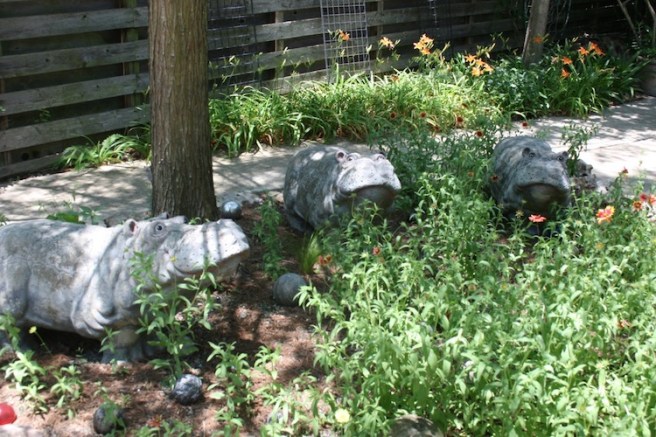
A small town rural garden filled with Texas natives, reseeding wildflowers and whatever else strikes the owners fancy. Yes–there is a hippo story to tell…

TANGLEWOOD GARDENS

Howdy 13

Skottie O’Mahony and Jeff Breitenstein relocated from Seattle to Austin in 2013 with the dream of establishing a daylily hybridizing nursery. Their 1.7 acre garden overflows with tropicals and Moroccan influences.

SUNDAY

GARDEN OF LUCINDA HUTSON

Howdy 14

Cookbook author Lucinda Hutson’s La Casa Moradita (the little purple house) in historic downtown Austin cottage bursts with color at every turn and has been featured in magazines and PBS gardening shows. A devotee of all things Texican, this unique gardener greeted with open arms and wearing purple cowboy boots. This is one of the most personal garden I have ever visited–I am saving the best pics for the full post!

GARDEN OF RUTHIE BURRUS

Howdy 15

Ruthie’s Garden Haus was featured in Southern Living magazine in April 2017. Built from stone gathered on the property and salvaged tin roofing, windows and doors it is the backdrop for a climbing rose called Peggy Martin, sometimes referred to as the Katrina rose.

GARDEN OF MARGIE MCCLURG

Howdy 20

A trip to Butchart Gardens on Canada’s Victoria Island inspired this homeowner to transform her courtyard back garden into a beautiful space to enjoy the sights and sounds of nature.

ZILKER BOTANICAL GARDEN

Howdy 16

The Isamu Taniguchi Japanese Garden, along with the Hartman Prehistoric Garden, are popular Sunday afternoon strolling spots.  We took time for lunch here before moving on to the final few gardens.

GARDEN OF TAIT MORING

Howdy 17

Local landscape architect Tait Moring has gardened this spot since 1997. His goal to celebrate the Texas Hill Country’s natural beauty is reflected in his use of native trees, shrubs, perennials and succulents. He characterizes his garden as a “test kitchen” for regional plants and is committed to the garden being a safe haven for local wildlife.

GARDEN OF KIRK WALDEN

Howdy 18

This relatively new home and garden (2013) replaced an abandoned house surrounded by invasive shrubs and weeds. Being in the front seat on the bus worked well for me at this garden–not everyone was able to photograph the terraced patio, spa and pool (and its phenomenal view) without anyone else in my shot. The home sits high on a bluff overlooking deep blue Lake Austin. Just bury me here.

ARTICULTURE

Howdy 19

We ended our day with a Texas barbecue dinner at Articulture, a creative indoor gardening boutique with a plant filled back yard event space. This happy hour with food and drinks inspired by Lucinda Hutson’s cocktail recipes was the perfect way to end our Austin Fling.

Every one of these gardens has so much more to see than the single photo I chose for this postcard peak. Hopefully I’ve lured you in and you keep an eye out for the longer, more complete posts as I publish them.

Plantspotting in Pasadena…

With barely a day home from AQS QuiltWeek (see We quilt this city…) I’ve changed out my suitcase to accommodate Southern California’s warm weather and am off for a few days in the LA area while my sweetie attends a conference. The garden gods have graciously arranged this international neurology meeting to coincide with the Garden Conservancy’s Open Days event in Pasadena.

Open Days is the Garden Conservancy’s education program which offers special invitations into private gardens all over the United States. The tours are self-guided and usually within reasonable driving distance of each other to allow you to see every one within the designated open hours. Visit http://www.opendaysprogram.org for information on gardens by location and date for the rest of 2018 and http://www.gardenconservancy.org for information about the Garden Conservancy and its mission to save and share outstanding American gardens for the education and inspiration of the public.

Pasadena is one of my favorite garden cities. It has it all–beautiful public spaces, tons of historic architecture, interesting neighborhoods with lots of diversity in home sizes and styles and residents who all seem to have a green thumb. I would venture a guess that it is something in the water but these days no California city seems to have plentiful water! Pasadena gardeners, along with those in several cities in the Bay Area, have risen to the occasion with some of the most well done waterwise and drought tolerant landscapes I have seen in my travels. A strong statement given their moniker ‘City of Roses’! You can see additional Pasadena gardens in my post The Ellen 5 get Rich in Pasadena….

Six private gardens plus La Casita Del Arroyo Garden (a City of Pasadena property maintained primarily by the Pasadena Garden Club) were included and I will post on four of the private gardens. As the day warmed up and my time grew short I left La Casita Del Arroyo for another visit. First up–the Penner Garden.

THE PENNER GARDEN

GC Pas Penner 1

In this era of every HGTV show touting the value of curb appeal it is immediately obvious that this home is more about privacy and family than making a splash in what is all ready a very WOW neighborhood. A 7 passenger golf cart ferried garden viewers up and down this very steep tree canopied driveway–a few of us made the climb on foot and regardless of how you got there the payoff was at the top.

GC Pas Penner 18

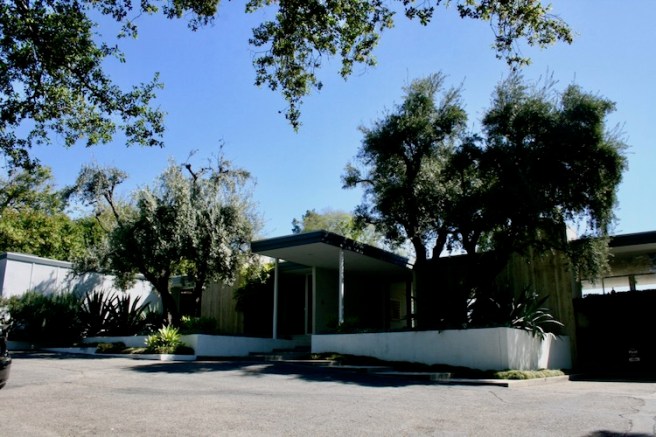
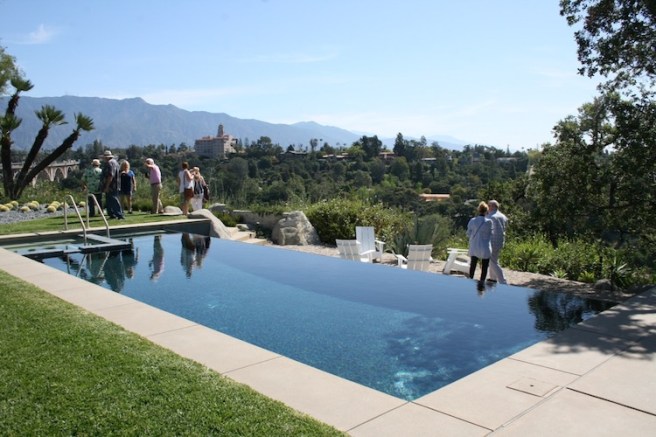
The mid-century single story home on the bluff overlooking the Arroyo River was designed by Smith & Williams in 1963. The post and beam residence is surrounded by mature oaks, olive trees and palm and the renovation of the outdoor spaces was designed to maximize their existing role in the landscape.

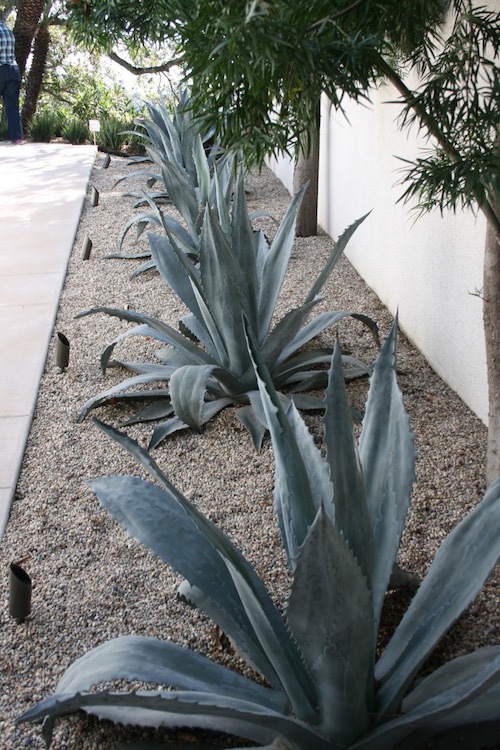
As we approach the wide entrance adjacent to the carport these agaves (terrible with succulents-let me know if I’m wrong) foreshadow the emphasis on groups of plants with strong structural qualities, an aesthetic which I think fits the home’s architecture well. Mature podacarpus of unknown variety have been limbed up to soften the stucco wall and provide some textural contrast.
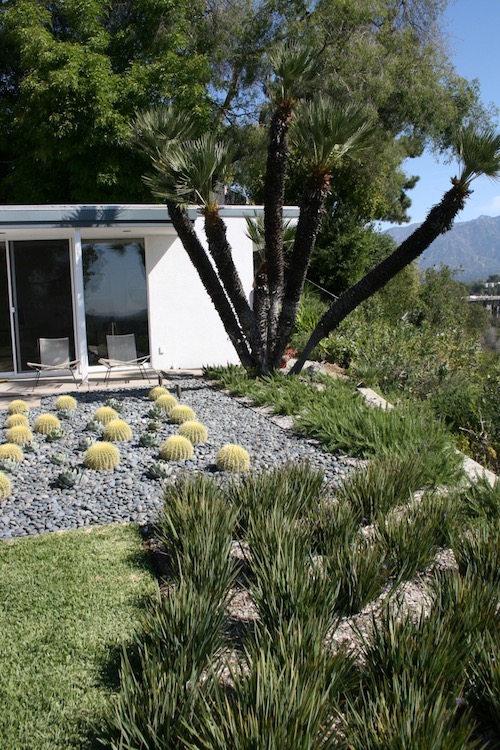
GC Pas Penner 3
I imagine these are spectacular lit at night.

As the back garden vista opens up it is clear why this home is at the top of the hill rather than street side.

GC Pas Penner 14

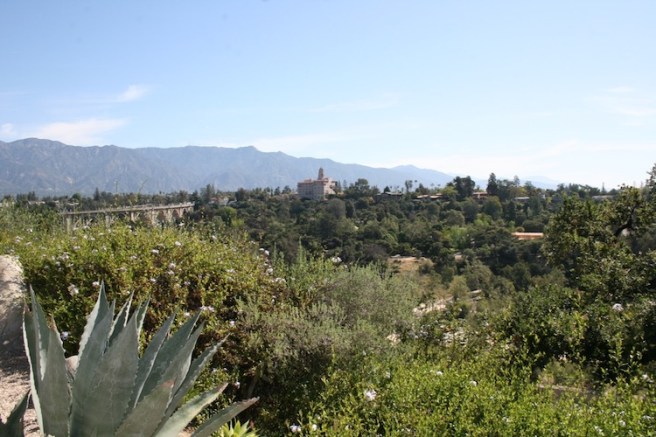
The view of the river bed and distant mountains is spectacular!

GC Pas Penner 10

From every vantage point you are held captive by the vista.

GC Pas Penner 7

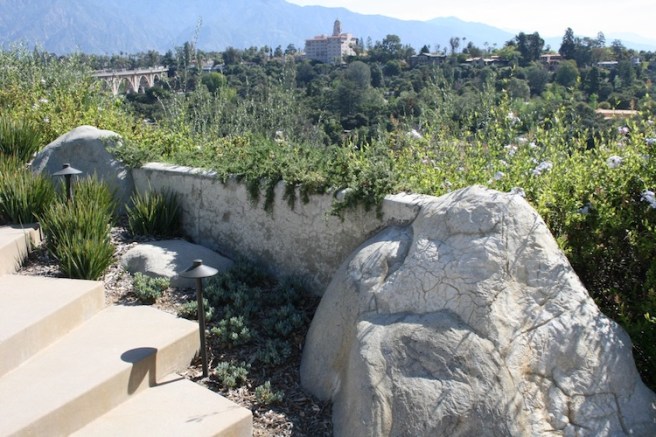
Mid photo on the left is the historic Arroyo Bridge.

So now that you have recovered from the big picture–there’s a lot going on in this very family friendly garden which was renovated by landscape architect Nord Erickson to maximize outdoor entertaining space as well as create a more natural transition to the  hillside vegetation lying beyond.

GC Pas Penner 4

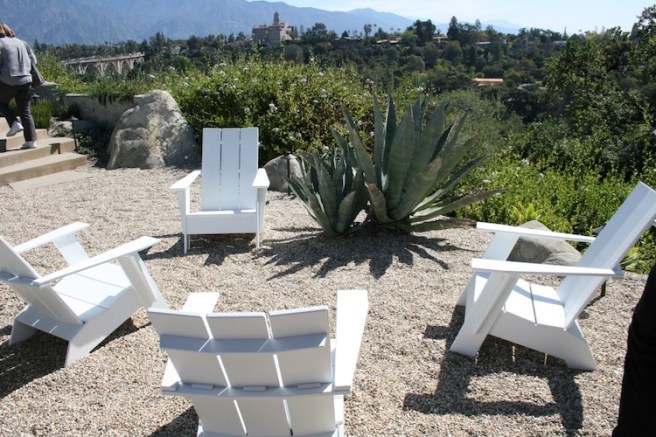
There are multiple seating and entertaining areas. Above you can see this great grouping of egg like woven chairs which surround a fire pit. What looks like a red sculpture tucked under the roofline’s overhang is actually a giant chair with multiple places to sit–the homeowner says his kids love to do their homework perched comfortably on this big red thing!

GC Pas Penner 15

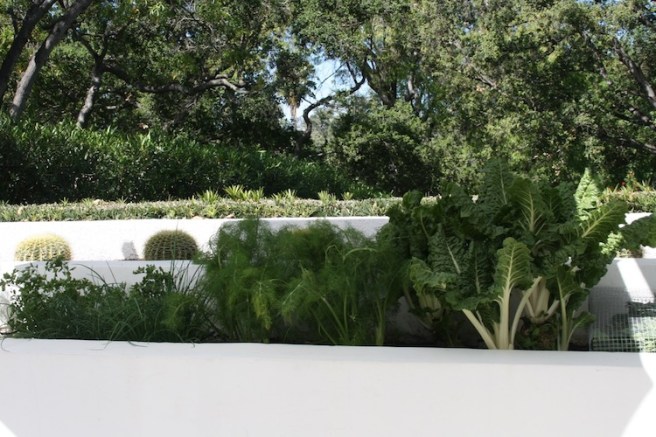
This fully outfitted outdoor kitchen, complete with a pizza oven, is tucked up next to the home and has raised beds to accommodate veggies and herbs.

GC Pas Penner 16

GC Pas Penner 13

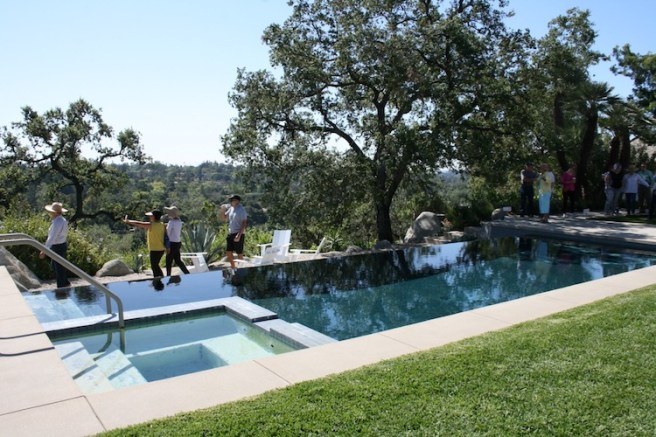
Stone steps tucked at the end of a small area between the infinity pool and the downslope of the bank of the riverbed give you access to another intimate seating area–this is definitely the after dinner wine sipping venue.

GC Pas Penner 6

GC Pas Penner 8

I loved the steps taking you up the other side which incorporate these large boulders and offer a planting pocket sporting a mass of succulents. The landscape architect’s plant palette is restrained in both color and number of plant choices. His selections are repeated throughout the garden and used in masses. Rosemary and cape plumbago peek over the short retaining wall.

GC Pas Penner 9

As you ascend those steps the emphasis on massed plants with architectural qualities is evident. In the foreground, the strap like narrow leaves of a mass of dianella (not sure which one but lower than most) are in start contrast to the geometric planting of a very spiny barrel cactus and its smaller blue gray succulent companion. Rosemary under the palm provides yet another leaf form and texture.

GC Pas Penner 12

Here is the view from that area back into the rest of the garden. The garden has a beautiful sense of enclosure given that the view from one side is just about forever– private, yet expansive!

GC Pas Penner 17

Three bushy olive trees planted in square metal forms sunk in the ground soften the stark white stucco wall of this wing of the home. Yet another table and chairs, this time funky red ones, offer a shaded place to dine or play games. You can be in the vicinity of whatever is going on in the pool without being right in the middle of it.

GC Pas Penner 5

Looking back at the home from the far side of the pool you can see that this home has the extensive walls of glass so evocative of the mid-century modern style and which provide a seamless transition to the outdoors and vistas beyond. A comfy sofa and chairs provide another shady spot for hanging out.

GC Pas Penner 11

Just one more look before we go! It seems as though lately we have been focused on  creating ‘garden rooms’ in our landscapes–looking to provide a little mystery as we move from one part of the garden to another. This garden could not be more different. From the vantage point of the last of those sculptural agaves in the first photo the entire space is in a single visual plane. This garden is beautifully designed to take best advantage of its location and is in total harmony with the home it enhances.

I often find ‘bonus’ homes and gardens as I move from one tour garden to the next and include them in my posts. Fun stuff along the way is always a great addition to any adventure.

gc-pas-penner-2.jpg

This peacock flew (?) up to this driveway gate only a few feet from where we were waiting for the Penner garden to open. Apparently in nearby Arcadia (which is relatively close to the Los Angeles Arboretum) there are literally bands of roving semi-wild peacocks inhabiting residential neighborhoods. Who knew? My guess is that they are cute just about as long as deer are cute in a residential neighborhood–just until they poop on your car or eat all your perennials to the ground.

Smitten by all accounts…

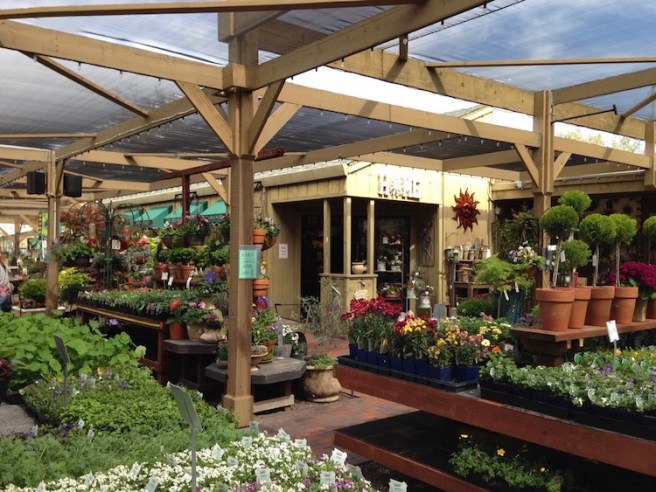
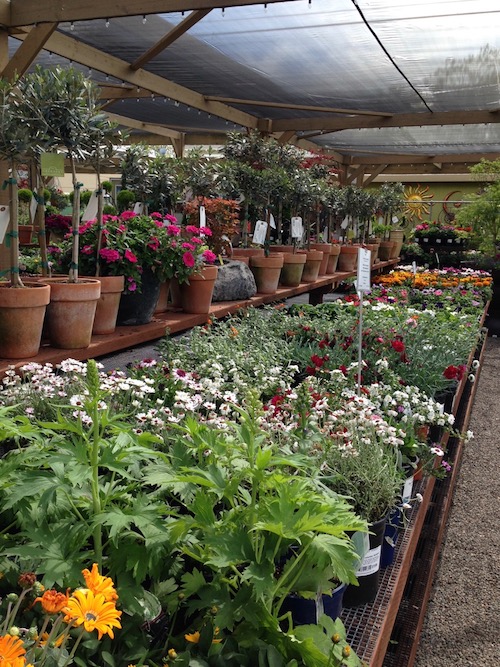
2018 has been an unbelievably busy year both in out of the garden! Our January and February weather was mild enough to accomplish all of the “heavy lifting” work needed in the newest of our lawn free landscape areas. March gave us enough precipitation to keep the ground from crusting over but not so much that I could not get out and dig in plants purchased for the bed in the fall and overwintered in my back yard holding area. I also divided and moved in some plants which had proven southern exposure successful in the driveway circle bed last year. Still having some very large open spaces and a need for some white to temper the purples, lavenders, blues and pinks I took a road trip last week to one of my favorite garden centers–The Greenery in Turlock, CA. Not exactly around the corner for me but worth a trip every few months. I got so caught up in browsing I forgot to take more photos!

smitten 3
Annuals and an addictive gift shop
smitten 4
Perennials galore–stock is always fresh!
smitten 5
My go to nursery for lots of plants in 4″ pots
smitten 9
Shady gems and tons of good quality pottery
smitten 8
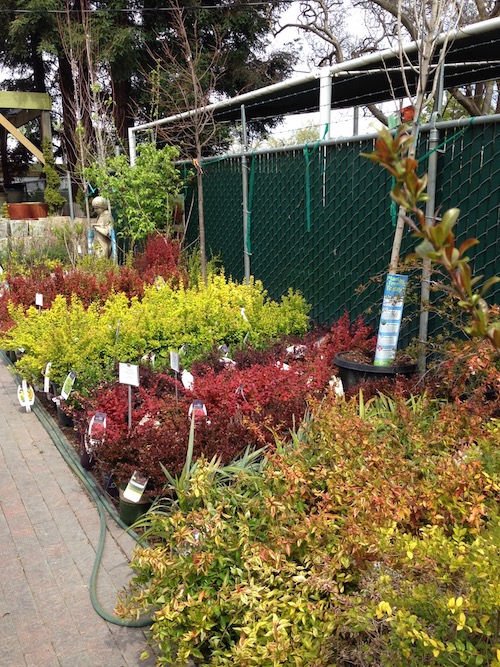
Lots of varieties of barberry, abelia and other shrubs
smitten 7
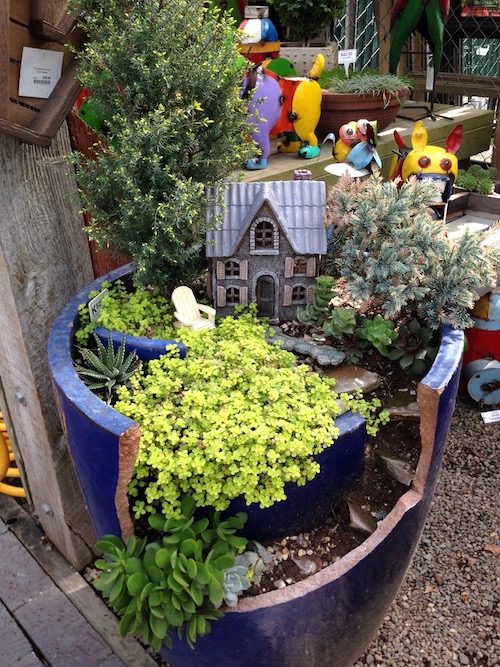
One of many fairy gardens throughout!

I may have been a wee bit too early for all of the newest waterwise stock to be in place. There were many salvia selections–mostly from the Salvia greggii/microphylla complex–but none of what was on my list. So even though I did not bring home anything to add to my bed in progress I did snag a couple of other very precious dark red specimens for my shadier areas.
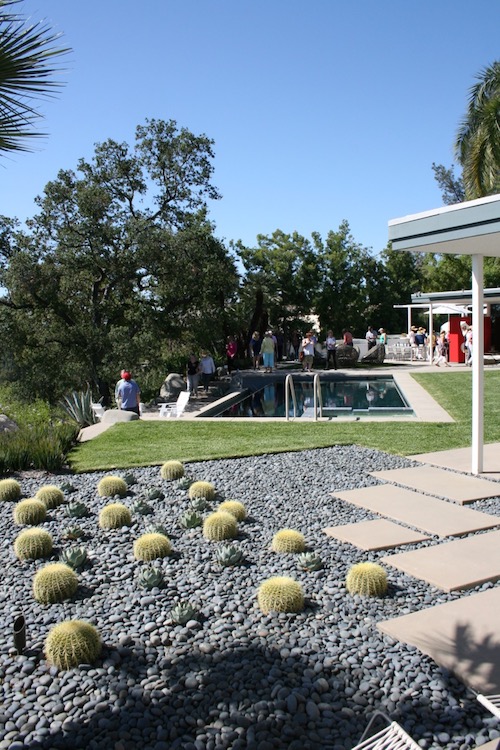
In recent years I have been dabbling in adding a smidge of red to my garden. In deference to my existing palette the red MUST be a blue/red NOT an orange/red and these cooler reds are not nearly as plentiful and one would think. Salvia ‘Killer Cranberry’ is my touchstone for a workable red–if it looks ok in the same visual plane as the Killer it will work anywhere. A deep rich red is a beautiful foil for the many deep purples and lavenders in my garden as well as the clear pinks.

smitten 1

I have to say I almost ran toward this camellia in the shade section at The Greenery! A perfect marbling of red, pink and white distinguishes Camellia japonica ‘Tudor Baby Variegated’. Fortunately, I have room for yet another camellia in an area we actually shade cloth over during the summer months so I can grow camellias for cut flowers in the cooler months. Listed as a formal double and late spring bloomer, it was a must have for me.

smitten 2

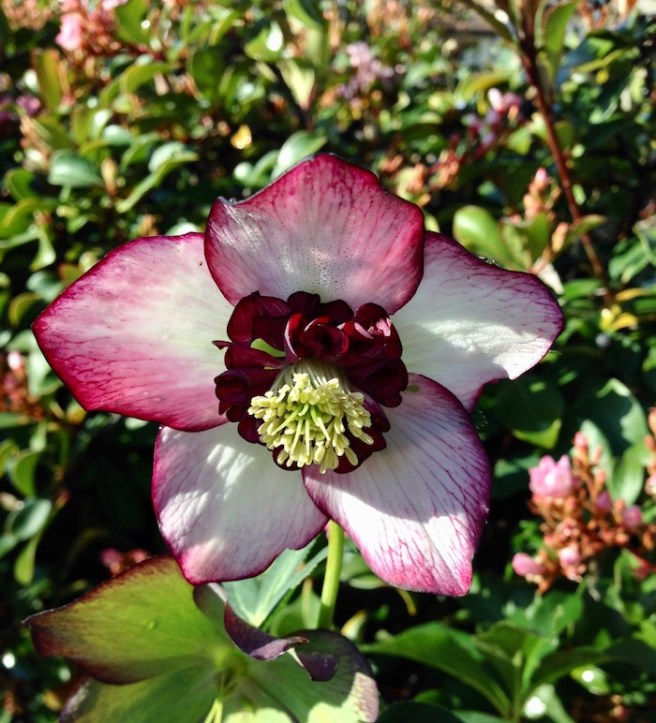
I never met a lenten rose I did not like and this one leaped into my cart with very little assistance. A little more purple than dark red or burgundy, it is a stunner called ‘Cherry Blossom’ from the Helleborus hybridus collection called Winter Jewels. The spent blooms, one of which you can see lower left, take on that typical lime green hue but still bear the dark edging. This was the only remaining flower in its prime throughout the half dozen or so gallon plants available to buy and it sold me!

So no white, nothing sun loving (or even tolerant) and certainly no new waterwise plants are calling my garden home after this trip but all together a fun day of seeing what’s as new and fresh as spring feels today.

Bits and pieces, buds and blooms…

The garden in early spring is more individual threads than the marvelous tapestry it will become in the coming weeks. Little bits and pieces of awakening life give me just a glimpse of this year’s promise.

bits and pieces 4

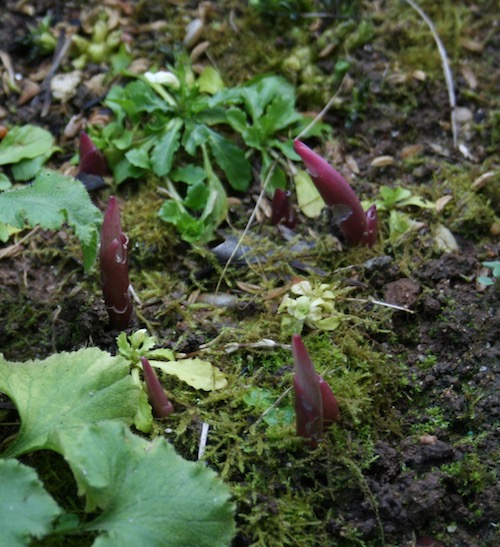
The pointy, burgundy starts of this year’s Solomon’s seal (Polygonatum odoratum ‘Variegatum’ push confidently out of the moist shade bed. Even in my shadiest area this woodland perennial dies back well before I get the benefit of its signature yellow autumn color. Notice that the slugs have all ready had their way with these babies.

The very first of the blooms on a Spirea cantoniensis ‘Flore-Pleno’, commonly called double bridal wreath spirea, added to the secret garden area last fall.

Redbuds have burst into bloom all over the city and mine is no exception!

bits and pieces 10

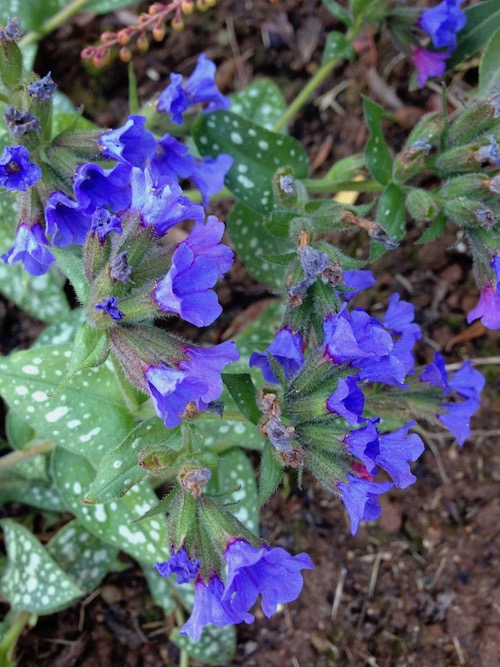
Pulmonaria ‘Trevi Fountain’ is always one of the earliest blues in the shade area and like its neighbor, Solomon’s seal, I lavish it with early spring attention even though I know its fate is to be a pretty crispy specimen by mid summer.

Fruit trees, both ornamental and edible, are at their most splendid in early spring.

New to my growing collection of vines is Clematis x cartmanii ‘Blaaval’, also know as the avalanche evergreen clematis. I purchased two of these in 2 gallon cans on a nursery shopping trip last fall. They overwintered in their proposed home but are still unplanted, awaiting their 6 foot tuteur climbing structures. This one simply could not wait until its change of address cards were mailed out and burst into bloom yesterday after a few weeks of these massed creamy bell shaped buds–its partner is not far behind.

The tilling and turning is finally completed on the new front bed. Next up is to establish a casual path (stone?) through it to allow me to access the large area from multiple vantage points for planting and maintenance. Find your gardening gloves and sharpen up your tools–your garden is calling!

Bloom alert…

A few days ago (February 16) I shared with you a bearded iris on the cusp of blooming–very early even in my mild winter weather garden. Throughout the daylight hours of Saturday, February 24th, this bloom slowly unfurled to its full 6″ beauty.

bloom alert 1

Tall bearded iris ‘Blueberry Bliss’, although beautiful, would probably not be a standout in a garden planted with many other bearded varieties blooming in shades of blue, lavender, purple and white but in my garden which currently has lots of healthy iris foliage coming on but no other flowers it draws your eye like a beacon in the night!

This one is new to my garden, part of a large Schreiners Iris Gardens order I planted last fall. The color is more purple than the advertised navy blue but the fans are robust and the stems are tall with 3+ branches each bearing many buds. Two other new varieties are planted on either side, one a midseason bloomer and the other a late bloomer, none of those fans are showing even a peek of what is to come. People who garden are the world’s most persistent optimists–there is always something to look forward to!


The winter that wasn’t…

This morning I enjoyed a fellow garden blogger’s new post entitled Snow Day from gardeninacity (a Chicago area writer) and my eyes were once again opened to the vast differences in gardening cycles across our country. Check it out and be sure to like, comment and or follow to let him know you’ve found his site.

On opposite side of the weather spectrum, most of us here in California are not buried under snow and would probably pay to have Chicago’s fluffy, white stuff trucked in to dump in our yards.

I always refer to my garden as being in a mild winter or temperate winter zone–not a dramatic winter with ice storms or snowfall but a winter where historical lows have been in the 40-50 degrees daytime, colder night and some early morning frost or fog. This “winter” is really our only hope of annual rainfall with almost all of the year’s precipitation occurring in December through February.

This year our winter has been more like a Southern California winter and So Cal’s winter  has often approached conditions that many other areas never see in their warmest winters. In January, my Orange County gardening bff posted pics on Facebook more than once showing her thermometer in the mid nineties. Late to the Garden Party is a great Southern California garden blog to check out if you want to see what’s going on down that way. Here in the Central Valley I have been shirt sleeved gardening since Christmas with temperatures pretty consistently in the mid 60s and 70s. Our mountain cabin at 5000 feet elevation has had no appreciable snow and has also seen much warmer than average temperatures.

All these extra degrees have not been accompanied by much measurable rain with the exception of the massive overnight storm which caused the devastating mudslides down the fire ravaged hillsides of Montecito near Santa Barbara. Our rainfall season in Fresno County runs from October 1-September 30 each year. Rainfall to date is 1.64″. Our normal or historical average is 6.74″ at this point and 11.5″ for the full season. Last year was a banner year for us in which we reached our normal full season number by mid-February.

There are both positive and negative consequences of all this lovely spring like but dry weather in months when we should be inside eating soup and binge watching Netflix. On the plus side, I have gotten an enormous amount of maintenance work done and will approach actual spring with a much shorter punch list. We also have been able to actively work on yet another lawn removal effort–with a wet winter we would have been looking at bare dirt until fall 2018.

IMG_6609

IMG_6608

Since these photos were taken we have started tilling and amending–more on this project soon.

Not so exciting is the prospect of a summer with even tighter outdoor watering restrictions (we are at a single day per week NOW with watering only before 9 am and after 6 pm) and a garden full of trees, shrubs and perennials which will enter the most heat stressed part of their year all ready somewhat starved for deep ground moisture. Many plants which normally gain the new season’s strength from their winter rest have never gone dormant and many others have all ready flushed out new growth which may be in danger of damage from an unexpected late frost.

Here’s a smattering of what’s blooming now in my garden:

Clockwise–Fernleafed lavender (Lavandula multifidia); Cherry Sunblaze rose; calla lily (Zantedeschia aethiopica)

Clockwise–Pulmonaria ‘Tivoli Fountain’; Veronica ‘Georgia Blue’; Scabiosa columbaria ‘Butterfly Blue’; unknown cultivar of pansy; Anisodontea x hypomandarum ‘Slightly Strawberry’

Clockwise–Geranium sanguineum striatum; Penstemon ‘Midnight’; Salvia chiapensis

I noticed this bloom stalk on one of my bearded iris just peeking out of the foliage on February 1st and photographed it on February 8th. I often have several remondant bearded iris bloom off and on all winter but this is by far the earliest I have seen a single bloom cycle iris with a bloom almost open.

IMG_6607

So while I am sure gardeners in snow covered areas are longing for spring, I am a little envious of those of you still tucked in for your garden’s long winter’s nap–at least it is a season you can count on!

Australian Astroturf…

IMG_4222

I have been accumulating a few miniature conifers to use in a shallow dish garden and recently made a quick pit stop at my local specialty garden center to pick up a small container of scotch moss to add to the plant mix. While ringing up my purchase the owner lamented about the fact that I had gotten the last one and how he had kept meaning to put a container aside to experiment with. I’ll admit I was not really focused on the exchange and when I got into my car I wondered what all the fuss was about–scotch moss is a dime a dozen in most nurseries!

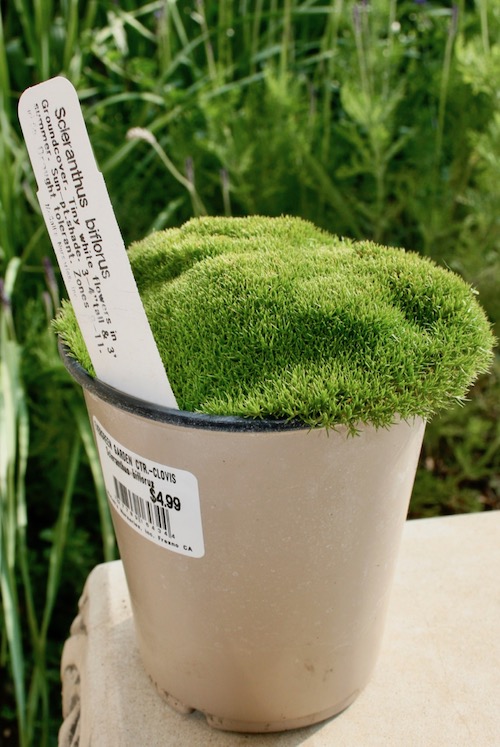
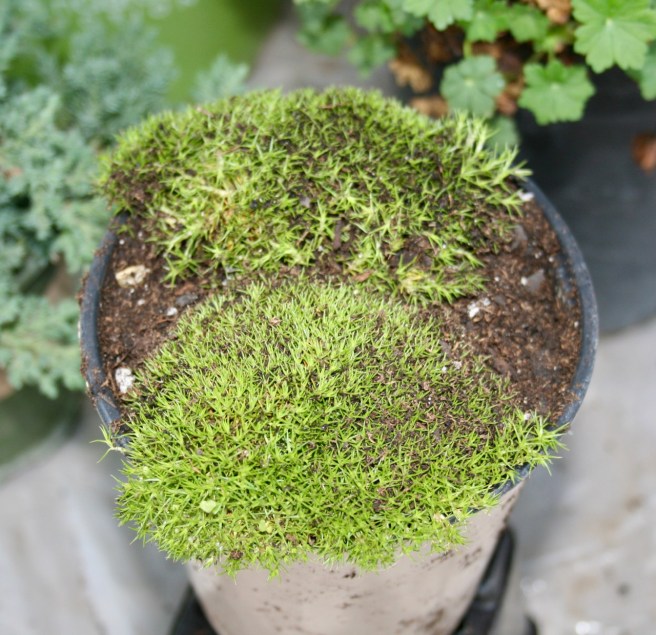
It was not until I got home that I realized I had NOT purchased the needed scotch moss but a look-alike called Scleranthus biflorus. The plant tag announced its common name as Australian Astroturf and I was immediately captivated, although still without the scotch moss!

IMG_4221

The almost instantaneous miracle of the internet supplied lots of information on this Australian ground cover, native to the country’s natural alpine and coastal areas. Who knew that Australia–home to every living critter that can kill you instantly–even HAD natural alpine areas? This perky mat forming, almost spongey perennial is part of the dianthus (think carnation) family and is known as lava lime to the down under gardening community. Most sources also mention that it will bear tiny white flowers.

Cultural requirements include a location with full sun to bright shade, USDA zones 9-11. The United States websites indicated the plant to be very drought tolerant while the Australian gardening web cited the need for some moisture. I guess the driest of our climate zones doesn’t even come close to what the Aussies deal with! The key seems to be excellent drainage.


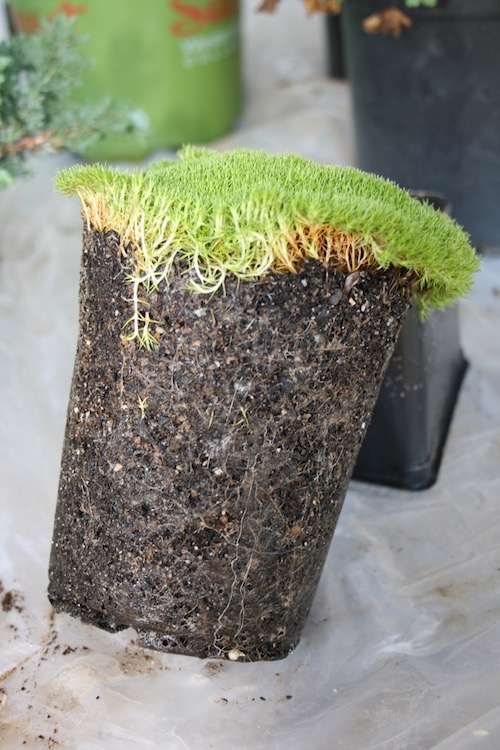
Pulling the specimen out of its quart container I found its roots to be a very fine but dense mass, perfect for division by slicing in half–giving me the opportunity to try it out in more than one location.

IMG_4226

IMG_4229

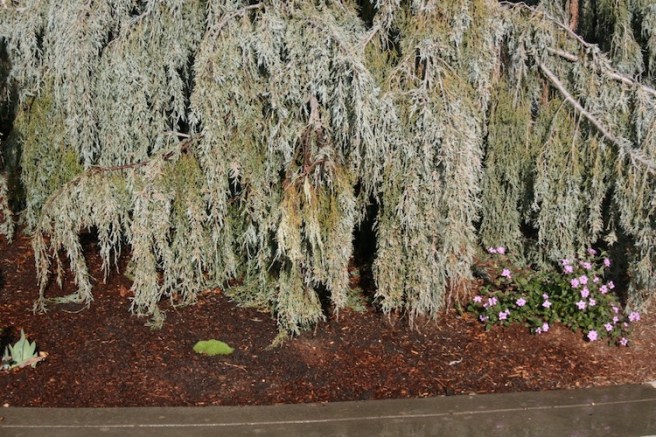
I put one half in a little full sun spot which gets some irrigation runoff from under the weeping juniper but is basically out of the direct line of fire of any one sprinkler. This little plug is only about 2″ by 4″ but its chartreuse color makes a great contrast to the blue green conifer. At a mature size of about 3″ tall with a 3 foot spread it should fill the open area without getting buried under the overhanging limbs.

IMG_4231

I sliced the remaining half in two and put the pie shaped pieces back in the original pot, alternating them with fresh potting soil. My bright but shaded holding area will allow me to keep an eye on the pot’s progress–it will be interesting to see how quickly the mass fills in!

A ‘new-to-me’ plant to play with gives me as much pleasure as a new pair of shoes, a great new dress or a special piece of jewelry might give someone else–the goes without saying exceptions being made only for for woodworking tools and diamonds! And now…back into the car to get that scotch moss.