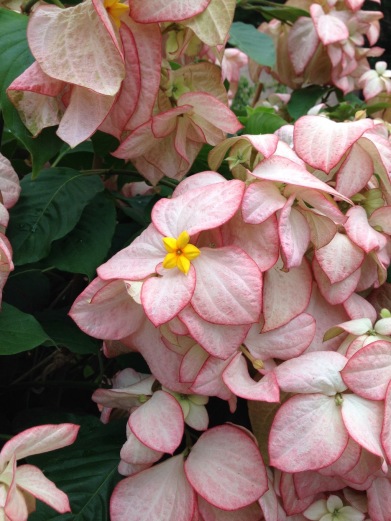
This eagle has finally landed…


Ila 17

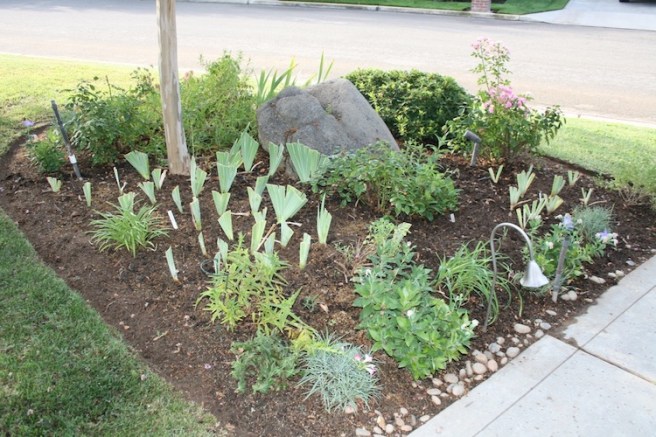
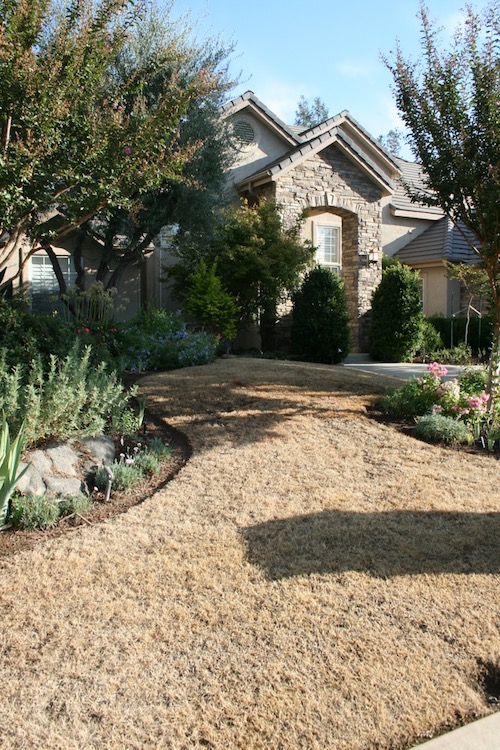
I recently wrapped up the seemingly interminable lawn removal/replanting of the long side yard bed between our side fence and the street. Living on a corner lot comes with blessings and curses. The biggest advantage is a little more privacy as we have no neighbor on one side. The curse (challenge?) is having a lot of area to landscape and maintain which is pretty well disconnected from the rest of our front garden and is not visible from any where inside our home.

As I have chronicled in several other posts, in June 2016 we initially chemically killed the ragged Heinz 57 variety grass planted the length of this approximately 140 foot bed along with grass in 3 other areas, including the large driveway circle bed tucked between our two driveways.  We finished the replanting of the other areas very early in 2017 and they all had successful summers. Our stamina flagged and the heat came and so we did not get back to it until fall 2017. Check out posts Now THIS is a Labor Day… to see the great rock relocation project; Autumn musings… for the plantings closest the driveway and A little cleanup and a few new friends… to see the second wave of new plants added to the bed.

We left number of the original elements in the bed, including 3 Bradford pear trees, which are all planted smack up against the fence. The trees are critical to us for privacy  plus shade AND as 2 of the 3 are original (18 yrs old) to the landscape I deemed removal of  some of the shrubbery whose roots are amongst and surrounded by tree roots to be a risk without benefit. The Rhaphiolepis indica and nandinas of unknown cultivar were trimmed up, along with several mature podacarpus, variety also unknown.

The pear trees drop an unbelievable number of leaves over a couple of weeks in late winter, usually early to mid January depending on the weather. The last areas of new plants and final mulching down had to wait until leaf fall was completed and cleaned up. Their bare limb stage is very brief and they are all ready showing buds.

Ila 13

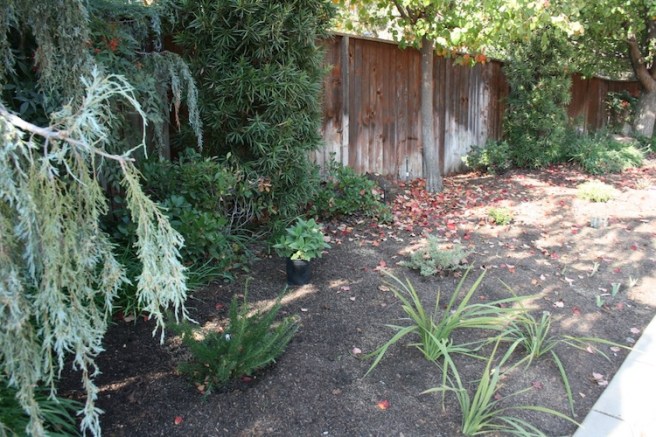
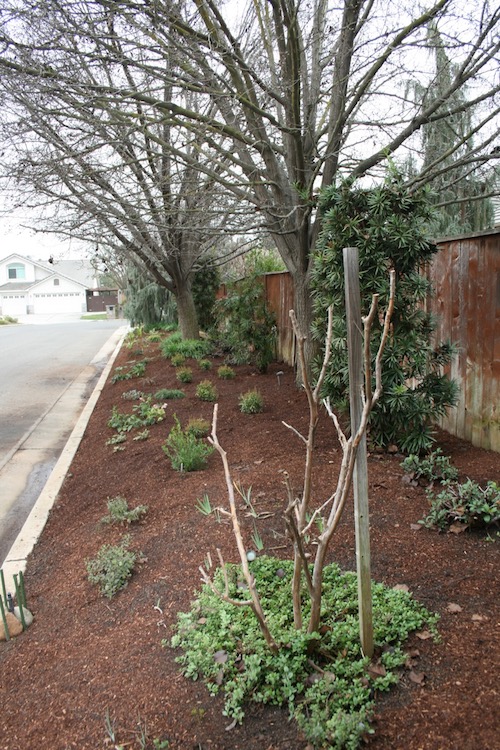
It is almost impossible to photograph this bed without crossing the street and standing on my neighbor’s porch! Even though many of my plant selections look very small–I opted for 1 gallon on almost everything–quite a few will be large scale shrubbery at maturity. A number of my SLO Botanical Garden purchases went in this bed. My goal is moderate to low water usage. The trees need regular water so I had to find a balance of materials that would tolerate summer water. As each section was hand dug around major tree roots and planting points determined, every hole was filled with water to sit overnight to test drainage. Luckily I had to change only one intended planting spot–far fewer than I had anticipated!
Ila 12

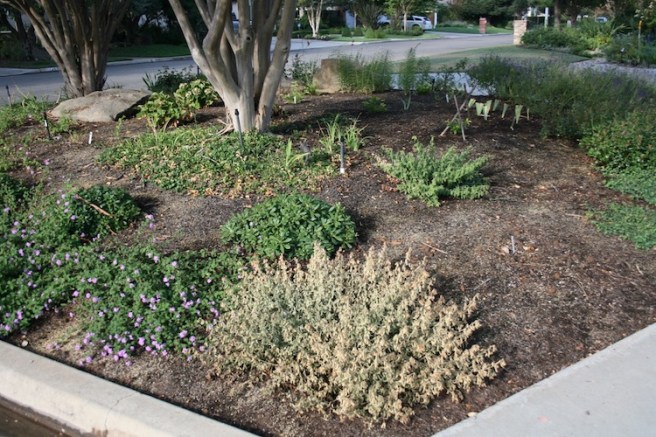
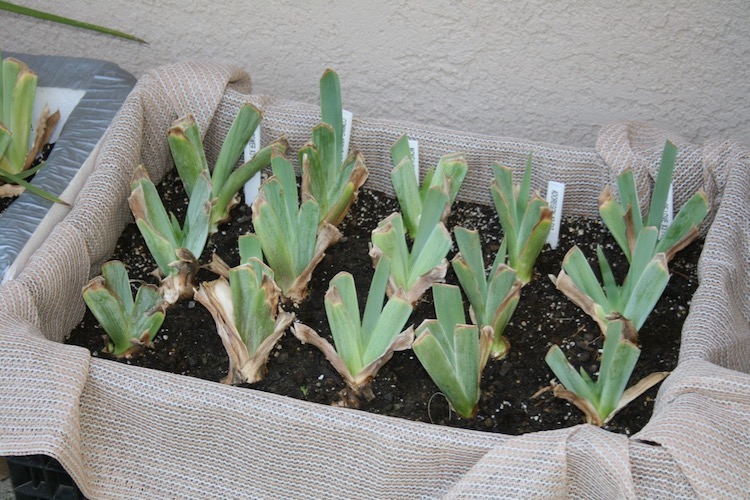
Looking from the furthest point back toward the driveway. This pitiful tree is a crape myrtle that we moved about 5 years ago. It also was right up against the fence and we moved it midway between the fence and street. Last summer the tree actually bloomed for the first time ever since we purchased the house in 2008. It is a gorgeous, clear purple–possibly a ‘Catawba’.  At the base of the tree is a 2 year old colony of Convolvulus mauritanica ‘Moroccan Blue’. There are also quite a few bearded iris in blues, whites, and purples that have been moved to this sunny end over the years as I have had divisions with no other place to go. Two lavender lantana will fill the area closest the curb–readily available and easy to get going. I am using them throughout these renovations as filler plants while more permanent shrubs mature.

Ila 11

The area fully in the shade canopy of the pear trees needed an evergreen backdrop and I chose Pieris japonica ‘Tiki’ to fill the bill. The common name of this plant, lily of the valley shrub, is evocative of the pink to white pearl like clusters of drooping blossoms. ‘Tiki’ is on the smaller side of the pieris selections, topping at about 3-4′ tall. My group of 5 should make a nice show once all the buds open!

Ila 8

Also in the shade canopy area but getting a good bit of the rising sun I added a hardy geranium with chocolate hued foliage. This unmarked find came from Branches & Barrels in Encinitas, a great little garden and event center in north San Diego county. It has lots of new foliage, a brighter green than the more mature leaves, and I anticipate that when I have blooms I may be able to identify it from my resource library. It is hard for me to leave a hardy geranium not already in my collection behind for someone else to snap up!

Ila 7

Ila 10

No shady area in my garden is ever complete without a few hellebores. I added 2 groups of three plants each, hoping for a pretty full look in a reasonable period of time. The top photo is Helleborus orientalis ‘NW Cotton Candy’. Its ruffled double light pink flower has darker pink veins–the first one opened yesterday and you can see it up close at the beginning of the post. The single pink flower just above is Helleborus orientalis ‘Pink Frost’As this bed slopes nicely from the fence to the street it affords a better view of the flowers than if it were totally flat. I hope to have placed them forward enough to catch the morning sun but back enough not be trampled by people getting out of parked cars.
Ila 6

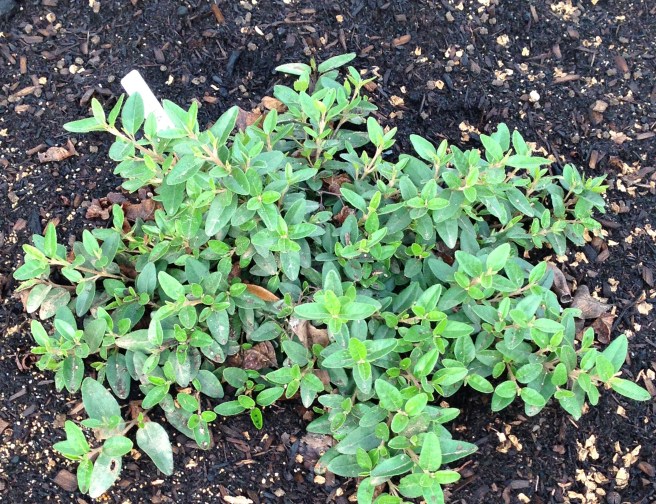
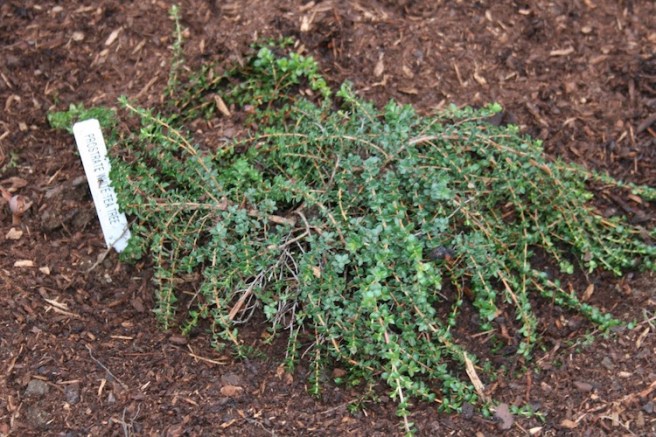
Another Branches & Barrels find is Leptospermum scoparium ‘Star Carpet’, or prostrate white tea tree. The foreground of the center pear tree is ground zero in its need for a cast iron plant selection. It is sloped more sharply than the surrounding areas and to find planting crevices amongst the mature, close to the surface roots is challenging. The reference material for this lesser known variety of the upright New Zealand tea tree characterizes it as a good bank cover tolerating dry conditions. The leaves are tiny but plentiful on delicate weeping branches which should spread 6-8 feet. The wild card on this one will be sun–hopefully the morning sun will be adequate for production of its small star shaped white flowers. I think dry shade is perhaps the hardest condition for which to find plants. Three of these went in the ground about 2 weeks ago and I do have new growth. Everyone, keep your fingers crossed!
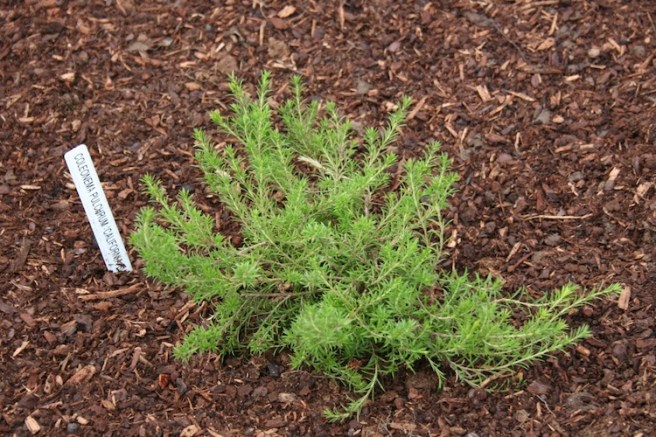
Ila 5

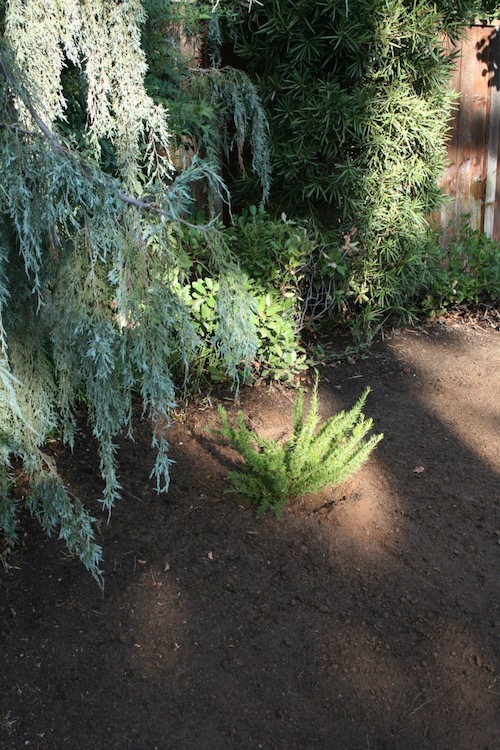
The canopy opens up near the newest of the pear trees, requiring plants with more sun tolerance. Even though this bed faces east and gets only morning sun; that sun can be quite strong at the peak of summer. Complicating the issue is that, over time, the area will be ever more shaded. At some point there will be more shade than sun except in the very early hours of the day. Breath of Heaven is an evergreen shrub native to South Africa and much used in my valley as foundation plantings. Their delicate character is appealing and their leaves are aromatic when bruised. The Coleonema pulchellum ‘Sunset Gold’ is lower than the species and bears tiny pink flowers on yellow gold stems. It has actually been kind of fun trying a little bit of this and a little bit of that in this new bed!
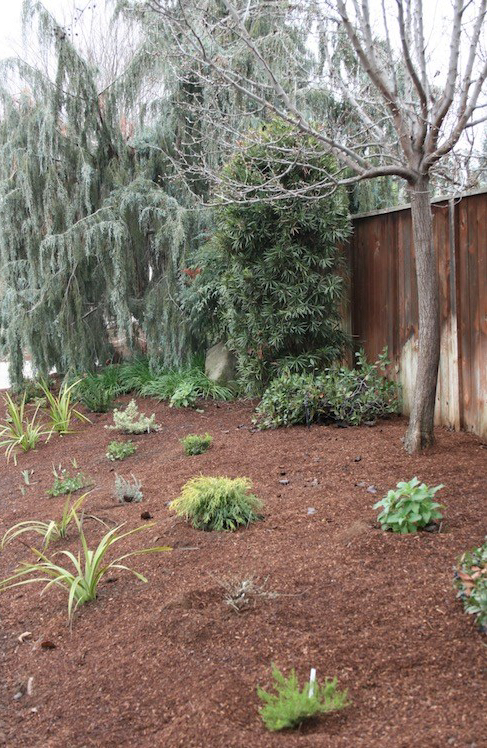
The plants below were described in the previous posts about this bed renovation but here’s a look at them one more time.

Left: Teucrium betonicum Right: Leucophyllum langmaniae ‘Lynn’s Everblooming’

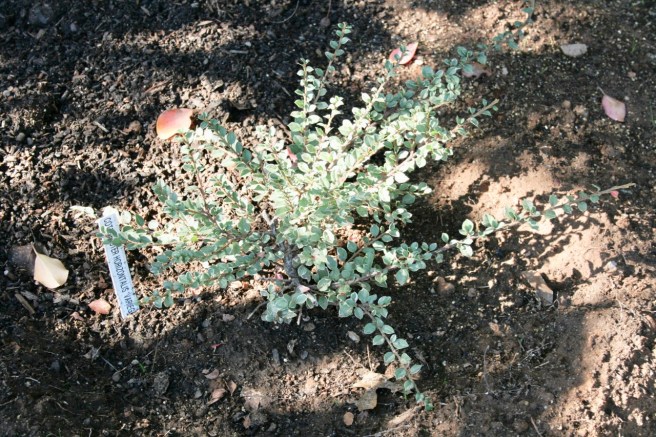
Left: Grevillea ‘Pink Pearl’ Right: Cotoneaster horizontalis variegatus

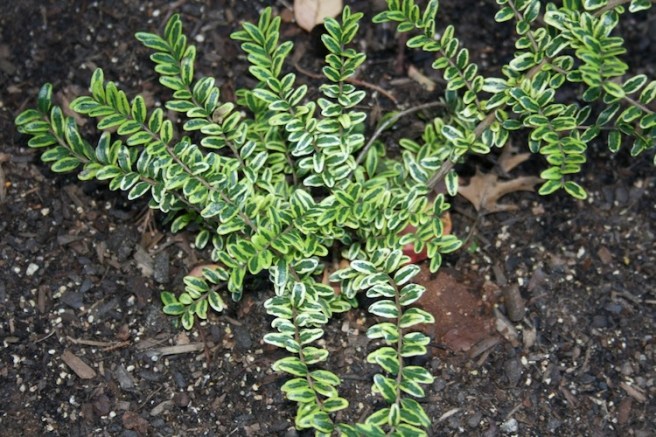
Left: Plumbago auriculata ‘Alba’ Right: Lonicera nitida ‘Lemon Beauty’

Left: Chamaecyparis pisifera ‘Sungold’ Right: Dorycnium hirsutum

The larger part of the bed has filled in very well–most plants were added in October. We did have the treelike weeping juniper professionally trimmed in late summer and I think it looks better than it ever has.
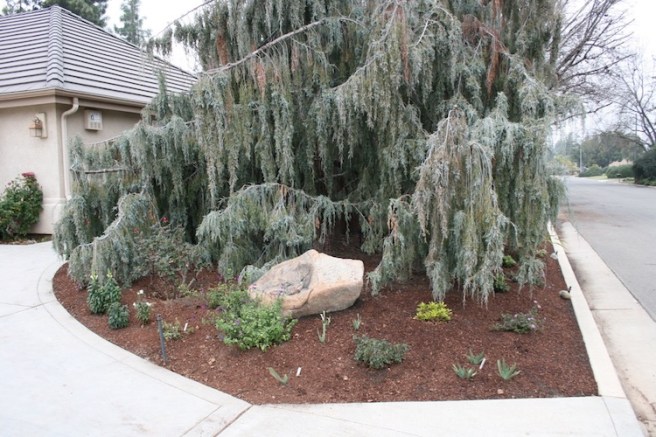
Ila 2

Ila 1

No doubt I will add a few more bits and pieces over time–a plant collector’s wheelbarrow is never truly full–but I feel as though the time is right to let this initial go around of plants settle in and see how they fare through the summer.
 

Sierra Azul and Sculpture IS in the Garden…

Happy New Year to all my gardening friends! A very warm December and early January has lured me away from my computer and into my garden more than usual for what is supposed to be winter. Before I catch you up on what’s going on in the Queen’s little 1/2 acre I want to close the loop on the Watsonville trip I wrote a bit about in my December 6, 2017 post Gardening with Goat Hill Fair….

One of the facets of chronicling my garden travels for this blog that has proved an unexpected pleasure for me is learning a little about the history of the communities, events and gardens I visit. Even as a native Californian there are so many places in my own state that I have never visited!

Watsonville is the second largest community in Santa Cruz County. The city of  Santa Cruz has always been a popular beach destination for Central Valley residents and those of us who stayed in town for college thought that our friends who went of to UC Santa Cruz had died and gone to heaven…to party forever! I am pretty sure Watsonville–just a few miles away–was never on our radar. Watsonville was settled in 1852 and named after Judge John H. Watson who arrived in the Pajaro Valley and set up a claim on a portion of the Bolsa Del Pajaro, a land grant belonging to a prominent Mexican-American settler. Watsonville’s history is based in agriculture, growing products such as strawberries, apples (it is the home of Martinelli Cider), berries, lettuce, mushrooms and cut flowers. The rich, fertile land and favorable agricultural climate of the Pajaro Valley remains the basis of the area’s agricultural success today.

I have been buying plants grown by Sierra Azul Nursery from my local garden centers for many years and so I was excited at the prospect of visiting the nursery and meeting its owner, Jeff Rosendale. Jeff’s wholesale operation, retail nursery and demonstration garden are located on E. Lake Avenue, a stone’s throw from the Santa Cruz Fairgrounds and enjoy a spectacular view of the distant mountain peaks. The nursery’s name is taken from the mountain range of the same name. The southern half of the Santa Cruz Mountain Range is divided in two by California State Highway 17 into what the colonizing Spanish called the Sierra Moreno, “brown mountains”, to the north and Sierra Azul, “blue mountains”, to the south.

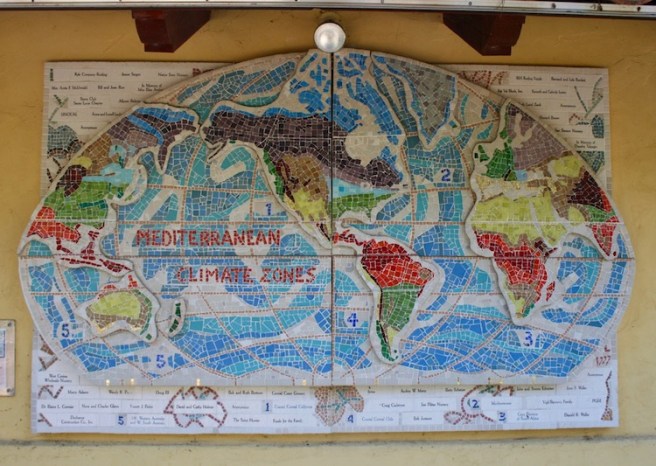
Sierra Azul Nursery & Gardens specializes in plants from the 5 Mediterranean climate zones–remember the great mosaic art piece at the San Luis Obispo Botanical Garden (see November 6, 2017 post SLO down for this Central Coast botanical garden) describing these 5 zones? Most of what the retail part sells is grown on the property.

SLOBG 12

Owner Jeff Rosendale’s 2 acre demonstration garden adjacent to the retail nursery offers insight into what many of the plants he grows will look at mature size during various times of year. While it is not a manicured garden, it is a very realistic representation of how a wide variety of native and non-native trees and shrubs can work together in large scale borders.

Sierra Azul 4

The rocket ship like conifer in the background is Sequoia sempervirens ‘Mt. Loma Prieta Spike’, unfortunately no longer being grown for retail purchase. I loved it!!

In 2006, Sierra Azul’s demo garden became the backdrop for a project of the Pajaro Valley Arts Council dubbed Sculpture IS in the Garden, an extensive installation of art pieces from California artists. The open air exhibition now runs from June 1-October 31 yearly. Even though the event was technically over when I visited Sierra Azul many of the art pieces were still in the garden, along with pieces Jeff has acquired for his permanent garden collection. The 2017 event showcased over 90 pieces of original art. Included each year are works (many for sale) in a variety of styles and media, including steel, wood, ceramic, bronze, glass and concrete. Many are large scale. Some are static, some bend in the breeze. The winding open spaces of the garden drew me through the beds and borders, finding something new to admire at each turn. Over 1,000 pieces of sculpture have been featured in the garden in the past 11 years. Here’s a small sampling of what I saw.

Sierra Azul 1
This playful Pisces greets visitors just inside the property’s gate.
Sierra Azul 3
This organic representation of earth hangs high in the trees.
Sierra Azul 6
Bird and Gear by William Huffman was one of the pieces offered for sale.
Sierra Azul 2
Another large scale piece rising from the landscape–I loved the fanciful rusted iron face!
Sierra Azul 9
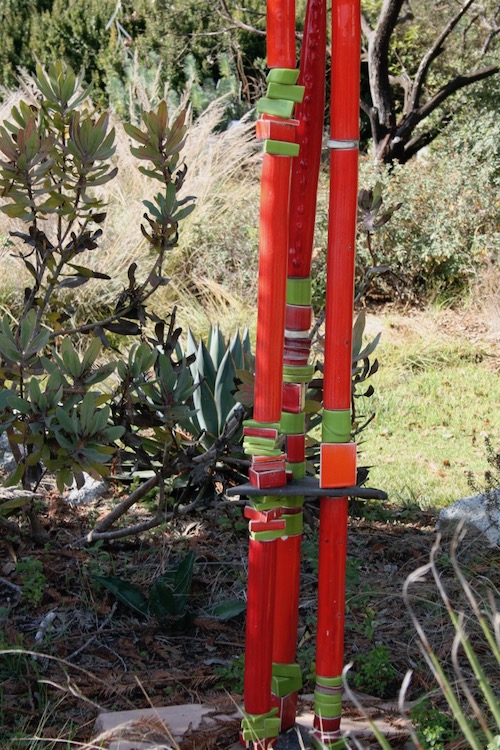
One of a series of colorful ceramic totems–I am obsessed with totems in the garden.

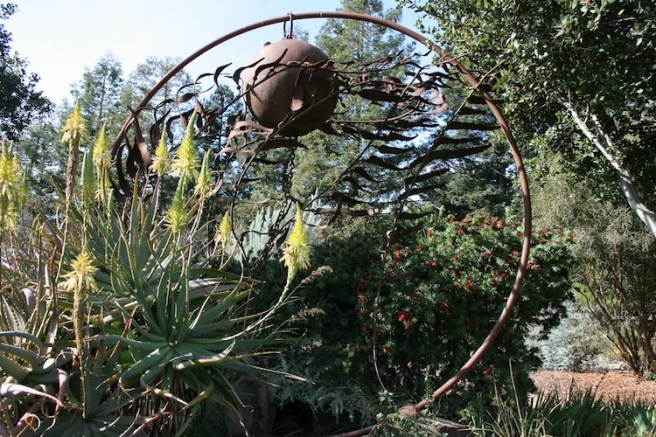
This huge bronze and steel sculpture entitled Woven Ring by Paul Cheney was my favorite piece–it can be yours for $7000.

Recognizing that I was lucky to even see a few of the pieces displayed this year I am putting a 2018 road trip to Sierra Azul on my calendar DURING the exhibit dates so I can get the full experience, including taking in the plantings during their best season.

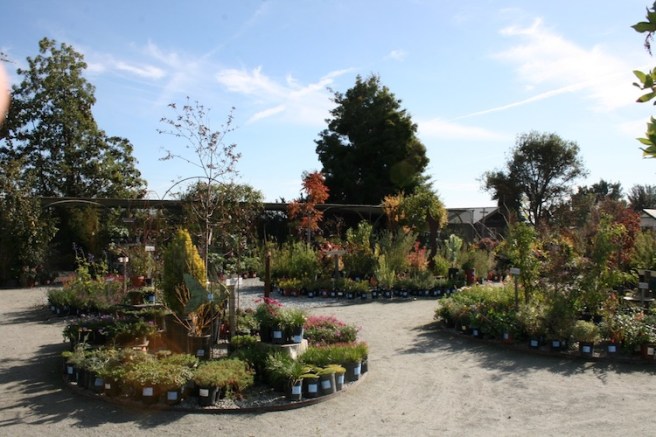
I  spent a very enjoyable hour strolling the retail nursery and selecting a few interesting additions for my garden. The retail area is compact and gardener friendly. Like plant families are grouped together with lots of variety in each area. I am assuming that having your growing operation just steps away allows Jeff to keep just a few of each plant on display with the possibility of providing a larger quantity of a single species  upon demand.

Sierra Azul 17

Sierra Azul 11
Phormium and Cordyline varieties  with the demo garden in the background.
Sierra Azul 14
Lots of Pittosporum on the left and Leucadendron just past them

Garden centers in Southern California, the greater Bay Area and Central Coast are finding that plants of Australian and South African origin fit the bill for drought tolerant plantings in their warm winter climates. I see more and more varieties of Leucadendron and Banksia–genera with both interesting foliage and flowers. We see few of these in my somewhat colder winter valley. Sierra Azul has a nice selection in both these plant groups. They are fascinating to me but I am not sure about long term winter survival in my garden.

This huge Banksia integrifolia dwarfs the little redwood check out cottage!

Sierra Azul 12
Lots of Banksia, including integrifolia, await shoppers
Sierra Azul 21
Leucadendron argenteum or Silver Tree
Sierra Azul 22
Leucadendron salignum ‘Golden Tulip’

Sierra Azul 24

I had to keep my hands in my pockets while passing this Correa ‘Wyn’s Wonder’. I love the dainty bell shaped flowers BUT the three Correa, although a different variety, I planted in the driveway circle last year were the only plants I lost–dead, dead, dead!

Sierra Azul 23
This was a new one to me–called Astelia nivicola ‘Red Gem’–and described as an evergreen perennial for shade.
Sierra Azul 19
There were many Grevillea to chose from–including this one Grevillea ‘Robyn Gordon’.
Sierra Azul 15
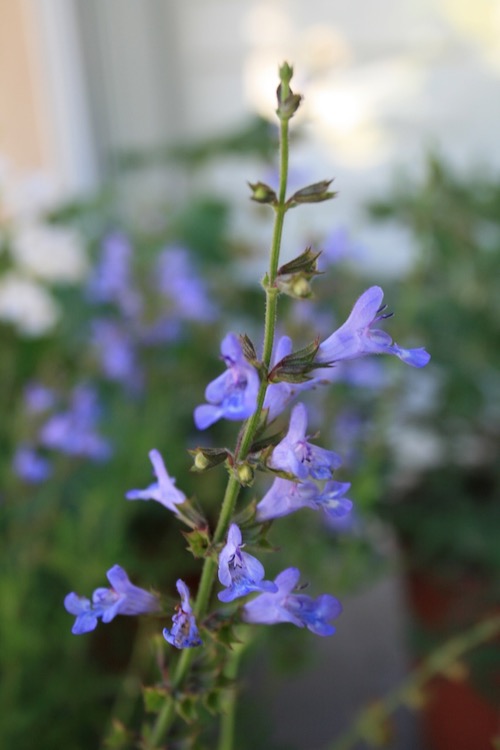
I never met a sage I didn’t like!
Sierra Azul 20
My booty accumulates!

Some of my purchases have all ready found places in my garden, others are resting in my holding area awaiting the right spot. Take a look!

Sierra Azul 27
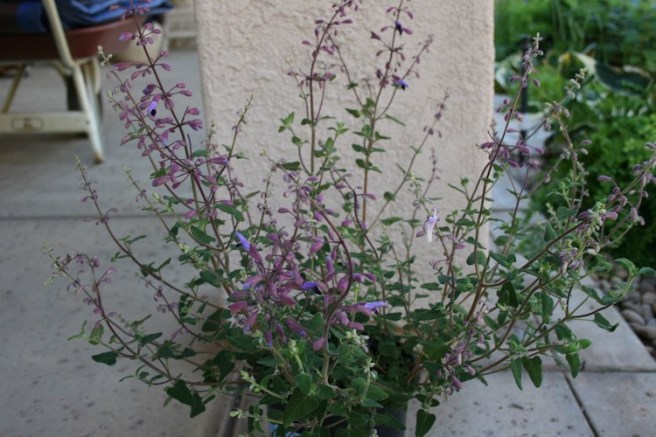
Salvia repens x namensis–a low selection with leaves similar to scented geraniums
Sierra Azul 26
Salvia repens x namensis–bloom closeup
Sierra Azul 28
Salvia semiatrata–very delicate looking but purported to be 4 feet tall and wide
Sierra Azul 25
Salvia semiatrata–bicolor bloom closeup
Sierra Azul 32
Pelargonium quercifolium–common name oak leafed geranium
Sierra Azul 30
Salvia mellifera ‘Calamity Jane’
Sierra Azul 29
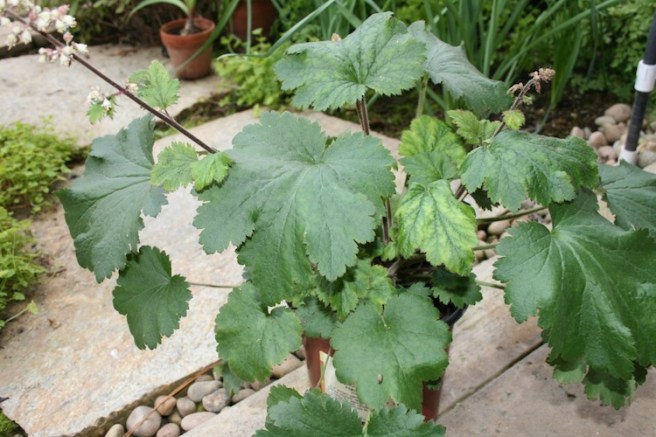
Heuchera maxima–a California native with huge leaves
Sierra Azul 31
Salvia somalensis–bright green velvety foliage

So many of the specimens I purchased are new to my gardening experience. It will be fun to see how they perform and share their success or failure with you. Sierra Azul Nursery & Gardens has a permanent place on my ‘make time to stop’ list if I am anywhere at all close. Check out their website at www.sierraazul.com for more information and contact information–also a series of pictures of lawn free landscapes Jeff has designed. A++ for a great selection of plant material, helpful gardening advice and a welcoming garden for a picnic lunch when I have done my shopping!


Perfect poinsettias…

I know I am not the only one for whom the arrival of truckloads of bold red poinsettias to every type of business in possession of a cash register signals the coming of Christmas. I recently had the opportunity to spend an hour with Belmont Nursery owner Jon Reelhorn and learn more about the journey all those plants make in the months before they end up on our mantels, holiday tables and front porches. Thank you to my friend and blog follower Ann D. for making the introduction to Jon–I learned so much!

Poinsettia 8
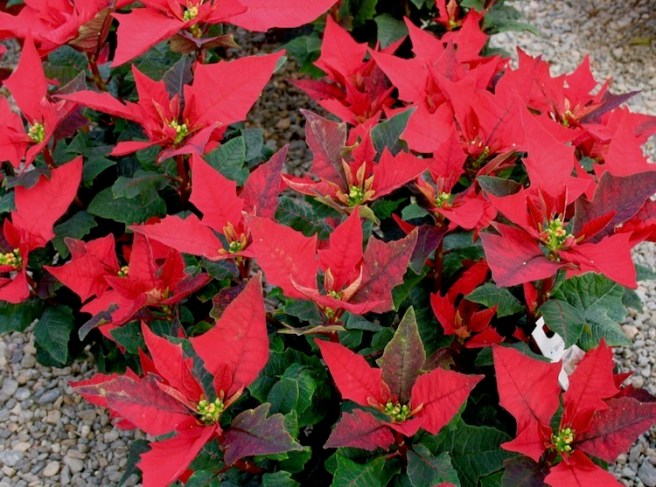
What we think of as the blooms are actually bracts–a leaf modification. The flower is the tiny yellow center!

Within minutes of shaking hands with Jon and stepping into the first of several covered greenhouses I would see, he disabused me of my clearly outdated understanding that growing poinsettias is a process of precise calculations of  daylight hours and manipulating those daylight hours on a schedule of black-clothing to the ultimate end of bringing the plants into bloom just at the right point for retail sale.

Let’s step away from the poinsettias at Belmont for a brief history lesson which starts with the Ecke family of Southern California. In a 2008 article, the Los Angeles Times characterized the 4 generations this way: “The Ecke family of Southern California is to poinsettias what DeBeers of South Africa is to diamonds.” I’ll try to put the story in a nutshell for you. German immigrant Albert Ecke and his family established a dairy and orchard in northeastern Los Angeles in the early 1900s. The green and red poinsettia shrub native to Mexico and Central America grew wild throughout Southern California and Mr. Ecke started to grow the plants outdoors on farmland in Hollywood, selling them from street corner stands.

Albert Ecke’s son, horticulturalist and businessman Paul Ecke Sr., saw the plant’s commercial potential. Through his closely guarded propagation efforts the somewhat straggly outdoor plant was turned into a sturdy floriferous potted plant and he moved the operation to Encinitas on  the San Diego coast. Paul Ecke Jr. expanded the family business and by the 1960s the plants had been moved indoors to greenhouses. Where the family once shipped thousands of plants by rail all over the US, Paul Jr. saw the benefit in selling the cuttings to other nurserymen to be grown locally. The uniform plants with multiple branches emanating from a single stem are still referred to as the “Ecke style”.

In the early 1990s a university researcher published an article revealing to the horticulture world that the Ecke poinsettia secret was not in the pollination or breeding but in the grafting of two types of poinsettias, thus opening the door to competition. The last poinsettias were grown for sale at the Encinitas ranch in 2006 and the business was sold in 2012. Breeding efforts in the last 2 decades have produced plants of many hues and plants with crinkled or marbled bracts. Most importantly, advances in breeding have lead to plant cultivars which bloom naturally early enough for the Christmas sales period–no more counting the daylight hours and black-clothing. Now, back to Jon and the Belmont Nursery poinsettias.

The poinsettia’s botanical name is Euphorbia pulcherrima. Indigenous to Mexico the plant derives its common name from Joel Poinsett, the first United States Minister to Mexico, who introduced it to our country in 1825. Today there are over 100 cultivated varieties and they remain one of the most popular holiday flowers.

Most of Jon Reelhorn’s poinsettias are pre-sold for use as holiday fundraisers. A single greenhouse at the retail location houses plants ready for shoppers; to see the breadth of Belmont’s poinsettia crop we hop into Jon’s car, along with a friendly white lab, and head for the nursery’s nearby propagation grounds. Our first stop is Henderson Experimental Gardens on McCall Avenue. Jon’s brief history of this site which has been used for plant production since the 1940s leads me to believe it is worthy of a blog post of its own–I’ll save that for another day.

Wow! The greenhouse door opens (with a small motion from Jon, the lab acknowledges that this is a no dog zone and waits for our return) to this breathtaking site.

IMG_4119


Poinsettia 7

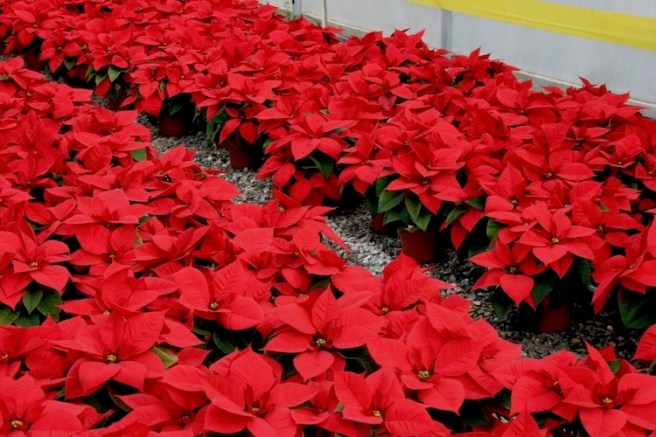
These are ‘Premium Red’–Belmont’s most popular poinsettia. Very sturdy–they are not caged or staked like the ones you can pick up at the big box stores-and fully red; these are the classic Christmas potted plant.

Belmont’s poinsettia crop begins with unrooted cuttings from South America. In general, the nurseryman manages the production of each variety based on its genetic flower initiation date and the desired ready for market date. For the varieties Jon favors September 21 is the target date to have his cuttings in production–making them a perfect  crop to fill some of his seasonally empty greenhouses. At Belmont Nursery the cuttings are planted in their finished sized pots (there is no successive ‘potting up’ from small to finished size) and misted only until the bracts emerge. Drip irrigation meets their water needs from then on. The plants get no extra temperature control–they grow with whatever day and night temperatures prevail. The sticky yellow tape running along the rows attracts white flies and other pests and clues Jon in to what is going on in his greenhouse so that he can treat appropriately. A very specific regimen of pinching is the key to a sturdily branched plant meeting the grower’s size desires.

Poinsettia 2

Poinsettia 13

Poinsettia 14

At yet another growing site–the vast majority of the several thousand plants Belmont produces each year are in 6″ containers but in this greenhouse there are a few 8″ pots being grown of some varieties with fancy Christmas Rose bract shapes. On the right above is the variety ‘Jester’. It has a much more upright bract than ‘Premium Red’, allowing more of the lower green bracts to be visible. The plants in the middle photo are slightly less mature than the ones directly above–they just need a little more time.

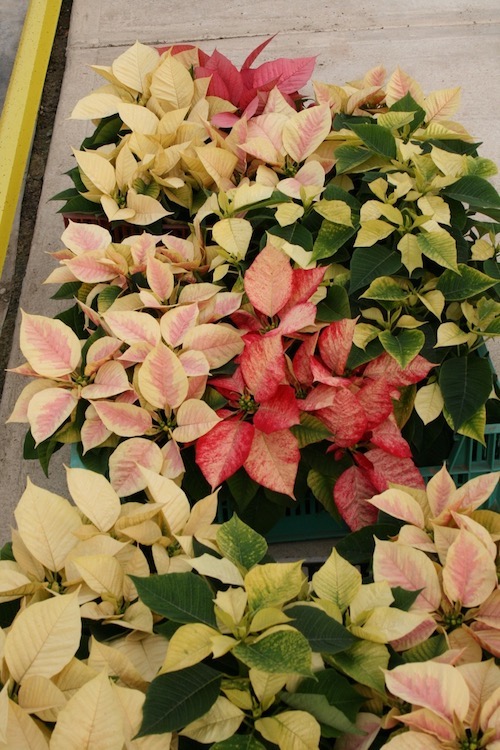
Jon’s favorite variety is called ‘Ice Crystal’. This year he ordered 200 cuttings but his suppliers sent him the cream and pink ‘Marble’ by mistake. The one above looking as though it has been dusted with pink sugar is ‘Ice Crystal’.

Poinsettia 11

‘Ice Crystal’ is exceptionally prized by Jon this year as he has so few!

In response to my query about my preferred bright pink plants, Jon explained that the reds are overwhelming more popular and after many years of running out of red and having the other colors left over,  he sticks to the sure winner–clear medium red like that of ‘Premium Red’.

Poinsettia 10

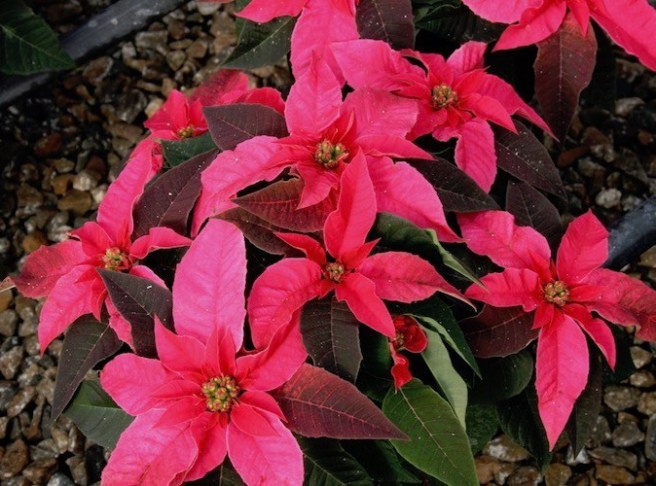
He did offer up this petite fuchsia called ‘Princettia’ which had lots of flowers on a small scaled plant. I checked this one out online and found that it is one of a series which includes white, several shades of pink and a red. It is being promoted as a bed and border planting in mild winter areas, blooming right up to first frost.

Poinsettia 15

The development of a Thanksgiving poinsettia called ‘Gold Rush’ has expanded the plant’s traditional season. There were a few of these left for retail sale on the day I visited. They were truly beautiful and now that I have them in my sights I plan to make them a part of my late fall tablescapes from now on.

Thank you to Jon Reelhorn and Belmont Nursery for expanding my knowledge of and appreciation for what goes into producing these iconic symbols of the Christmas season.


A little cleanup and a few new friends…

Some very pleasant fall days and moderate improvement to the various spring and summer injuries which have largely kept me out of my own garden for the last six months have provided the opportunity to do some much needed cleanup and and dig in some plants that have rested in my holding area for far too long. I am still only able to work in blocks of a couple of hours at a time so I focus on small areas and tasks with the hopes of actually being able to get the job done and tidy up whatever mess I’ve made in the doing of it before I give out!

Aut Reflect 18

In my October 2nd post Autumn musings… I showed you this curved bed near our back patio, ruefully pointing out that I had totally lost control of this climbing floribunda rose, ‘Morning Magic’. The confusion is rounded out with a huge clump of bearded iris needing division and a stand of Penstemon ‘Raven’ (lower right) which totally obscures the stepping stones and is laying on top of any number of other small perennials along the bed’s edge.

IMG_3721

The climber got a pretty drastic haircut for November. Warm days have encouraged lots of new growth in the couple of weeks since this photo was taken. Gardeners here often deadhead and  strip the leaves off roses in November to encourage them into dormancy, following up with the annual major prune in January. I resisted this practice the first few years we were here because I just hated to chop on roses that still looked fabulous but have come to accept that the practice does force them into a needed rest and offers a chance to dispose of diseased or damaged foliage before rains knock those leaves including whatever is attached to them to the soil below. Woo hoo! Check out those great stepping stones. The penstemon probably needs to be relocated to an area which would better accommodate its 4′ X 4′ late summer size. It is cut down to about 12″. The bearded iris have been divided with 5 nice fat rhizomes in place for next season. I potted up another half dozen for relocation to other beds.

Dave and I continue to work on the long side yard bed–site of the great Labor Day rock relocation. Digging and amending is VERY slow as minimizing tree damage is a high priority. In September, this entire stretch was treated (along with the rest of the yard) with John & Bob’s granular blend which is a combo of their products Optimize, Maximize and Nourish Biosoil. It also got a good drenching of their Penetrate Liquid Biotiller.  John & Bob’s Smart Soil Solutions was a Garden Bloggers Fling sponsor this year and John toured gardens with us as well as giving a great presentation of their product line. Check them out at http://www.johnandbobs.com for more information.

IMG_3727

IMG_3731

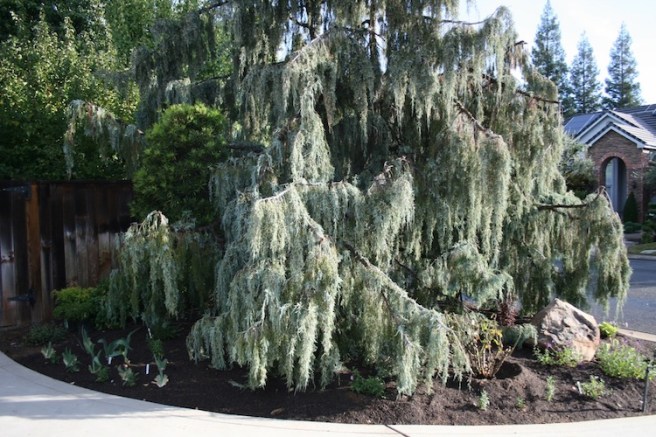
This bed gets a lot of sun at various times throughout the day and so needs plant material that can take the heat and also survive the root competition for water. The huge Juniperus scopulorum ‘Tolleson’s Blue Weeping’ is clearly the focal point and we are just nibbling a little around the edges with some additional foliage interest and a bit of color. Transplanted from the backyard, a ‘Double Knock Out’ rose occupies a void amidst the graceful weeping branching of the juniper. A couple of dark purple Salvia greggii had shown up as ringers in the large grouping of Salvia ‘Mesa Azure’ we planted in the driveway circle bed last fall so I moved them across the driveway to snuggle up against the boulder. I have had 2 replacement 4″ ‘Mesa Azure’ waiting in the wings for a good long while, ready to pop in once the darker purple ones found a new home. A single carpet rose ‘Pink Splash’ will eventually fill the driveway/street corner area–another repeat from selections used in the driveway circle. For street side consistency the ‘Wheeler’s Dwarf’ pittosporum were also repeated but I expect they will end up being  only a green blur beneath the weeping blue branches overhead. A six pack of snapdragons, purple trailing lantana, and bearded iris from my copious supplies of potted up divisions will fill in quickly to give cover while the other plants fill out.

Turning the corner I have worked my way down this long narrow bed about 25 feet–so far concentrating on an open area that is in full sun until 2 pm or so in the summer months. The shorter days have certainly brought the dappled shade sooner. In years to come the youngest of the three Bradford pears may may totally shade this area out except for the eastern rising sun but now this area still requires plants that will withstand strong sun at least part of the day.

New Friends 19

I decided to use this stretch as sort of an experimental area to test out some plants I have not grown before. With the trend toward water conservation we are seeing many interesting and reputedly tough plants become much more available. The challenge for me has been to be able to integrate some of these in beds which all ready have mature shrubs or perennials that take average water. I am doing quite a few ‘one of’ large scale shrubs/ woody perennials–trying to determine what will fill my extensive real estate and prosper with minimal attention. Many drought tolerant shrubs will accept more water than they require as long as they have excellent drainage and to that end we are paying special attention to each planting spot selected.

New Friends 25

New Friends 15

This trio of Lonicera nitida ‘Lemon Beauty’ is a wild card. Sunset lists mature size as 4′-6′ feet and wide while the plant tag (well known grower but I can’t remember which one) lists 18″ X 18″. I think I have actually purchased this plant once before and gave it to a gardening friend when the Sunset Western Garden Book  scared me off.  The lemon and lime green edged leaves brighten up this small opening at the base of the tall juniper and I stand ready to dig them out if I wake up one day and they are 3 feet tall! Notice how my fresh humus top dressing is a porta-potty beacon to every cat within 5 miles…

New Friends 14

I introduced you to Grevillea ‘Pink Pearl’ (far left) in a previous post–since it was planted in September it is looking great and has put on buds at its stem ends.

New Friends 22

New Friends 23

To its right are three good sized seedlings of Aristea ecklonii dug from near their mother plant by the pool. In this spot these prolific reseeders can just have their way with the open ground. The cheerful, blue flowers and spiky stems are almost indestructible. Below you see the blooms from their mother plant.

cuties-3.jpg

Teucrium betonicum, still in its pot in the wide shot above, has now been planted. This is one of my San Luis Obispo Botanical Garden purchases. Its leaves are hairy and aromatic and should sport purple flowers in spring and summer. This plant matures at about 3 feet high and wide and withstands poor soil and dry conditions. Given irrigation it must have excellent drainage.

New Friends 20

I am trying out a Texas ranger in this bed called Leucophyllum langmaniae ‘Lynn’s Everblooming’. Purported to be a dense grower which flowers profusely, it sure doesn’t look like much now.

New Friends 21

Below–another SLO Botanical Garden find is Dorycnium hirsutum, the hairy canary flower.

IMG_4106

This perennial shrub is low growing at about 2′ high but with a spread to 6′ and useful as a dry slope ground cover. I’ll be looking for its tiny, white flowers with pink touches next fall and the red winter fruit will contrast nicely with the silver grey leaves. Another selection which I hope will not suffer totally from the afternoon dappled shade.
Two more test subjects are Chamaecyparis pisifera ‘Sungold’ and Cotoneaster horizontalis ‘Variegatus’.

IMG_4105

IMG_4107

I have also add a white flowered plumbago and several groupings of bearded iris divisions. I have moved down to the far end now and will work toward the middle for as long as the weather holds. The very center of this long strip is the most compacted with tree roots AND has the sharpest slope to the curb AND is is full shade except for first thing in the morning. I’ll take any suggestions for this area!

A shout out to another 2017 Garden Bloggers Spring Fling sponsor–everything in this latest round of planting has gone into its hole sitting right on top of a FUHGEDDABOUTIT! Root Zone Feeder Packet from Organic Mechanics. These packets provide a measured dose of fertilizer, mycorrhizae, biochar and micronized oyster shell flour (4-2-2) and are intended to be used along with a regular fertilization program. All Fling participants got a bag of a dozen to try in their gardens–I am always open to try a new product to give my new friends a solid start!

I am working diligently to add more variety in foliage color and texture to the garden. This side strip is a good place to see how plants perform and evaluate whether I want to expand their use to other more visible parts of my garden. I specifically bought 1 gallon specimens to be able to try more selections and even though many of these will grow to fairly substantial sizes, they look like little specks in a broad sea of mulch right now!

I have been gradually cleaning up the front walkway bed to make a place for my new prize find Cercis canadensis ‘Ruby Falls’. Iris were dug and divided in October and several perennial salvia cultivars nipped back to encourage some fresh growth and reevaluate available space. I once read a blog post in which the gardener described her planting style as ‘layer cake planting’–layering up plants by growth season and height so that when one perennial declines, another is coming into its peak to take the place. Pretty impressive. While I aspire to that, I think my planting style is more accurately described as ‘dump cake planting’–year after year I add things in, not recalling what I put there last year. Everything just climbs and falls all over everything else. Closely planted would be an understatement!

IMG_4102

The bare ground is actually full of Santa Barbara daisy sprigs which will fill back in within weeks, if not days. A quarterly hard cut back of this perennial ground cover goes a long way toward keeping my snail population down.

IMG_4103

‘Ruby Falls’ is just starting to drop its large heart shaped leaves. I saw this newer redbud cultivar advertised in a gardening magazine and was really taken by its unusual weeping habit and small stature at maturity. Really so excited to see this little tree next spring!

This has been a wonderful autumn to work in the garden. The weather is inviting and my recent travels have allowed me to purchase interesting plants not as readily available in my community–the only improvement would be 15 hours of daylight and a second set of hands.


Autumn musings…

As spring is the most anticipated season to those cold weather gardeners whose labors lay under a blanket of winter ice and snow, autumn is the season that hot and dry climate gardeners eagerly await. And we don’t wait patiently either. We grouse, we commiserate, we complain daily about the soaring temperature, crispy plantings and the lack of rain–you would think we have actually forgotten where we live. Somehow it always seems to be ‘the worst summer ever’.
Autumn is my favorite season. Autumn is the busiest season in my garden. It is the time to reflect on how first season in the ground plantings have fared–declaring both winners and losers; plan for additions to beds and borders; complete essential cutting back and dividing of perennials; refreshing the humus topdressing everywhere and a myriad of routine maintenance tasks. If I have a productive autumn my spring must-dos are reduced exponentially. With various injuries having kept me out of the garden since late spring for all but the least physically demanding jobs, there is a great deal to be done!

Over the last couple of weeks our temps have dropped down into the eighties and nineties, allowing for a human being to actually be out in the garden for more than 30 minutes at a time. Take a peek at what’s going on.

Aut Reflect 3

Working this wide front bed entails dividing dozens of bearded iris–over 20 cultivars which were last divided 4 years ago. July and August are more preferred months for iris division but it is simply too hot and thus my iris seem to have acclimated to September division and replanting. Multiple salvia cultivars await their final pinch back and the Santa Barbara daisy–now reduced to wee fist sized clumps–had totally obscured the soil.

Aut Reflect 2

I am declaring Salvia ‘Mystic Spires Blue’ a winner! I found 3 bedraggled 4″ pots last fall and dug each one into a different spot in the garden, hoping for the best. This is one which is sited in full on all day sun.

Aut Reflect 4

Iris divisions are settling in; asters and salvias have been neatened up. Not much to look at right now but most of these perennials will bounce right back for another short bloom before shutting down for winter in late November.

Aut Reflect 10

The driveway circle bed completed early spring 2017 is looking great. The most time consuming care this bed has required through the summer is the periodic removal of the crape myrtle suckers whose growth was no doubt stimulated by all the shovel work around their huge roots systems.

Aut Reflect 1

Disappointingly, none of the Correa ‘Carmine Bells’ in this new bed survived. Three were planted last November and grew steadily through the rainy season and spring. Above you can see that one has already been removed, the one in the foreground is flat dead and the one behind and to its right is starting to fail. Below you see a shot of the same plant in March of this year.

img_5553.jpg

I guess DEAD assumes it to be in the loser category for me. I have read a lot about these drought tolerant Australian natives trying to discern what happened. Ruling out overwatering (they grew like gangbusters during out wettest season) I am leaning toward too much reflected heat from the street and driveway. They are in a morning only sun position as they require but just inside the shade canopy and the literature does caution against reflected heat. The three Correa were the only plants lost in the new bed–any thoughts about the cause?

I’ve made my first two additions to the 12′ X 140′ side bed. The burgundy foliage and rigid form of Berberis ‘Helmond Pillar’ is a good contrast to the weeping grey-blue ‘Tolleson’s Blue’ juniper as its backdrop. It’s tucked behind the boulder Dave dragged out from under the juniper’s canopy (see my Labor Day post). Around the corner I dug in a $2 (yes, two dollars!!) Grevillea ‘Pink Pearl’ I picked up on my Sacramento trip. It looks like a drop in a very big bucket now but literature puts it at 6′ X 6′ in average garden conditions. My Virginia and Maryland travels in June have cemented my goal to get out of the small leafed, medium green rut and strive for more variety in foliage shape, size and color. Mature trees and compacted soil are making this new lawn-free bed a challenge to plan and plant–look for a spring post when the project is completed.

Aut Reflect 12

Just to make sure there is no rest this fall and winter, we have targeted another lawn area. The lawn has been chemically killed and awaits a man (or woman, I guess) with a shovel to remove the remnants. The foreground of this photo is the site for my Little Free Library to be added along with a sturdy bench. Stay tuned on this area also!

A couple of other winners from this year–

Aut Reflect 7
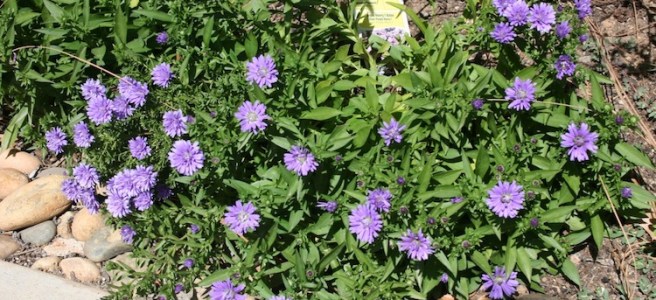
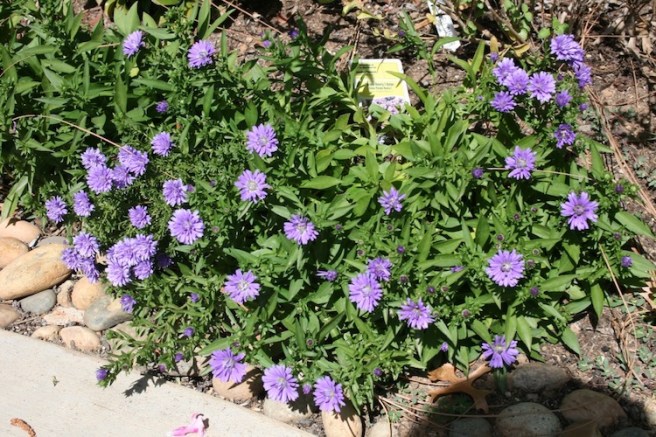
Aster novi-belgii ‘Henry I Purple’ has been blooming non-stop since June
Aut Reflect 9
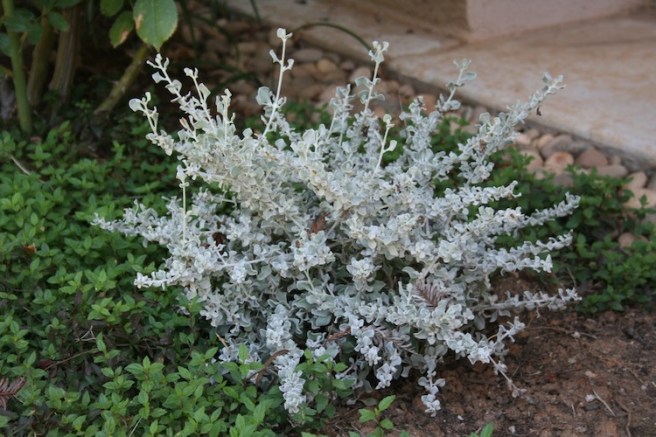
Leucophyllum candidum ‘Thunder Cloud’ has almost white foliage and sporadic small dark purple blooms–one of the smallest cultivars of Texas ranger

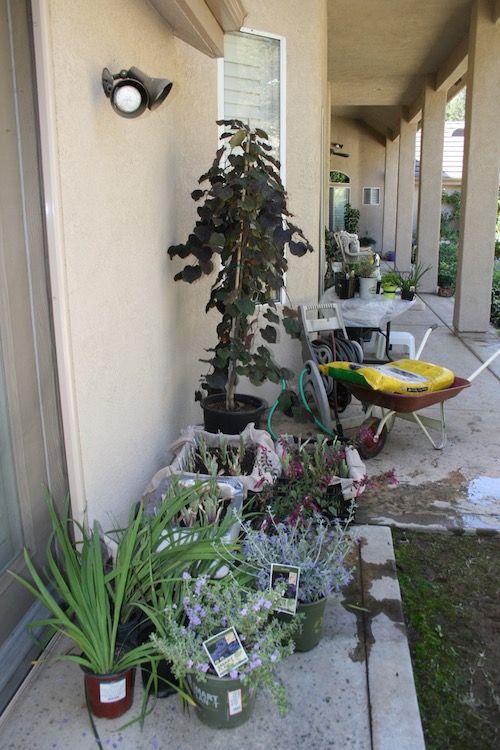
One of a few staging areas for special finds, potted up divisions of perennials and crate after crate of iris in holding mode ready to go into new bed areas. I am really excited about the weeping redbud, Cercis canadensis ‘Ruby Falls’–gorgeous heart shaped burgundy leaves! Autumn is the best time for planting but the worst time to find plant material so I accumulate specimens throughout the summer months in areas I can count on them having some afternoon shade and a nearby hose.

Aut Reflect 17

A mixed bed in the back garden still sports nice blooms–mostly small flowered salvias.

Aut Reflect 19

This Salvia ‘Fancy Dancer’ was cut back about 3 weeks ago and has rewarded me with fresh green foliage and another nice bloom cycle.

Aut Reflect 18

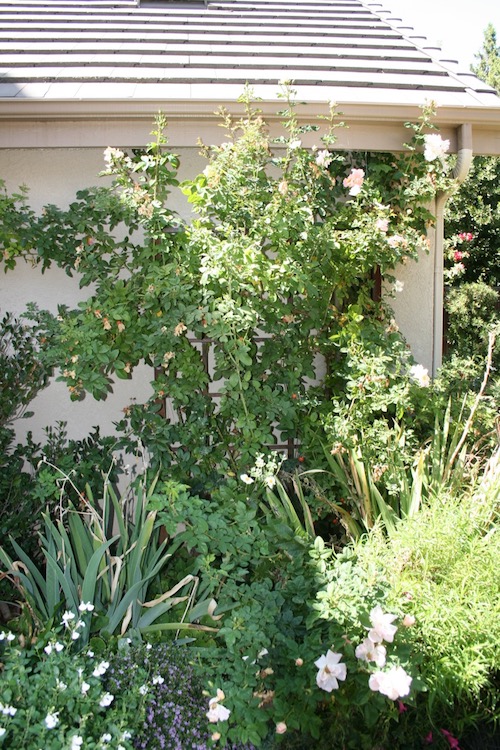
No horticultural degree needed to know I have totally lost control of this climbing rose, ‘Morning Magic’. Yes, that is a cane about 6 feet long laying horizontally. Definitely moving this tidying up task toward the top of my list.

Autumn is my favorite season. Autumn is the busiest season in my garden. That just about covers it.


Virginia Gardener’s Virginia garden…

Virginia Gardener and her husband were married on their Middleburg estate shortly after purchasing the property in the 1970s. They share a passion for classic historic homes and the c. 1790 home on Seven Springs Farm met their hearts’ desires. Smack in the middle of Virginia horse country, the surrounding garden offers long views of rolling fields and distant hills.

Virginia’s property leads with her veggie garden and barn as any proper farm would. The plots for crops were not overly large but were chock full of really healthy looking produce, flowers and a bit of garden art here and there.

VAG 1

VAG 2

Virginia had walked down the driveway to welcome us. As we followed her back up toward the house it was hard not to be distracted by the views.

VAG 4

VAG 5

The gracious home comes into view. I am sure that 220+ years did not pass without changes to the house to meet the needs of the day but the home’s architecture remains  marvelously cohesive.

VAG 6

The garden is divided into many distinct areas; both sides of the home feature a little more formality while the back has an open family friendly lawn.

As we rounded the home on the stone end we enter the herb garden near this charming small structure which I believe Virginia identified as the original spring house.

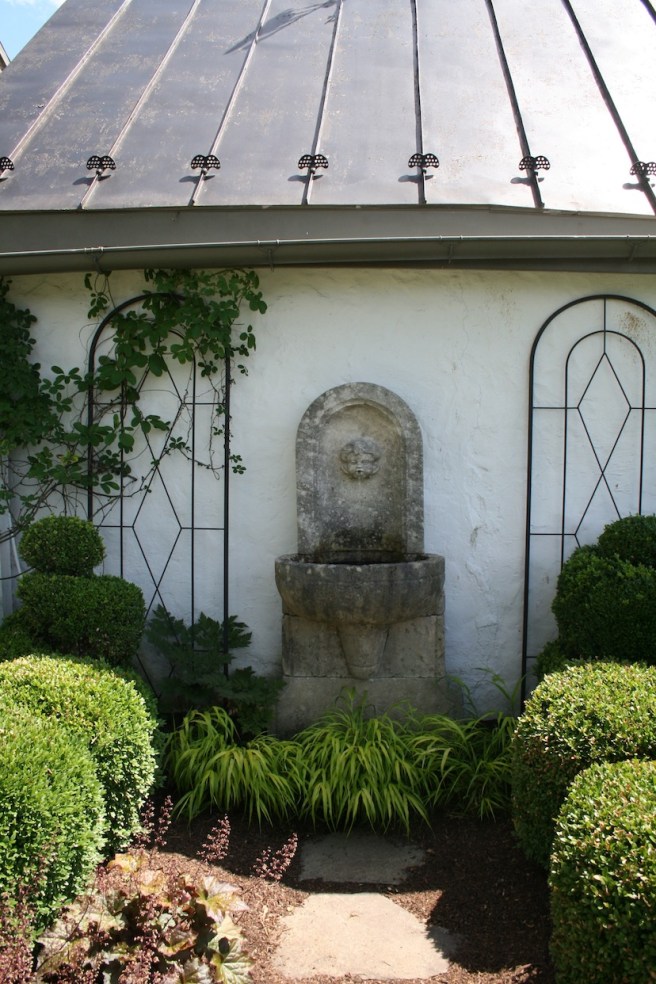
This vignette on the side of this rustic outbuilding features an ancient looking fountain framed by symmetrical boxwoods and iron trellises.

VAG 9
A classic sundial provides a centerpiece for the herb plantings

VAG 12

Meticulously maintained boxwood hedging of several heights separates the herb and secret garden from the broad expanse of the back lawn.

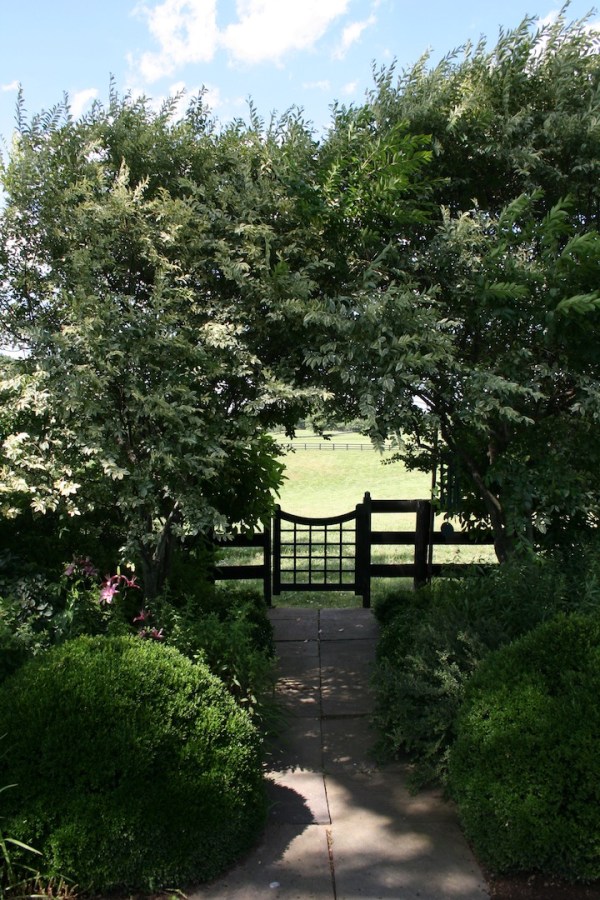
The perennial borders provide an area of transition from the lawn to the greater expanse of rolling grassland beyond the low rail fence. I loved that Virginia has provided numerous openings from the garden to the open fields, each one different and each one acting as the frame for a view worthy of a landscape painting.

VAG 13
No shortcut here but a lovely place to rest and enjoy the garden

VAG 14

VAG 19

VAG 15

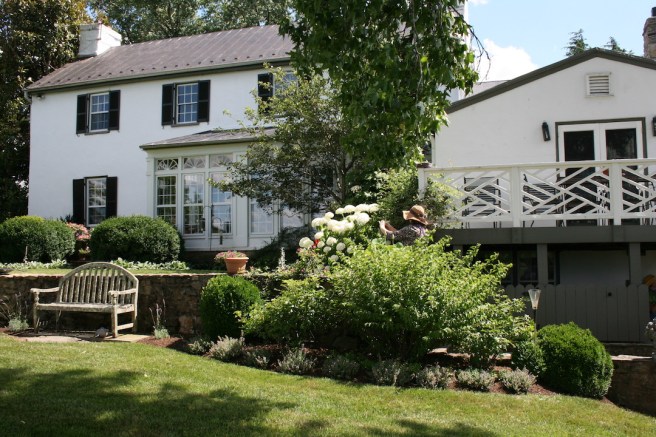
Looking back at the home. The stone wall is a beautiful way to accomplish the elevation change and makes a nice background for the plantings. Classic boxwood define corners and walkways throughout the garden.

VAG 17

VAG 18

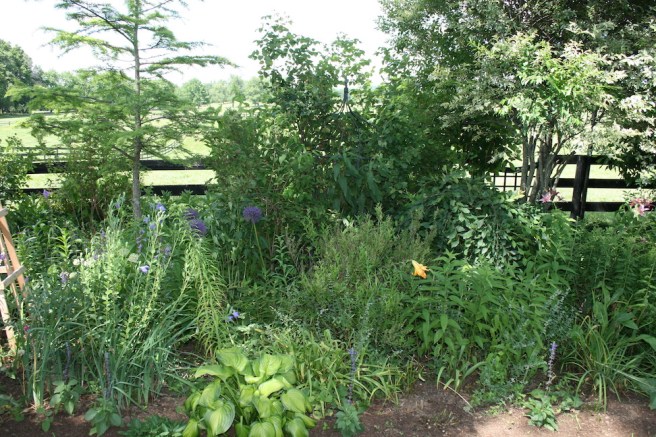
The perennial borders were not riots of color but had lots of variety so that there would always be something  in bloom.

VAG 20

Deciduous and evergreen trees and shrubs, in addition to a variety of conifers, give the borders year round structure and interest, allowing the seasonal plants to wax and wane as they choose.

VAG 21

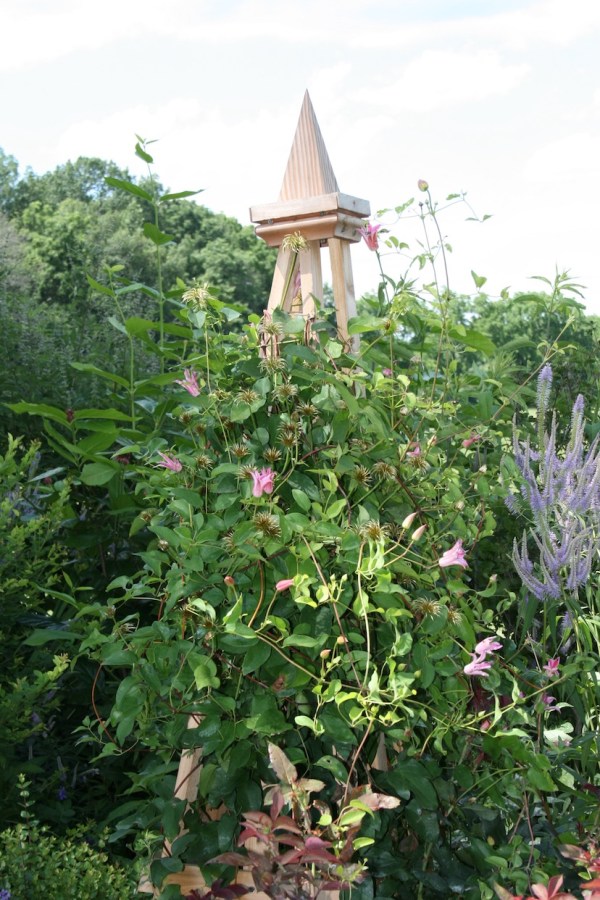
Wooden obelisks were staples of the border, offering vertical interest and a place for a variety of scrambling vines. Here you see one of the nodding bell shaped Clematis with blooms in all stages.

VAG 23

I would have been happy to sit on one of the gardens benches or up on the raised deck fitted for outdoor dining for the rest of the day enjoying this exquisite countryside.

VAG 22
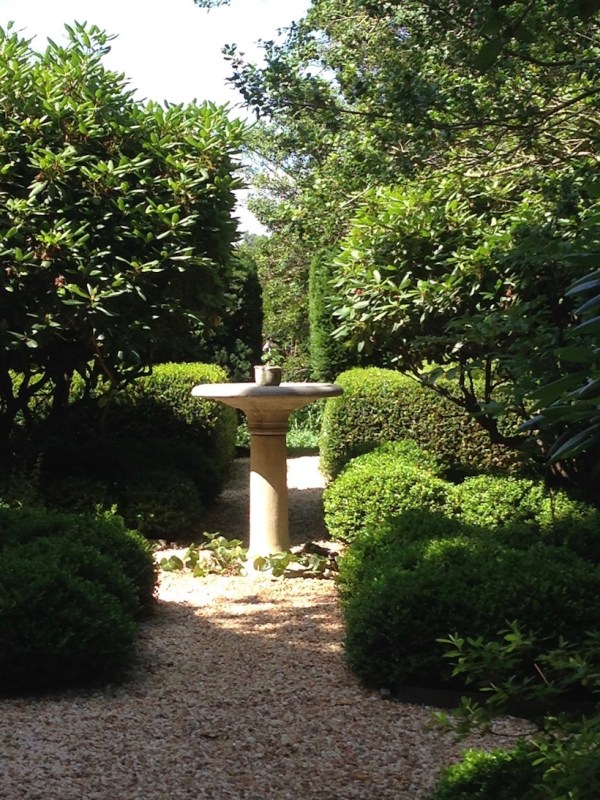
I want this birdbath!

VAG 24

Hands down this was my favorite place in Virginia’s garden. Another elevation change was accomplished with stone steps and this U shaped wall delineated a restful spot with a perfect view. Please take note of the bronze animal walking the back wall. I was not the only one who mistook it for coyote–several of us discussed it with interest for several minutes before a local took pity on us and identified it as a fox…you know, like in fox hunting…in horse country…duh.

VAG 25

VAG 27

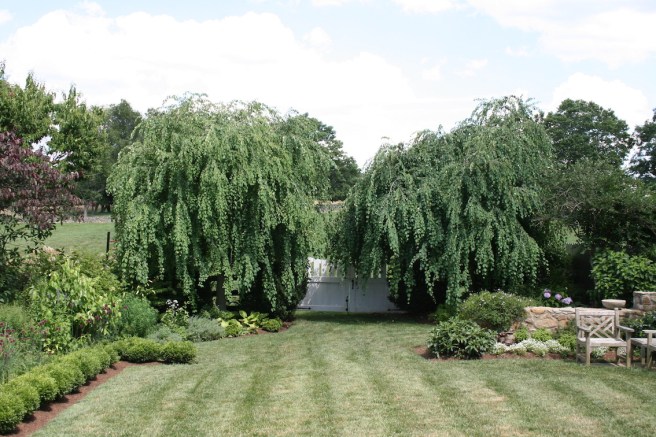
These beautiful weeping trees (maybe Katsura?) camouflaged a wide side gate.

VAG 30

One of many great garden art rabbits.

VAG 28

Yet another gorgeous framed view!

VAG 36

A formal boxwood garden takes you from the sunken stone area up toward the shady swimming pool. Symmetry and sight lines rule.

VAG 31

The back of this calming pond accommodates another elevation change.

VAG 33

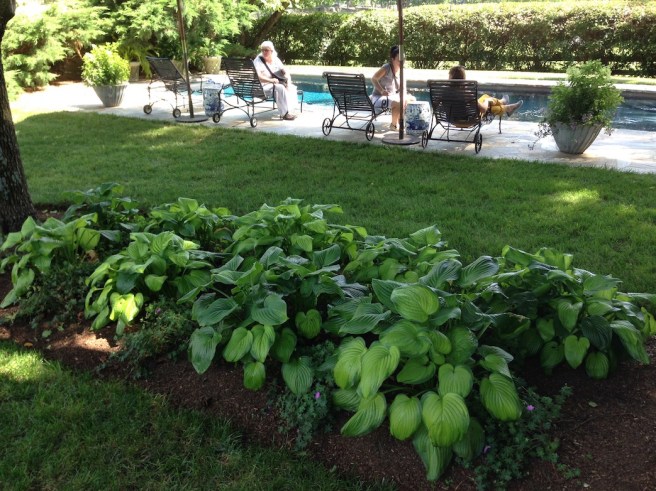
The faint limey green in these hosta leaves almost glows in this shady bed which delineates the boxwood garden from the pool area.

VAG 7

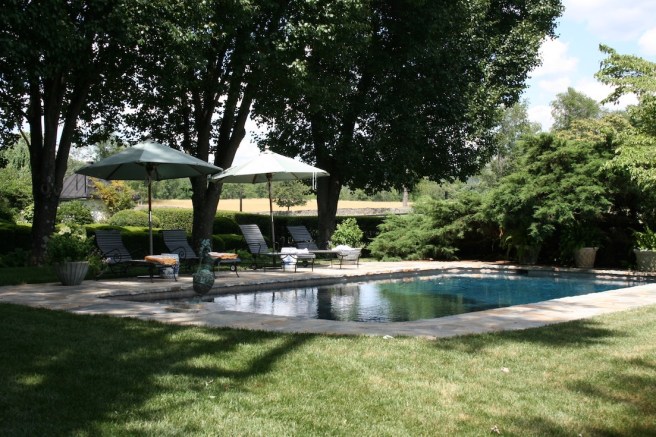
After several minutes rest in the shade by the pool and a glass of cold lemonade we weary garden bloggers bid good bye to Virginia Gardener and her Virginia garden. The distinct rooms of this garden estate have evolved over decades and speak to me of the cool mostly green gardens I remember so well from my years living in the Deep South. When you can achieve a beautiful garden that is also practical and looks good without spending every waking hour on maintenance, you have arrived!

VAG 26

Paradise 1, parking lot 0…

Ripley 1A narrow strip of land between the Smithsonian Arts and Industries Building and the Hirshhorn Museum and Sculpture Garden, once designated in the master plan of the day as a future parking lot, is the site of the Mary Livingston Ripley Garden. Mrs. Livingston, who was the wife of the eighth Secretary of the Smithsonian Institution and the founder of the Women’s Committee of the Smithsonian Associates, was an accomplished plantswoman and envisioned the open space as a “fragrant garden”. In 1978 she persuaded the Women’s Committee to sign on in support of her garden concept and the space became reality in 1988. In the early years of the garden Euonymus was transplanted from her home in Litchfield, Connecticut to form the east wall espaliers. The garden is supported today with funds from another benefactor, Mrs. John C. Folger, who established an endowment in 1994 for the care of the garden with the hope that others would be inspired by her generosity and add to the funds, enabling the garden to be enjoyed by the public well into the future.
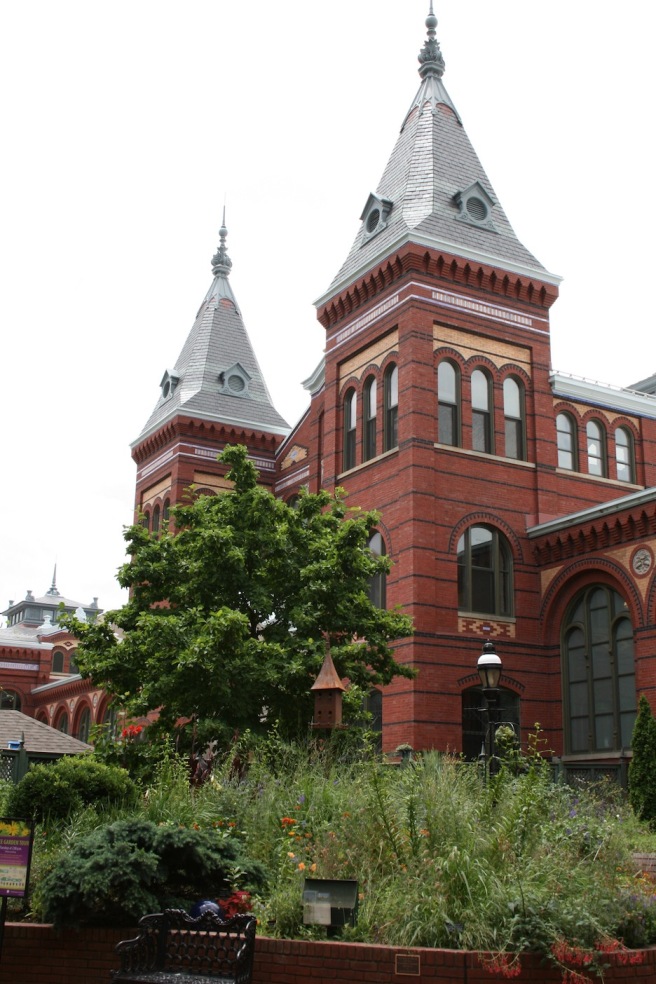
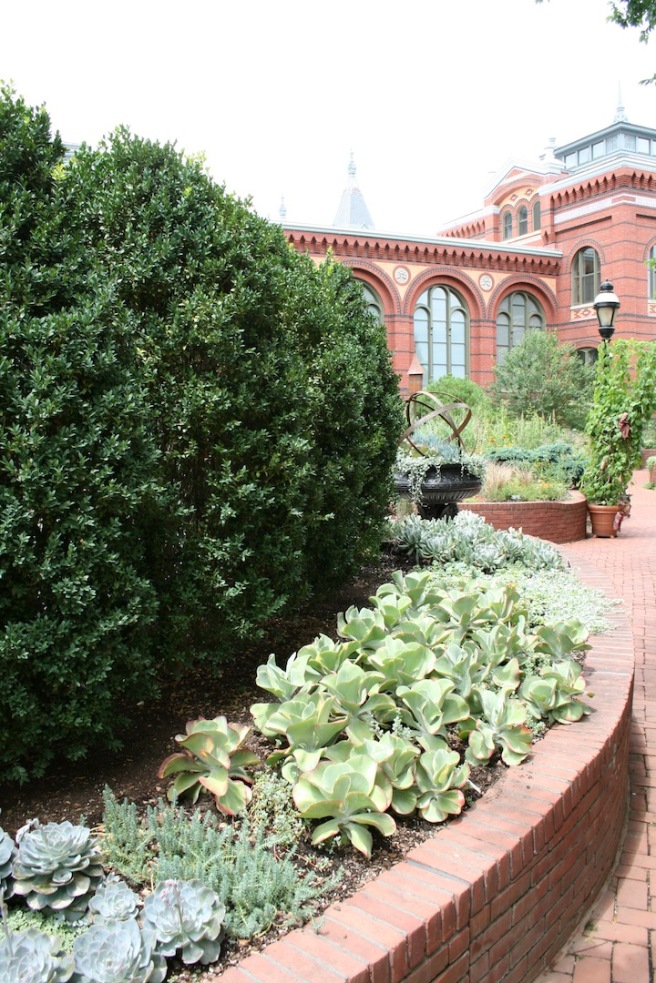
Washington, D.C. architect Hugh Newell Jacobsen set the stage for a still evolving collection of perennials, annuals and tropicals with his curvilinear brick walkway flanked by serpentine raised beds. His use of red brick echoes the surrounding buildings and grounds the long narrow garden.

Ripley 14

Ripley 16

As you enter from the National Mall end of the Ripley Garden an airy courtyard, anchored by a large fountain, offers spots to sit in both sun and shade. As with all of the Smithsonian Gardens I visited, year round structure takes the form of groups of conifers and evergreen trees and shrubs. Current horticulturalist Janet Draper states her goal for the Ripley Garden is to expose visitors to as many different plants as possible and to “expand the plant palette.” With over 200 plant varieties represented, meticulously labeled and beautifully maintained she has certainly painted a garden picture which is both beautiful and educational.

Ripley 21

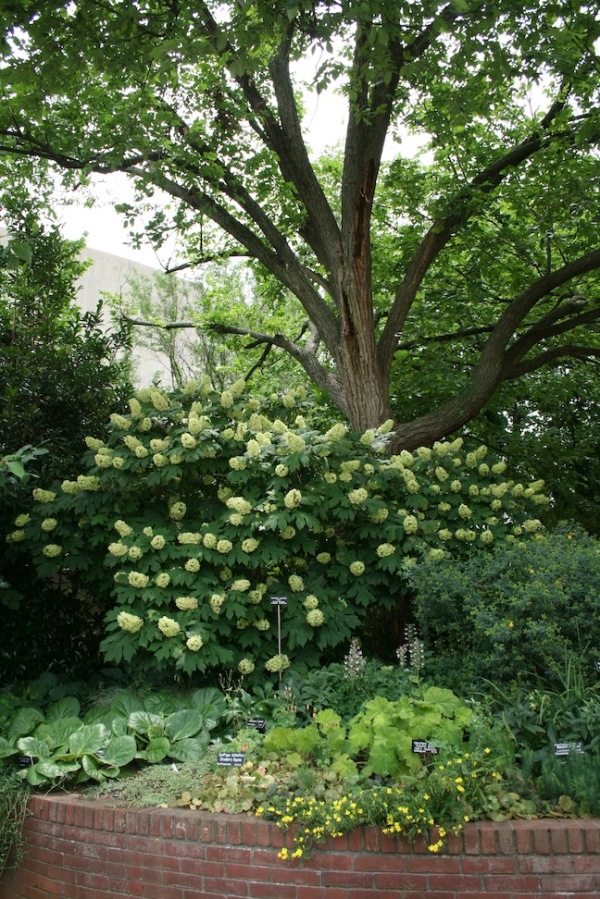
Hydrangea quercifolia ‘Alice’ reaches to the sky. Heuchera ‘Autumn Bride’, Acanthus mollis and Saxifragia stolonifera nestle at her feet.

Ripley 20

Cistus x hybridus ‘McGuire’s Gold’ is a shining light in this plant grouping. I am going to check this one out for my garden! I love how this shrub acts as a prop for some very tall lilies planted behind it.

Ripley 4

Here’s a great view of the winding chevron brick walkway which runs the entire length of the garden from the National Mall to Independence Avenue. What you can’t get a sense of is the undulation of the raised beds. At some points they are only a couple of bricks high as in this photo. At others they are raised waist high—they flow up and down so seamlessly it took me several looks to focus on the height difference.

Hosta 'Silver Bay'

There are blues and whites…

Ripley 19

Chartreuses and limes…that’s Jasminum officinalis ‘Frojas’, common name Fiona sunrise jasmine on the far right.

Ripley 22

Reds and grays–love the pop from these Caladium!

Ripley 11

Really nicely done living wall. Smithsonian Gardens greenhouse staff design and execute all the hanging baskets and containers feature in the Ripley Garden. They also propagate the annuals and care for the tropicals and succulents out of season.

Ripley 6

Cissus discolorThis interesting vine was new to me. Cissus discolor or rex begonia vine is being supported almost invisibly by a panel of fine chicken wire. A little research revealed that this species is a tropical and would generally be used as a houseplant in a cold winter area like Virginia. A great example of Janet’s goal to expose visitors to new and interesting plant material, in this case in  non-traditional setting.

insect house

I have been seeing these ‘bug houses’ on Pinterest for awhile now but this is the only large one I have seen in person. Not willing to miss a teaching opportunity, this great sign gives garden visitors a heads up!

Ripley 9

Hands down, the Mary Livingston Ripley Garden was my favorite of the 6 Smithsonian Gardens I saw. The original design of the curvy raised beds and brick walkways established a framework of open spaces to which structural and foundation plantings were added. Now mature, those plantings provide year round interest and a backdrop to showcase free flowing colonies of perennials, bulbs and their annual companions. This garden appealed to me as a plant collector and I am sure on every visit I would be able to see something either new to me or used in an inspiring grouping. The time and effort needed to maintain large expanses of turf or manicure bed-turf transitions can all be redirected toward creating interesting combinations of colors, textures and shapes in living plant tableaux.

Kuddos to Mrs. Livingston for pursuing her dream and creating this paradise which so easily could have become another parking lot.

Kathrine and Enid…

2017 Capitol Region Garden Bloggers Fling participants had several hours to pick and choose among the 12 Smithsonian Gardens clustered on either side of the National Mall. I am sure Kathrine and Enid would be pleased to see the public garden spaces named for them and visited by thousands of garden and history lovers every year.

KATHRINE DULIN FOLGER ROSE GARDEN

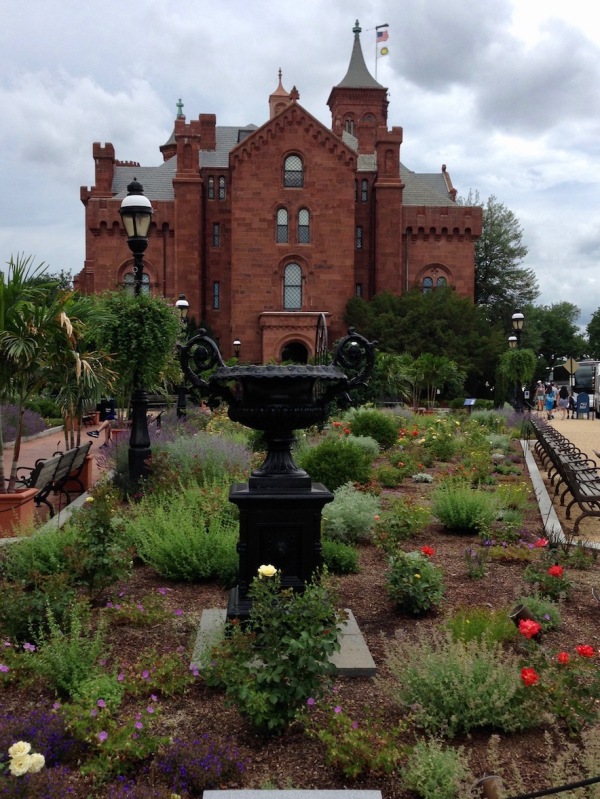
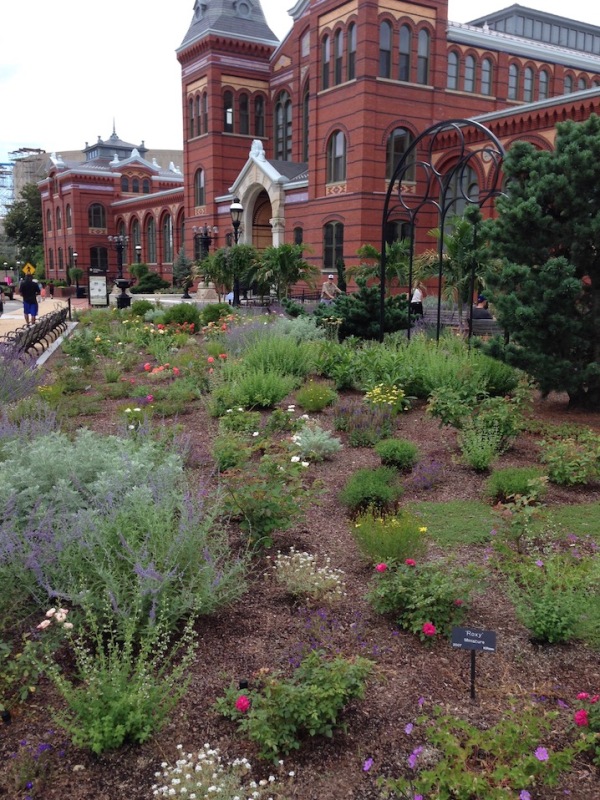
This garden is the centerpiece of the front of the Arts and Industries Building to the east of the Smithsonian Castle. The original garden was made possible by a donation from Mr. and Mrs. Lee M. Folger and the Folger Fund and was dedicated in 1998. The design called for a four season garden with specimen conifers and evergreens as anchors during winter months. Spring and summer would be dominated by an extensive collection of roses and their perennial companions. The 2016 redesign retained the four season focus and ground covers and additional perennials chosen for their ability to attract beneficial insects were added.

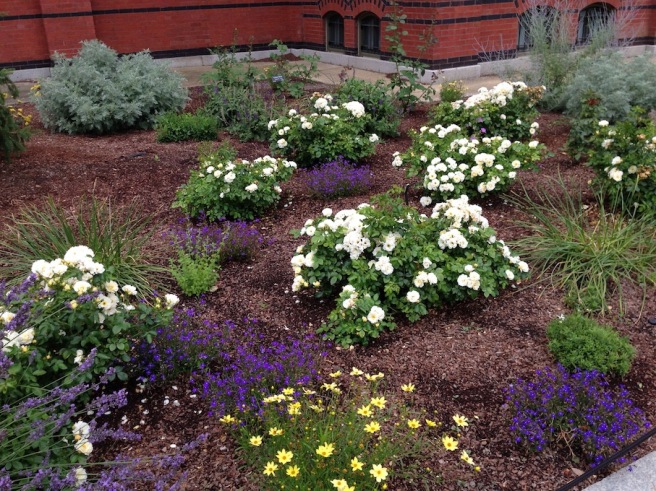
I will admit to some disappointment in this rose garden. All gardens have to be new at some point–I just happened to catch this one not even a full season after its renovation. Additionally, practicality has to reign sometime and the newly planted roses are almost all of the more modern shrub and drift types. This is perfectly understandable given that the Washington D.C. summer humidity inevitably fosters age-old rose issues such as powdery mildew and blackspot and these newer varieties are much more disease resistant. The newer landscape type roses also have less rigorous deadheading requirements and are probably better suited to public gardens than fussier varieties…oh well.

That being said, my nostalgia for the older, more classic multi-variety rose garden has not kept me from also going to the Knock-outs and Drifts in my own garden…

IMG_5798

This urn along with an original 19th century three tiered fountain are part of the Smithsonian Gardens garden artifact collection.

IMG_5801

Here’s our friend from Peace Tree Farms-Lavender ‘Phenomenal’. Lavenders are classic rose companions and this variety is used extensively in this garden. The ground cover Veronica ‘Georgia Blue’ (spring bloomer) will eventual spread to fill in around the lavender and other perennials.

IMG_2784

IMG_5804

Catmint (Nepeta), yarrow (Achillea) and the hardy Geranium ‘Rozanne’ hold promise as mounding ground covers.

IMG_5803

I would love to check back in on this garden in two or three years after the mounding roses have matured and the perennials have taken hold. For now, Kathrine’s garden is new again with promises of what’s to come.

ENID A. HAUPT GARDEN

This 4.2 acre garden is actually a rooftop garden, sitting directly over the underground museum spaces of the National Museum of African American Art, S. Dillon Ripley Center, and Arthur M. Sackler Gallery. It can be reached from large gates on Independence Avenue, from entrances on either side of the Smithsonian Castle or by going out the Castle’s back door.

Philanthropist Enid Annenberg Haupt passionately supported the creation of public gardens and the preservation of horticultural institutions. Her three million dollar endowment made this garden possible as part of the redesigned of the Castle Quadrangle in 1987. The Smithsonian based Enid A. Haupt Fellowship in Horticulture is a much sought after academic opportunity.

The garden is actually composed of three separate gardens: the Parterre, the Moongate Garden Center and the Fountain Garden, each reflecting the adjacent architecture and the culture of the museums below.

As I entered the garden from the east side, the skies opened up and I sprinted to take shelter outside the African Art Museum. An inviting seating area complete with market umbrellas offered me a bit of protection from the shower and I got the opportunity to see several amazing potted plant specimens. The limited soil depth (remember we are standing on top of underground museums) and protection provided by the surrounding museums creates a microclimate milder than is typical of the region. I am reasonably sure none of these would be winter hardy if planted in the ground without shelter from the cold.

IMG_5808
This gardenia was at least 12 feet tall and more than that wide!
IMG_5809
Look at the trunk on this angel’s trumpet.
IMG_5810
Mussaenda ‘Queen Sirikit’ –closeup of the bloom below

IMG_5811

Just west of the museum’s entrance is the Fountain Garden, modeled after the Court of the Lions at Alhambra which is a 13th century Moorish palace and fortress in Granada, Spain.

IMG_5813

At intervals throughout the gardens there are roof vents nestled among the foundation shrubbery, reminders of the museum activity below.

IMG_5818

The Parterre is designed in classic Victorian style to complement the architecture of the Castle. Ornate iron borders harken to an earlier day when gardens full of fussy ornamentation and vast beds of stylized annuals were the mark of an affluent homeowner. Much of the Smithsonian’s collection of antique iron garden artifacts reside in the Haupt Garden.

IMG_5817

A second brief shower drove me into the Castle for refuge and I never got to see the third garden highlight, the Moongate Garden Center. An interesting collection of potted specimens clustered at the buildings steps caught my attention-especially interesting was the unusual coloration on the conifer–maybe a pine?

I regret not taking time to read more about this garden before my visit. There was much to see and several interesting backstories that I missed because I did not do my research. When I return in a few years to check up on Kathrine’s roses and I will give Enid the time and attention she deserves!

A tiny monster any girl can love…

I have long had a love affair with geraniums–true or hardy geraniums to distinguish the group from their cousins, pelargoniums (often called zonal geraniums.)  I am usually in the throes of a love affair with one plant or another and spend my garden center time searching out every different one to add to the garden.  In future posts you’ll no doubt hear about my current obsession with all the wonderful new perennial dianthus, or my first glimpses at the diversity in the large plant family called campanula which sent me up and down the highways hunting down every one in the Central Valley, or the lavender years, or, or, or…I first drank the kool-aid with Geranium incanum in the eighties when we had a difficult front slope in southern CA to fill with things that were easy care and would take up a fair amount of space.  At that time there were not many varieties of these hard working gems in most local nurseries or garden stores even though there are over 300 species and many, many cultivars and hybrids in the world.

Most true geraniums, often called cranesbill, are easy care; not too fussy about soil and rarely bothered by insects or disease.  Although they are often tagged as full sun, in my hot, dry climate most benefit from some afternoon shade.  Let’s face it—most everything here, including me, could benefit from some afternoon shade!  I have about a dozen different kinds between my front and back beds but few are in bloom yet.  I do shear back the foliage for our cold winter and the new foliage is just now popping out.  Later in the spring I’ll  dedicate a post to them as they come into their prime.

On the other hand, G. ‘Tiny Monster’ has been up and running since mid January and will bloom continuously until I cut it back in self defense in late November or early December. It is a garden workhorse for me.  The  source of all the ‘Tiny Monster’ clumps in my garden (and in several fellow gardeners’ yards) was a 4″ plant found almost two years ago at the fabulous Plant Depot in San Juan Capistrano, CA.  I always stop in when I am visiting my SoCal girlfriends and never leave the OC without back of the Volvo wagon full of great finds.  Lots and lots of 4″ pots so you can try a lot of new things without breaking the bank.

I popped my little discovery in the ground under one of a pair of ‘Renae’ cascading tree roses hoping to give it a little protection from the southern exposure.  It quickly grew to a clump about 18″ high and 4 feet across.  Like many of the true geraniums it will attach to the soil at points away from the original crown.  These babies can then be detached from the runner, dug up and transplanted.  ‘Tiny Monster’ has proven itself as a reliable mounding ground cover in the hottest, driest conditions imaginable.  You can see the original clump in the photo below—this is a south facing bed with brutal summer sun.  I have transplanted clumps to a dry little sloping area behind the pool which is also south facing AND gets the western sun to boot.  Never wilts, never dries out, always blooms.  If I let it, it will scramble over its neighbors but is easily controlled with 5 minutes and a pair of hand clippers.  The magenta flowers are cheerful and the charming lacy, cut leaves look airy and cool.  For me, this tiny monster can hang out in my garden any time!

Hello, dainty little bells

We returned home from a few days at our mountain cabin to find many new wonders coming alive in the garden.  Soon my central valley will be in the throes of its hot, dry summer when I swear I can see the heat move in waves before my eyes and it’s everyone into the pool on a daily basis. I appreciate every little minute of springlike weather when things start to wake up from their winter’s sleep and stretch their arms out for another year.

A couple of years ago I added a shade bed adjacent to my north facing back patio.  The area had formerly been lawn and the shade from the house had made it a spectacularly unsuccessful lawn.  Shade tolerant grass varieties were not the answer–as soon as you passed the line of demarcation shaded by the house you were in hot, dry country.  The result was a lovely curvy bed about 25 feet long but only about 4 feet at its widest.

IMG_2540In this photo you can actually see the “line in the sand” drawn by the sun and the shade.  As the sun moves to its summer position it does encroach somewhat more into the bed (enough to have a couple of miniature roses at the eastern end) but for most of the year the meandering little bed remains a haven for shade and moisture loving perennials including hosta, Maidenhair ferns, hellebores, pulmonarias, tiarellas, calla lilies, true geraniums and bellflowers.  The bed is anchored by two standard gardenias, a couple of Pieris japonica ‘Prelude ‘ and several small hydrangeas Pink Elf®.  It is also home to every snail and slug within a five mile radius—sometimes it seems as though you just can’t win!!

One of my favorite inhabitants in this shady little village is a colony of Solomon’s seal (Polygonatum odoratum var. pluriflorum ‘variegata’)  That’s a pretty big name for this dainty perennial whose 14″-18″ arching stems sport dangling creamy white bells in early spring.  Solomon’s seal is a relative of the Lily-of-the Valley and actually a member of the same family as asparagus.  Its delicate leaves are edged in white and large colonies result from the spread of its creeping rootstock.  It is easy to pull up if it wanders too far but really, who would want to? If you live in cooler areas the leaves will develop a lovely yellow color before dying back for the winter.  In my very hot summer climate it can look pretty ragged by fall but always comes back just as hopeful the next spring.  There are several interesting explanations for the plant’s name.  One is that its roots bear depressions that resemble royal seals–another that pieces of the root when cut  look like Hebrew symbols. Below you’ll see the Soloman’s seal and a few of its shady neighbors!

Soloman’s friends bottom row left to right: Hellebore ‘Queen’s Double’, Brunnera macrophylla and Pulmonary ‘Tivoli Fountain’