A little Mendocino madness…

The old Volvo wagon is gassed and and my sun hat packed, the snacks are safely in their cooler and I am off  to Northern California on a garden visiting adventure.  My sweet husband, preferring to spend his weekend at our mountain cabin, kissed me goodbye and uttered those words so indicative of his concern for his lovely wife wandering the wilds of Mendocino County: “Don’t call me if you run out of gas…”

The Garden Conservancy is a nationwide, nonprofit garden education program which partners with garden owners, community and professional organizations, and local volunteers to help save, preserve, rehabilitate and rescue gardens and the rich cultural heritage they embody.  The Conservancy was founded by New York gardener Frank Cabot over 25 years ago after his visit to the Ruth Bancroft Garden in Walnut Creek, CA inspired him to look for a way to help historically and horticulturally important private gardens in need of preservation.

Since 1995 the Garden Conservancy’s Open Days Program has been inviting gardeners to share their gardens and gardening know how with the public. Each year a directory is published listing the open gardens by state and by date, complete with brief garden bios, highlights and maps.  The 2016 directory lists gardens in seventeen states and the open days range from early April to late October.  Although many of the gardens are in New York, New Jersey, Connecticut and other eastern states California is well represented with gardens in 5 counties on 7 dates.  Often the owners are on site but the garden visits are self guided and there is a small fee for each garden.  For more information about The Garden Conservancy and its Open Days Program visit their website at http://www.gardenconservancy.org or http://www.opendaysprogram.org or call 888 842-2442.

So I have mapped my route and my challenge is to visit the 5 open gardens (one being the gardens surrounding the fabulous Digging Dog Nursery) during their open hours of 10 am to 4 pm.  For my non California friends–Mendocino County is a lushly green, rural county give or take a 100 miles north of San Fransisco.  It enjoys a long stretch of uniquely wild and rocky coastline with fabulous views of the turbulent Pacific Ocean.  Probably less mentioned in the tourist guides is the county’s fame as the most southern part of the so-called Emerald Triangle, the largest cannabis producing region in the US.  Hey, this is a gardening blog, right?

IMG_1352
The Mendocino coast greets me!

After a day’s drive to arrive in the town of Mendocino and a refreshing night’s rest lulled to sleep by the sound of the ocean waves crashing against the rocky shore I am on my way. Let me say that now that I have decided that every one of these inspiring gardens is deserving of its own post so this will be the first of the 5 with the remaining four installments over the next few days.  The greatest challenge of this adventure for me has been picking the photos to show you as I have so many of each garden and I just don’t want to leave any out! As these are private gardens plant material was not marked.  I chose to take many wide and long shots to show you the overall ambiance of each space rather than focus on individual specimens as I have when visiting botanical gardens. Most photos contains multiple plant varieties and even if I knew all the varieties/cultivars it is just not feasible to list them all.  Just sit back and enjoy the views…

THE MOSS GARDEN

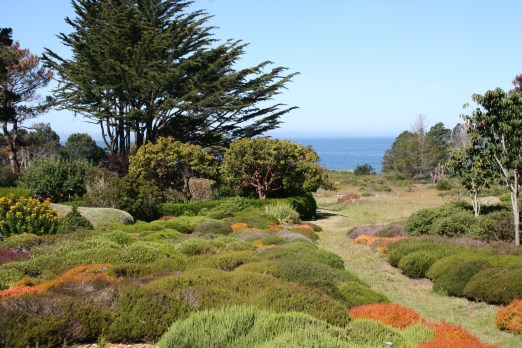
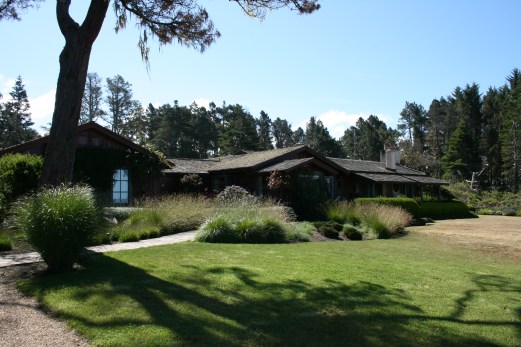
This tranquil property is surrounded by the Russian Gulch State Park and is only a stone’s throw from Point Cabrillo Light Station, nestled between scenic Highway 1 and the Pacific Ocean.  A long rural drive opens to a gorgeous heather garden which is the oldest of the garden’s elements. Beyond the sea of heather you get a peak at the charming redwood home set back from the ocean bluff enough to be protected from the strong ocean breezes.  The house provides shelter for much of the garden and its Northern European details inspired many of the garden elements.  The area between the house and the ocean bluff has been left much in its natural state which preserves the open view. My garden host, Eloy, maintains this garden which was designed by Gary Ratway of Digging Dog Nursery.
IMG_1357
Sea of heather guides you to the Pacific Ocean
IMG_1367
The low slung redwood home lets the view do the talking

The sunken garden was excavated to put it below the effects of the harsh winds from the ocean.  The excavated soil was used to construct rammed earth walls which not only create the garden room partitions but also act as retaining walls for the varying elevations.  A wide variety of lush plant material fill the various garden rooms (including many of my beloved hardy geraniums!)

There are vistas of the Pacific Ocean from both sides, in addition to from the front of the home. Even this beautiful property has not been exempt from trees suffering from California’s 4 year drought.

IMG_1361

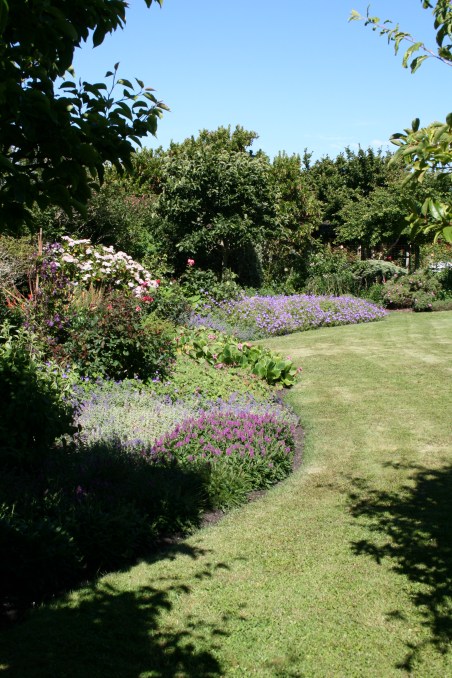
The large orchard garden is leeward of the home and boasts large meandering beds of both sun and shade plantings and a large lawn space perfect for relaxing or playing with the grandkids.
IMG_1379

A highlight for me in this garden was seeing this great specimen of Eryngium, commonly called Sea Holly–success with this has eluded me in more than one garden.  Also a first was this brightly hued Brugmansia, or Angel’s Trumpet:

My takeaway from the Moss Garden?  The power of garden rooms, gravel pathways, repeated elements to move the eye and wide, swathes of  compatible plants. Hey, and the ocean didn’t hurt the view either!

NEXT STOP: THE GARDENS SURROUNDING DIGGING DOG NURSERY

Not your grandma’s geranium…er, pelargonium

I admit to spending a good bit of time talking about hardy geraniums over the last couple of months in my quest to make you aware what really is a geranium, as opposed to what we here in the US call geraniums which botanically are called pelargonium.  That effort is born not in my desire to bash the pelargonium world but to make more gardeners aware of the magical world of the ‘other geranium.’ Feeling that the pelargonium may need a little love from me, let me tell you a bit about them.

Pelargoniums are woody perennials, most native to South Africa, which can endure light cold but not hard frost.  The three most commonly grown species in the US are the P. x domesticum (Martha Washington), P. x hortorum (common) and P. peltatum (ivy leafed).  All of these are garden center staples. Both the ivy leafed and common pelargoniums have fleshy, succulent like leaves and are easily propagated from cuttings.  In the past few decades many species of scented geraniums have also become increasingly popular. The common names of these will usually refer to the fragrance of their leaves and most in this category are good for bed edging, in herb gardens and in some culinary/medicinal uses.

Beyond these easily recognizable groups there are many more pelargoniums to be coveted.  One of my favorites is pelargonium sidoides.  Several years ago on the Mary Lou Heard Memorial Garden Tour in Orange County, my gardening girl Judi and I started our day at a garden farther north than we had generally ventured in past years.  To put this into perspective, this tour can often have 40+ gardens open and you could travel 90 miles from the most northern point to the most southern.  Given that we prefer to see as many gardens as possible rather than spend our day driving we would laboriously plot our route to get as many gardens per mile and thus never really get to the ‘outer limits.’

The description of this garden enticed us with the promise of a collection of pelargoniums which had been amassed by the homeowner over 30 years and the opportunity to purchase plants grown from his cuttings. And we were off!! We arrived at a pretty nondescript home surrounded by others just as much so until we got out of the car and a little closer–the front yard was overflowing with pelargoniums of all shapes and sizes, both planted in the ground and in pots placed strategically to let their flowers peek up behind another plant’s foliage.  The small back yard was dominated by a large greenhouse crammed with more specimens and a couple of smaller plastic sheathed growing areas.  The owner circulated among his guests answering questions and pointing out various plants.  Truly these plants were his passion and we caught a bit of the fire from him.  One of the 4″ pots I purchased from him was a fairy garden worthy stunner called pelargonium sidoides:

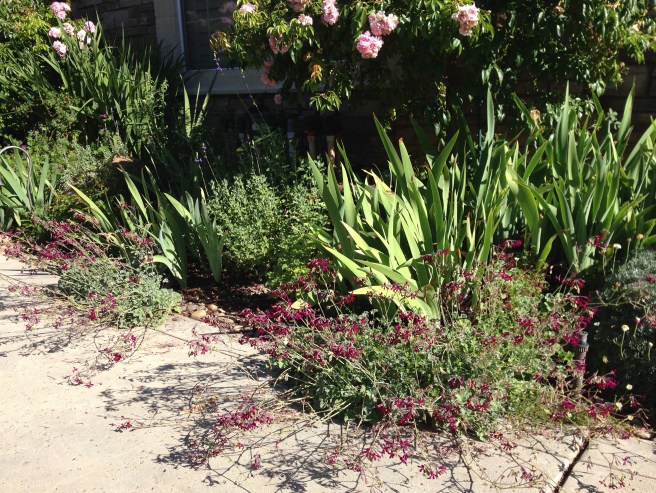
The dainty burgundy flowers born on slender, branching, trailing stems wave with the breeze.  They are held high over a dense mound of small, silvery gray, heart shaped leaves.  Although I have just two plants (the second being a cutting from the original purchase) I think this sweet thing would make a good small scale ground cover in areas receiving no hard frost.  Once established it can take full sun with moderate water. It blooms continuously from early spring (when the above photos were taken) to the coming of cold days in November or December.  Mine are planted perhaps a bit too close to the front sidewalk and tend to wander onto it as you can see below in the photo taken yesterday–doesn’t bother me until visitors have to actually step over it and then I’ll pinch it back a bit. I have come to understand that this pelargonium is not as uncommon as I initially assumed and I have seen it a few times since in local garden centers.  To my knowledge it does not have a common name but I am going to call it Burgundy Fairy Flower!

IMG_4039

Lay back on my couch and tell me all about it…

I have been thinking about doing this post for little while but was spurred into action by emails from two gardening friends who sent me basically the same message in response to my last post: “Your garden always looks beautiful. No matter how hard I work mine will never looks like yours or like the ones I see season after season in the gardening magazines.  I am so discouraged.” Clearly it is time for some green thumb psychotherapy!  First and foremost: No one’s garden ever really looks like the magazines.  Beds, borders and plant specimens are photographed at their peak and in perfect light. Undoubtedly a magazine minion (production assistant?) is hovering around spray cleaning foliage, picking weeds with a tweezer, sucking up the errant leaves and twigs and generally making the natural world look way more perfect than it is. Great gig if you can get it!  As for my personal garden world: I only let you see what I want you to see. Here are a few vignettes of what’s lurking just outside the scope of my iPhone’s little lens.

IMG_3995

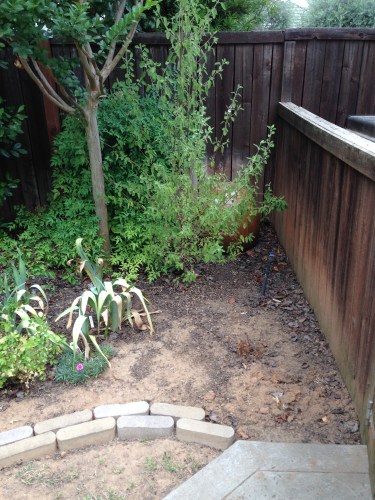
We call this the ‘corner of death’.  We have had one in every garden in every house for over 30 years.  If we had a nickel for every plant that failed in this spot over the last 7 years we might have that beach house we’ve always wanted.  No amount of soil amendment, sprinkler adjustment, mulch or prayer seems to alter this bermuda triangle like location. Oh, and notice the dead grass…

Slugs at work and their buddy, the snail, at rest…

Long searched for Hydrangea anomala petiolaris ‘Miranda’ –a variegated leafed climbing hydrangea not often seen in California– looks like a victim of nuclear warfare.  More common but no less doomed are three ‘Mystery’ gardenias in the Secret Garden behind our dining pavilion in the back yard.

Mature sequoias and young hydrangeas alike just cannot cope with the combination of the super heated air and our current exterior watering limitations.

Dead grass, dead grass, and did I mention dead grass with our friend Spotted Spurge? These areas are slated to be cleared, amended and replanted with drought tolerant shrubs and ground cover but I am not sure I will live long enough to see it.

IMG_3999

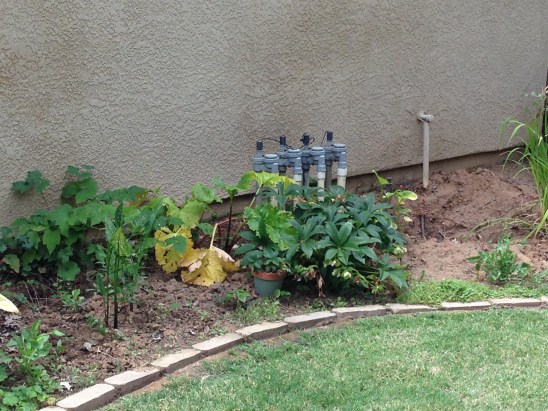
This area has been in the process of being cleared to install a long north facing potting bench with shelves behind it.  Oh, yeah…started relocating plants in 2014.  What year is it now anyway?

Big weeds, small weeds, weeds I can name and weeds I call names you would not want to hear!

So this is another post to which I could go on adding photos through the night but I think you get the idea.  If there are no weeds, critters, diseases, impending death and multi-year projects where you hang your big floppy sunhat then you probably have a LANDSCAPE not a GARDEN.  Landscapes are something you get done for you and let someone else maintain.  Gardens are planned, cursed at, pruned,  replanned and encouraged by hands that love them.  Gardens are about hope and gardeners are the most hopeful people on earth. We garden because we just can’t wait to see what wonderful thing will spring out of the ground next year.  We plot, we purchase, we plant, we nurture, we pray for our garden of the future–the garden of next season.

We garden because there is always another perfect blue flower to add, a plant we have never even heard of to pop into the ground and a new year to which we look forward with open arms and hearts.

IMG_4001

Psst!  One of two huge Bird of Paradise (big orange beaky flower) plants snugged up against the front of my home and providing a less than desirable backdrop to my predominantly blue/purple/pink plantings seems to be failing.  David loves these plants and is bereft.  I MAY have accidentally dropped a bucket of Round-Up on this one as I was passing by…

Two of the queen’s BBFFs…

There will never be enough blue flowers in the world for me to say “I have enough blue in my garden.” Blue for me ranges from the very pale sky and lavender blues all the way to the darkest royal and navy blues.  The interplay of crisp whites and blues of all shades with the myriad colors of green foliage is what I see when I close my eyes and envision heaven!  The only thing better than a blue flower is a blue flower that you can not only love for its color but for its hardiness, ability to hold its color is very hot sun and fill the role of a garden multi-tasker to boot. Today I am sharing two of my Best Blue Flowers Forever in hopes you’ll be inspired to add them to your garden where they will bring a smile to your face each day and reward you many times more than the investment you make in them.

IMG_3983
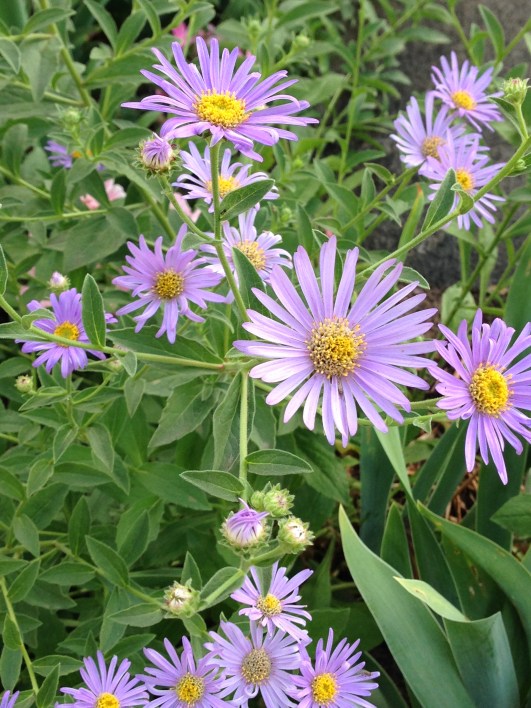
Aster x frikarti ‘Monch’

The Sunset Western Garden Book tells us that there are more than 600 species of asters ranging from compact mounds to 6 foot tall loosely branched plants with blooms in shades of white, pink, blue and purple, mostly bearing a yellow center.  I have never lived in an area where they were used to their full glory in perennial plantings but have seen countless photos of wide swathes of flowing plants dominating borders in the American northeast and in the UK.  While I have only had a handful of species/varieties in my own gardens each has been a faithful performer.  The retail nursery trade by in large dictates what we put in our yards and often they feel the need to stick to the ‘tried and true’ that they believe are familiar to the average gardener and will sell.  This is where having an small independent plant passionate nursery in your area will benefit you so much in terms of garden diversity.  Fortunately, A. x frikarti ‘Monch’ does fall in the tried and true category and thus is pretty commonly available even in the big box stores.

IMG_3984
Blooming by early May–Lasting til frost!

This aster is commonly called a Michaelmas Daisy. In cooler summered European climates it is an autumn bloomer and would be gathered from gardens to decorate churches around the 29th of September, Michaelmas Day, when harvest festivals take place.  In my garden it blooms from late spring through frost or whenever I cut it back to rest during the short winter months.  This hybrid was produced around 1918 by Swiss nurseryman Carl Frikart and was named, along with another one called ‘Eiger’, for the mountain peaks which were visible from his nursery. It fares best in full sun to part shade (the one pictures is in a full sun southern exposure with just a bit of shade from a small crape myrtle tree) in well drained, alkaline, average soil.  Although many asters are plagued with powdery mildew this one is very resistant.  The lavender-blue flowers are borne on long, loosely-branched arms which will wave a bit when there is a slight breeze.  They are wonderful cut flowers–try adding their delicate daisy faces to mixed blossom bouquets. Its open habit does benefit from a bit of pinching back now and then.  I find that even if I let it go too long and need to nip more aggressively it responds well.  My full sun front beds tend to get a little tired as the long, hot summer wears on and the ‘Monch’ helps me out with its sprawling, loose habit in camouflaging some of its worse for wear neighbors. As I have them planted in beds on either side of my front walkway  where their root balls are snugged up against the bases of the trunks of a couple of young crape myrtles, I can always tie them up a bit if the need arises. Mostly I just let them do their thing and often by mid September when everything else is gasping for cooler air and a drink of water, the asters are just rambling and scrambling along with little care.  Other similar varieties you might run across to try would be Aster x frikarti ‘Jungfrau’ and ‘Wunder von Stafa’–both similar in color to the picture.

On to #2!  I know you might be tired of hearing about geraniums–hardy geraniums–from me but they are so unknown by many that I don’t think there can be enough written about this marvelous group of plants.  To recap, these are GERANIUMS, not the PELARGONIUMS that we commonly call geraniums. The European gardening community calls this group cranesbills and while you may now and then find a plant tag bearing that name in the US it has never caught on with us.  Hardy geraniums are mostly perennial and in my zone 9 garden they will die back to the crown during the coldest of winters.  They generally prefer soil more acidic than alkaline and need adequate water in hot summer areas.  They range from full sun to full shade depending of the species and cultivar you choose.

IMG_3989
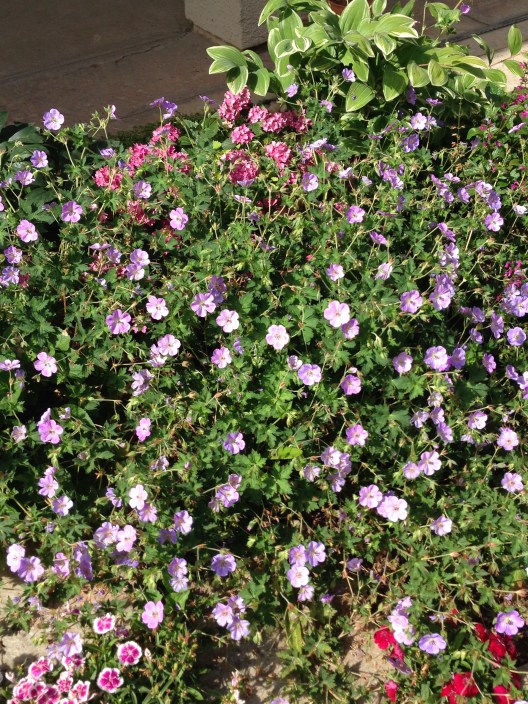
Geranium ‘Rozanne’

This is geranium ‘Rozanne’, probably one of the most currently commercially available of the hardy geraniums.  The above photo is a single plant which covers about about a 3 foot circle.  ‘Rozanne’ was bred by Donald and Rozanne Waterer of the UK.  Now and then you will see her marked as G. ‘Jolly Bee’ although in the garden patent world the patent on ‘Rozanne’ replaced that of ‘Jolly Bee’. This mounding sprawler is equally at home in the ground, in large containers or in hanging baskets.  I have never been able to produce a photograph that does the blueness of the lavender justice.  The blooms are at their most blue as they open and then fade to a more lavender shade. Research I have done on this plant suggest that the flowers or more lavender pink in hotter weather and more lilac blue in cooler climates. Given that I will probably never see the full extent of the blue hue! As with most hardy geraniums give her a slightly acidic, moist soil for best performance and some light afternoon shade in very hot summer areas.  My ‘Rozanne’ is planted right in front of a fairly mature ‘Pink Elf’ hydrangea.  The hydrangea is in too much sun as the summer progresses and sort of becomes a crispy mess.  I let ‘Rozanne’ wander right over it providing some visual relief for me and a little sun screen for the plant. I tidy it up about halfway through the season by just gathering the plant up and whacking it off to about a foot and ‘Rozanne’ responds with fresh green foliage and a fresh profusion of flowers.

IMG_3993
Beautiful ‘Rozanne’

There you have it–two beautiful blues for you to become BFFs with.  Garden on!

A gardener in paradise…

No visit to Orange County in Southern California is complete for me without a visit the iconic Roger’s Gardens in Corona Del Mar.  Their marketing tagline is ‘Bringing Beauty into your Home and Garden’ and that truly says it all.  Roger’s history spans over 50 years and it is a destination for plant people all over the country.

In the late 1990s when my gardening partner in crime, Mary, took me to Roger’s I was captivated.  It is like a little island of beauty and creativity surrounded many equally lovely homes in some of the country’s most high priced real estate.  Over the 11 years I lived in Orange Country I visited Roger’s hundreds of times and always found a bit of this or a piece of that needing to be added to my own efforts at creating an island of beauty of my own.  As if being a veritable visual feast of annuals, perennials, shrubs, trees, roses and just about anything else with roots isn’t enough; Roger’s has several exquisite home and gift sections to moon over and is a ‘must see’ destination when its holiday spirit is on display from late fall til January. Today fellow gardening gal who always believes there’s hope for next year, Judi, and I are here to take it all in. And shop, of course.

So, come with us on a photographic tour of this OC destination:

A peek at the current events  welcomes you as you approach.  The entrance changes with the season and is always an inspiration–loved these metal containers used both as planters and great accents displaying vintage gardening tools.  The living wall is planted using Wooly Planters and a variety of plant material including ivies, heuchera, campanula, ferns and more!

The front area where you line up to check out is always beautifully done and it is hard not to find more to buy (or photograph) as you move toward the cash register clutching your precious cargo.  The largest of the home gift areas is visible to all who thought they were done and ready to check out.  The themes and palette of this area changes frequently and it is  a seasonal treat even if you are not REALLY shopping.

This island bed, anchored by mature conifers, beckons you into the open air of the nursery area and is planted seasonally.  It is also a cool oasis for those non-gardening companions to hang out while you shop.

Planted containers surrounded by featured plant material lure you forward to see more!

Wander through areas for sun and shade plants, all well marked, and with helpful staff at the ready to answer your questions.

Today there is a vegetable seminar in progress and close by are tables to pick up those new varieties you may have learned about from the speaker.  A full schedule of seminars and classes is available at http://www.rogersgardens.com

IMG_3899

Some of the best stuff is the farthest away from the entrance but wagons are easily maneuvered along the winding paths.  Every turn finds a new delight.

IMG_3903

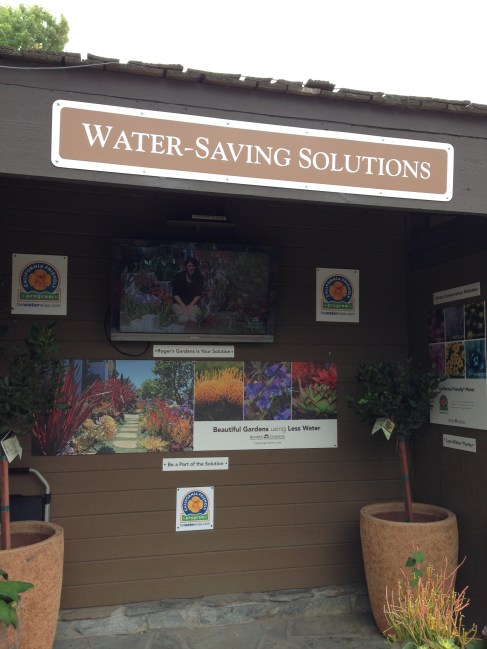
Drought is on all our minds here in California.  Roger’s offers lots of printed material to educate gardeners in their quest to create a beautiful landscape while conserving this most precious resource.

IMG_3978

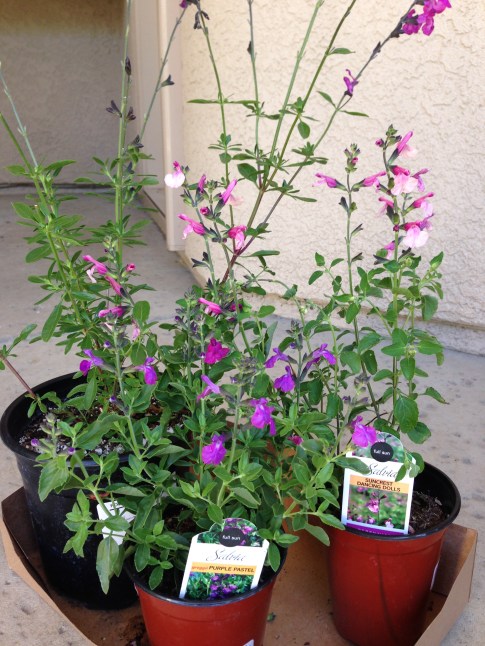
Although my personal haul today was restrained by my standards, I was tickled pink (or lavender?) to find one more the my sought after salvias from the Western Dancer series called Dancing Dolls.

Roger’s Gardens is a delight for the soul regardless of the level of your desire to get down on your hands and knees and dig in the dirt.  It is more a life experience than a retail one!

IMG_3906

We passed this poster as we made our way to the car with our finds.  Now who wouldn’t want to learn to make a hummingbird swing?  Is June 25 too soon for me to head south again?

Summer Magic…

Today we visit my gardening BFF, Judi, at her home in Southern Orange County, CA.  Judi and I have been garden touring and plant shopping companions for more than 25 years.  We can find a new place to explore or a new project on which to embark every time we get together.  Judi has a passion for fostering and nurturing wildlife in her garden.  Her plant and garden management choices are made with the bees, birds and butterflies in mind.  Her petite garden space has been named a National Wildlife Federation Certified Wildlife Habitat and proudly displays this plaque near her back gate:


Certified Wildlife Habitat sites can be residential, community parks, schools, corporate buildings –just about any location where the landscape is managed, using sustainable gardening practices, to provide the four basic elements that all wildlife need: food, water, cover, and places to raise their young. For more information about creating a certified habitat go to the Federation’s website at http://www.nwf.org/habitat or call 1-800-822-9919.

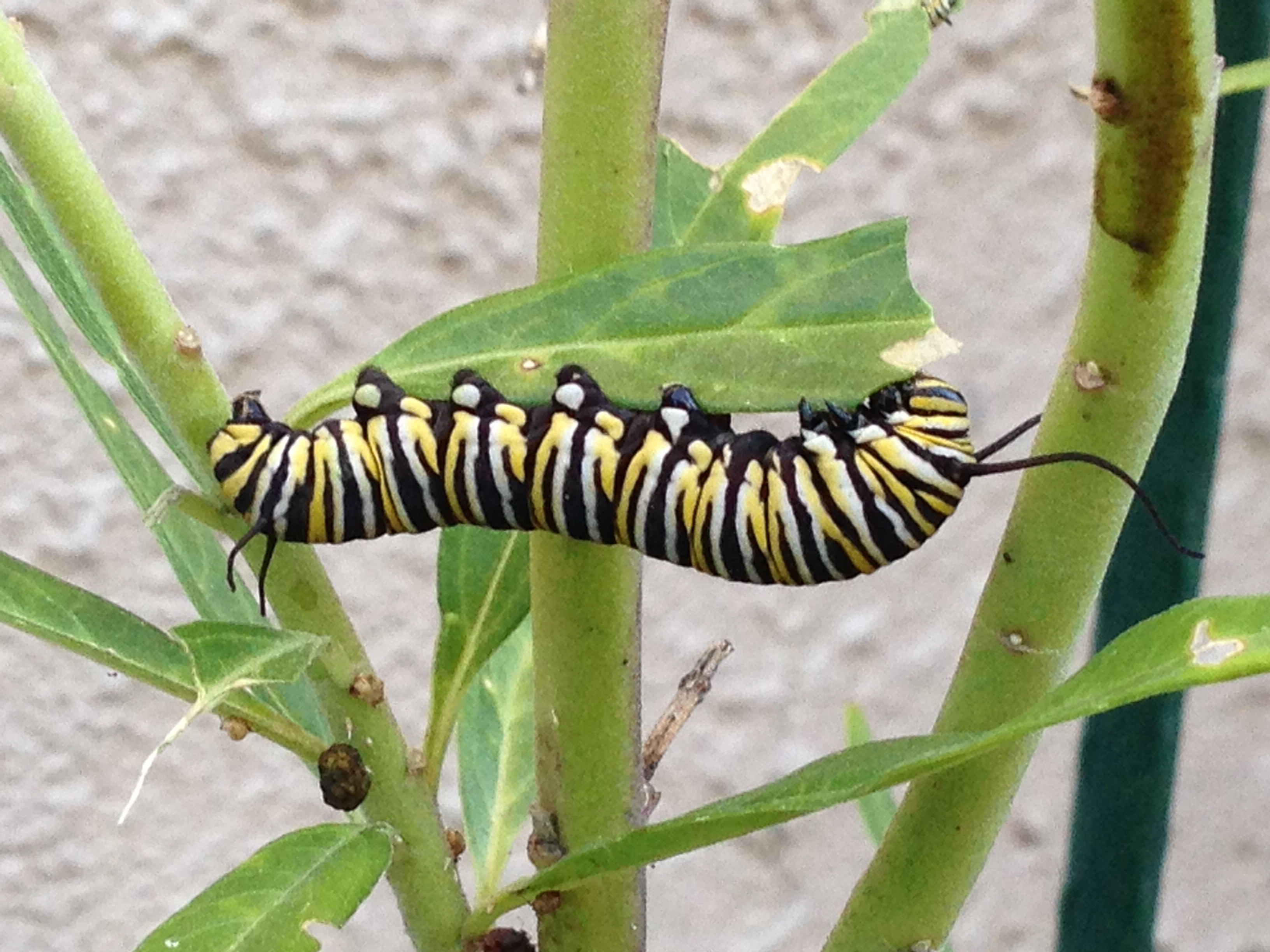
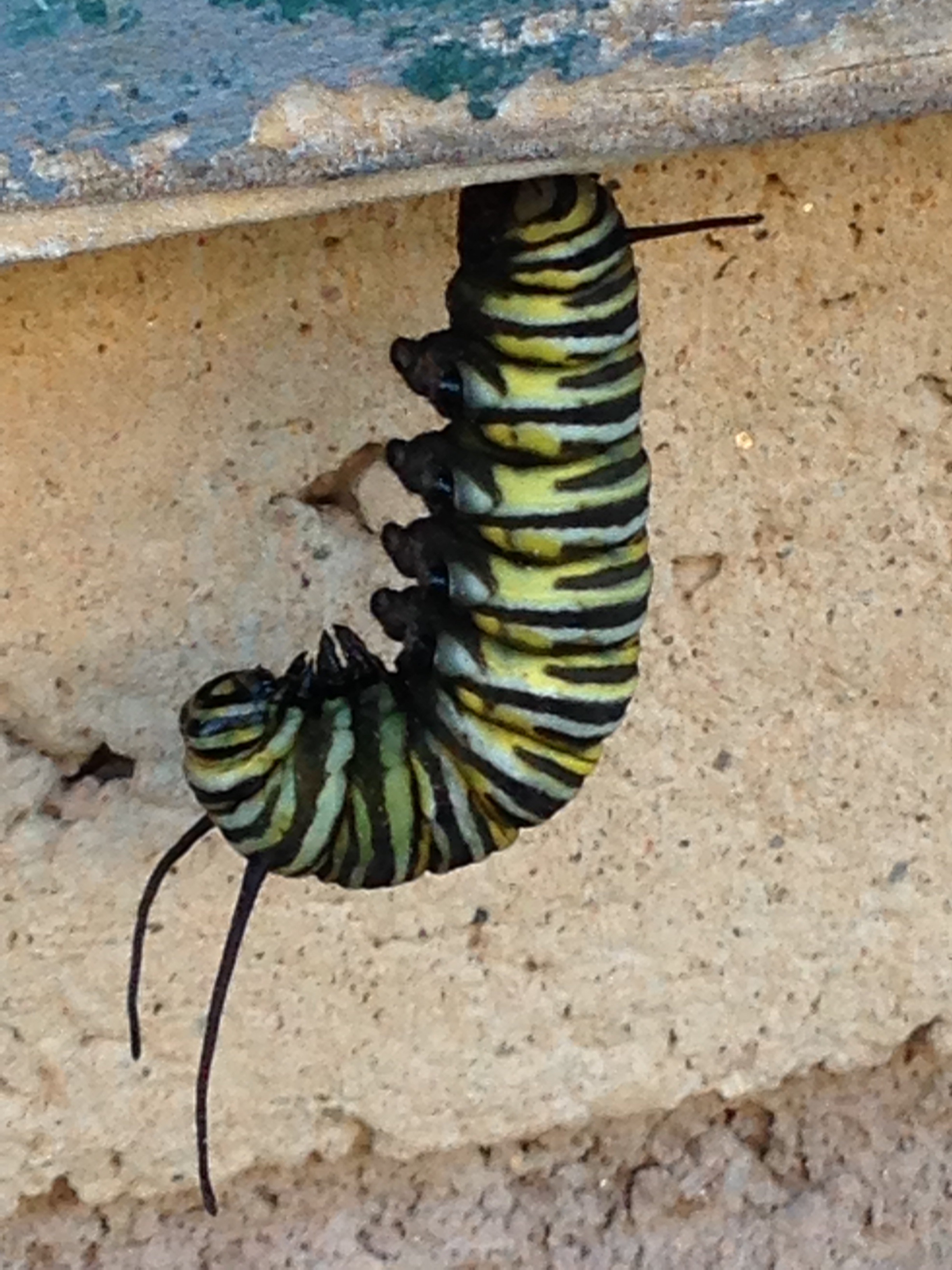
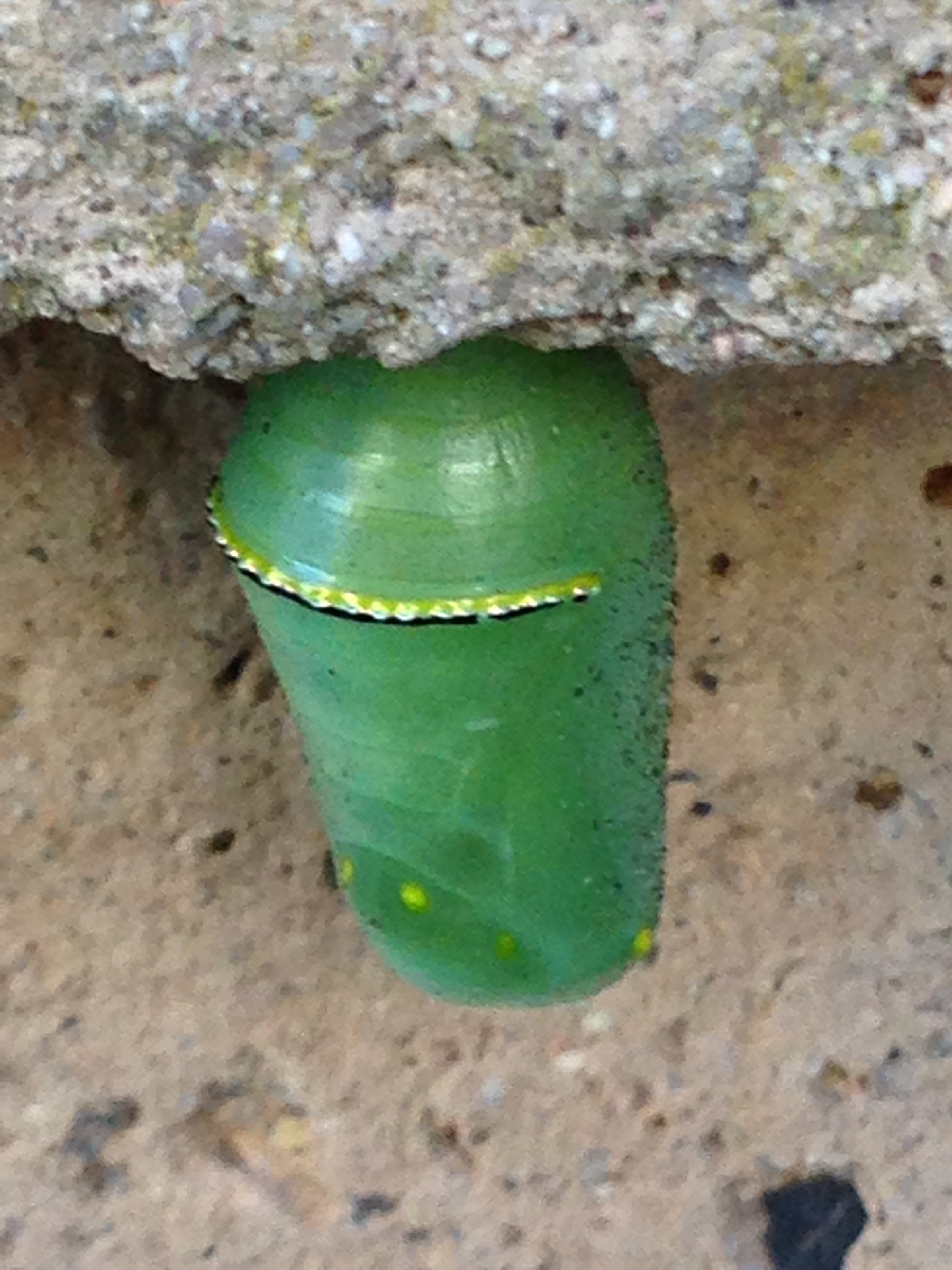
One of Judi’s special interests is the Monarch butterfly.  She provides many Asclepias tuberosa (common milkweed) and Asclepias physocarpa (Hairy Balls plant, Swan plant, Oscar milkweed) as host plants.  The Monarch butterfly lays its eggs on the host plants.  The eggs develop into the striped catepillars which then feed on the foliage of the host plant, often stripping it down to the stems. As the cycle continues each catepillar will prepare for the chrysalid state by attaching itself to a solid surface such as a tree branch or the overhang of a block wall.  Given adequate host plants for food Judi may see up to 20 chrysalids at any given time.  There are undoubtedly many more that are never observed by the humans inhabiting the garden.  The Monarch chrysalid is easily recognized by its bright lime green color and  gold band around its circumference and looks like it is wearing a dainty string of black pearls.  Within 10 to 12 days the chrysalid will take on a brown hue and you know that emergence of the butterfly is imminent. When the time is right the butterfly emerges very quickly, staying near the chrysalid, and flutters it’s wings to dry.  A sunny spot aids in this drying process.  And then the butterfly is off! This cycle of life is magic repeating itself in every butterfly friendly refuge over and over–amazing to think  that we can offer a bit of assistance to these lovely creatures by our garden choices!

Gardening friends! Please bear with the formatting eccentricities on this first post composed on my new iPad. Everything is in a different place and some of the tools I can’t find at all!!

My sage advice to you is…

That you are sure to find something in the genus Salvia to delight your soul and your senses!  The diversity of this family of plants offers year-round interest with colorful flowers, dramatic foliage, fragrance and a welcoming hug for bees, butterflies and hummingbirds.

The natural habitats of over 900 cultivars of salvia are spread all over the globe with hundreds originating in Mexico, Central and South America alone. You may choose tender annuals to fill those garden spots needing a burst of color or hardy perennials which will reward you year after year demanding very little attention.  While many are rugged, unthirsty performers which will stand up to long, hot summers there are also many  tender family members requiring shade and a more moist environment.  All salvias are not created equal and that is truly a plus for us in the garden world.  A little education will help you find the right ones to meet your garden needs.  I count The Plant Lover’s Guide to Salvias by John Whittlesey as an invaluable resource.  In addition, California is home to a variety of  nursery operations whose enthusiasm for salvias is evident in both the varieties they have for sale and their breeding efforts. The Digging Dog Nursery in Albion and Annie’s Annuals in Richmond are worthy of a visit. Flowers by the Sea in Elk has a comprehensive mail order catalog. Check them out at http://www.fbts.com and be sure to look at their blog Everything Salvias.

Since any post covering all the salvias I would like to introduce you to would have to be book length I am going to focus today on a group called by academically minded plantsmen “the greggii microphylla complex”.  This is a confusing group of species which includes Salvia greggii, S. microphylla, S. x jamensis (a naturally occurring hybrid of the first two) and several others. There are many series of cultivars bred from various combinations of these species.  A few examples found recently in my retail haunts include selections from the Heatwave, Mesa and Western Dancer series.  These names commonly appear as part of the cultivar name although whether they are marked as greggii or microphylla is somewhat less consistent from grower to grower.  These are not the showiest nor most refined members of their clan but, in general, plants in this complex are hardy, rugged perennials with twiggy stems, small fragrant leaves with their flowers held slightly above the foliage on slender stems. Salvia ‘Mesa Azure’ was my introduction to these shrubby salvias when I dug in a few 4″ pots in for color in the spring of 2010.  I added ‘Mesa Rose’ and ‘Mesa Purple’ to my southern exposure front garden at the same time but ‘Mesa Azure’ remains my enduring favorite.  Just by luck of the draw the other two colors ended up in a bed now dominated by a 20′ tall Raywood Ash (planted as a 15 gallon tree in 2010) and have lost most of their sun.  They are still lovely but flower somewhat less vigorously than ‘Mesa Azure’ which has grown in full sun with minimal water for lo these many years and only gets better every year.  I force it to rest most years by trimming it back in late November.  In mild winters it has burst back into bloom by late January and blooms on and on. The flowers are more purple than the name would suggest and they they tend to open a lighter lavender then age to a bit darker hue.Likewise new foliage is a lighter, brighter green before it hardens off a bit. Pictured below is the most mature of the Salvia ‘Mesa Azure’ plants  I adore and two photos showing the interesting flower color variation.

IMG_3583

The plants in this greggii/microphylla umbrella vary in flower color and somewhat in mature height. The ‘Mesa Azure’ is a bit less than knee height, receiving a bit of tidying up now and then to reduce its twiggyness and promote new growth.  Plants tags generally list heights as being 24″-36″. This year I have added many new plants from this complex to my garden and only time will tell in terms of their mature height and hardiness.  Just today I bought Salvia ‘Maraschino’ and its tag lists 36′ to 8′—now that is a pretty wide range!  I am going to give this new one a bit of afternoon shade per my internet research.  Toward the end of the summer I’ll report back to you how my new residents have faired. As the foliage is not spectacular on any of this group I have tried to give you a peek at the variety of flower colors available.  See some of my new friends below. Remember to roll your cursor over the photo for the cultivar’s name.

A little note–there are several S. greggii/microphylla cultivars in the light yellow, apricot and orange color ranges but all y’all know I just don’t do orange.  There are also several pale and medium blues on my acquisition list.

Just  to wet your appetite for Sage Advice part 2 I’ll leave with with a few additional photos  of salvias to desire–quite different from today’s group!  Can you identify any of these?

Nap time is almost over…

Just a short post today to follow up on the Getting your little ones on a schedule… post in which I chronicled my rose deadheading scheme for the Sunblaze miniature roses in my garden.  We are 5 weeks to the day out from when we put the little ones down for a brief nap with the mother’s never ending sense of hope that when they awoke they would be invigorated and reward me with another lovely flush of pink blooms.  On that same day I deadheaded the grouping of 5 ‘Iceberg’ standard roses which appear in the background of the miniature roses.  As you can see below, the ‘Sunblaze Pink’ and their friends are stirring now with each rose starting to show many groups of buds and lots of shiny new dark green foliage.  I am confidant that we will hit the six week mark with lots of open flowers! Clearly, the helicopter mom instinct I had to work so hard to squelch when my flesh and blood children were growing up has found a new outlet.  In the past few years each of my sons has conceded (maybe not in as direct a way as I would have liked) that I probably knew more than he gave me credit for in his teen and young adult years.  Growing plants in your garden is just like raising your children–give them lots of love, good nutrition and structure, nip them back when they need it and who know what wonderful rewards you will experience!

The bells ring in summer…

Hello, friends!  It is heating up fast here and soon instead of dreading the 90s we will be begging for them.  The foliage on the several species of Campanula in my garden always looks its best in the spring before it gets too hot but the flowers seem to respond to the warmer days with an explosion of nodding blue bells!

The Campanula, or Bellflower, family is vast and varied with over 300 species including creepers, trailers and taller upright ones like our grandmothers planted and referred to as Cups and Saucers. Most species have bell shaped flowers but many have flowers which start as bells then open into a more star like form.  As a family they like rich, well drained soil and full sun only in cooler climates.  In my garden they will tolerate morning sun only and probably would be happier (though not bloom as well) with no direct sun at all.  While I have had the more upright types in other gardens I have only a few of the lovely creeper/ trailing types now and they are a sight to behold in full bloom.  Although literature indicates they are attractive to snails and slugs I have not found that to be true in my beds–perhaps because I have many other lovely delicacies to munch on that they are just full by the time they get to the campanulas.

The upper left photo, taken about a month ago,  gives you a chance to see the lovely chartreuse green foliage born by Campanula garganica ‘Dickson’s Gold’. You can see by its neighboring photo that the clump has increased almost enough in size that we have to jump over it rather use the large stepping stones around which it is planted.  Although this clumping ground cover lives in my patio shade beds, it does receive a good bit of sun during some parts of the day.  Literature suggests that this cultivar, when planted in more shade, will have a more conventional darker green leaf.  That would be a crying shame!

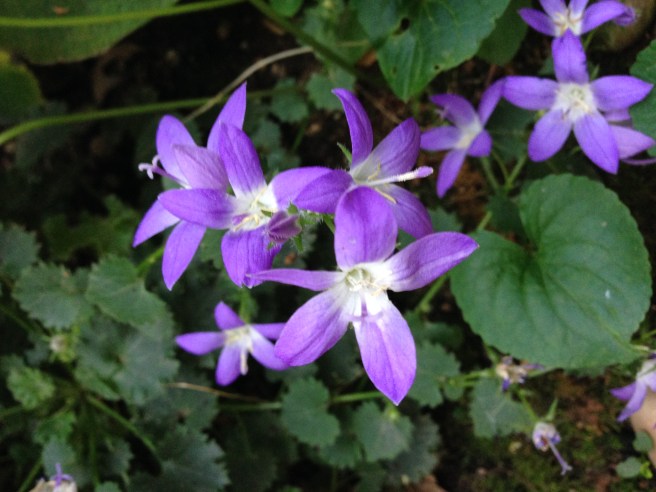
The Dalmation Bellflower, Campanula portenschlagiana aka Campanula muralis, is a lovely small scale ground cover which spreads but is not invasive.  It is more lavender than blue and has very long trailing stems.

The Serbian Bellflower, Campanula poscharskyana, is a more vigorous ground cover for me.  This one is the cultivar ‘Blue Waterfall’.  It is exceptionally free flowering and will be covered with blooms for three or more months.  A light shearing back of the spent flowers will produce another, though less profuse, full of blooms. ‘Blue Waterfall’ coexists very peacefully with other semi-shade pants and is more reported to be drought tolerant than some campanulas.

IMG_3561

‘Blue Gown’, another cultivar of Campanula poscharskyana, has larger flowers with a very distinct large white eye.

IMG_3799

This diminutive beauty is a very recent addition to the Secret Garden behind our outdoor pavilion.  It is a hybrid of the portenschlagiana and poscharskyana species called ‘Birch Hybrid’.  I don’t know who Birch is but I know he is (or was) smart enough to know that both of those “p” botanical names would never fit on a plant tag.  The flowers are more prominently bell like than the others I have and the leaves no bigger than the nail on your little thumb.  I admit to playing it safe and placing it in full shade, given the lateness of its planting and the rapidly escalating heat.  Only time will tell how it fares but this sweet little thing has promise for a lovely small scale ground cover with a cottage feel.

I am always on the look out for campanulas to add to my collection.  They are not the flashiest flower in town but are solid performers providing my coveted blue and lavender blooms.  I love them for exactly who they are and isn’t that just what we are all looking for in life?

P.S. How many of your eagles eyes noticed in the first two photos the several hostas with actual leaves on them??  I think the snails must be monitoring the garden blogging world and have read my disparaging remarks about their seemingly ravenous attention to every hosta I have ever planted—trying to give me a break this year!


Around the world in 91007…

After resting up overnight in Pasadena the Ellen 5 journeyed a few miles to neighboring Arcadia (zip code 91007) to visit the Los Angeles County Arboretum and Botanic Garden.  The Arboretum, as it is coined locally, is a 127 acre historical site jointly operated by the LA County Department of Parks and Recreation and the Los Angeles Arboretum Foundation.  The site’s interesting and lengthy history would fill many posts and if your curiosity has been piqued, you can check it out at http://www.arboretum.org.

The Arboretum is made up of many distinct garden areas linked by paths and walkways.  Of note are the plant collections representing the perennials, shrubs and trees indigenous to the continents of the world far beyond what many of us will ever see in person.  After wandering through the Celebration, Weaver and Wedding Gardens we spent some time in the tropical greenhouses resplendent with orchids and epiphyllums.  Much of the infrastructure of the site is quite old and somewhat in need of attention but that fact is far overshadowed by the sheer volume and variety of mature plants to admire. To the delight of children and adults alike, the garden is home to MANY peacocks which we encountered at every turn.  We saw amazing displays and posturing from the males.  The few females we came across seemed to be using their brown color to camouflaged themselves against the color of the dirt.

We started our world tour in Australia.  In the spirit of full disclosure, we actually did not get all the way around the world as it would have taken several more days to see everything thing the 127 acres offered! In our hot, dry Central Valley of California we are seeing more and more plants of Australian origin in our retail nurseries so this collection was of particular interest to me.  Many Australian plants have very strong lines and structural elements even in the small 1 gallon size available for purchase.  To see the mature specimens was somewhat like viewing living sculpture. Here are a few highlights—for those I could find plant tags I have added a caption you can see by moving your mouse over the individual photos.

The plant collection from the Canary Islands yielded some plants I could actually identify!

When we arrived in Africa, we turned to one of our group for her special insight as she had just returned from an African adventure less than two weeks ago.  She recognized several of the large trees we saw and passed on what she had learned about their roles in the African ecosystem.  I was awed by the trees with massive twisted trunks and tall broad canopies–I could almost see the elephants or giraffes gathering for shade and to feed! For me, the Cape Chestnut pictured below was the ultimate specimen.  We saw its top covered by masses of pink blooms from a distance and felt compelled to hunt it down through several winding paths.  Below you see three of our group (still focused on their anonymity) admiring its grandeur and 2 images of its spectacularly detailed blooms:

Truly, our time ran out all too soon and we agreed a return trip was needed.On tap for our next visit will be the southern section of the site which includes Baldwin Lake, the Prehistoric Forest, the Temperate Asia Collection plus the roses, daylilies, citrus and so much more.  Baldwin Lake is the site of the circa 1885 Queen Anne Cottage featured in the opening credits of the vintage TV show Fantasy Island–can’t miss that.

I’ll close this garden travel adventure with images of a tree I have so missed since I left Southern CA in the late 1990s.  The almost florescent blossoms of the Jacaranda tree clothe the rather straggly tree each spring and they are a sight to behold.  Many communities in this area of temperate climate line the planted center strips of their busy roadways with these majestic beauties.  As the blossoms fade and fall, it almost appears to rain lavender petals and the flowers covering the ground under the trees form a field of purple!